
Authors: Andrea Cercek, M.D., Melissa Lumish, M.D. https://orcid.org/0000-0003-4173-5567, Jenna Sinopoli, N.P., Jill Weiss, B.A., Jinru Shia, M.D., MichelleLamendola-Essel, D.H.Sc., Imane H. El Dika, M.D., and Luis A. Diaz, Jr., M.D.
BACKGROUND
METHODS

RESULTS
CONCLUSIONS
Skip The Scoop | Seek Understanding
New Bride in Hong Kong: I’m the Only One Left
A new bride in Hong Kong says she’s the only one left free—after her family was torn apart by Chinese authorities. Her husband is one of many now detained there amid Beijing’s sweeping arrests of pro-democracy lawmakers and activists.
The post New Bride in Hong Kong: I’m the Only One Left appeared first on NTD.
Trump Says ‘No More Money for RINOs,’ Asks Supporters to Donate to His PAC and Website
President Donald Trump issued a fiery statement on Monday night calling on his supporters to no longer give money to Republicans who oppose his Make America Great Again agenda and directed donations to his campaign website and the Save America political action committee, instead of the Republican National Committee (RNC). “No more money for RINOS,” Trump said in a statement, using an acronym for Republicans in Name Only. “They do nothing but hurt the Republican Party and our great voting base—they will never lead us to Greatness. Send your donation to Save America PAC at DonaldJTrump.com. We will bring it all back stronger than ever before!” Trump’s missive appeared to be a response to the RNC, which, according to The Hill and Politico, brushed off his cease-and-desist letter demanding that the committee stop using his name and likeness to raise funds. The president sent similar letters to the National Republican …
Chinese Economy’s Official Data Questioned
China’s 2.3 percent growth rate for 2020 has been widely touted by western media, calling it “by far the best performance of any major economy.” But a look at data from the country’s National Bureau of Statistics shows some of the country’s numbers don’t quite add up.
The post Chinese Economy’s Official Data Questioned appeared first on NTD.
Video: Facts Matter (March 8): Trump Sends Cease-and-Desist Letter to GOP: Stop Using My Likeness for Fundraising
In California, the petition to recall Governor Newsom has reached enough signatures to trigger the vote—which will likely happen later this year. At the White House, President Joe Biden has signed a new executive order in order to increase voting by criminals—both those in prison, as well as those on probation. Meanwhile, a new report […]
The post Video: Facts Matter (March 8): Trump Sends Cease-and-Desist Letter to GOP: Stop Using My Likeness for Fundraising appeared first on NTD.
Georgia Senate Passes Election Reform Bill That Would End No-Excuse Absentee Voting
Georgia’s state Senate passed a comprehensive election reform bill on Monday that would, among multiple provisions, repeal no-excuse absentee voting and limit mail-in ballots to certain criteria. The Republican-backed bill passed with a vote of 29-20. It now goes to the House Elections Integrity Committee where it is expected to be passed in the next several weeks. […]
The post Georgia Senate Passes Election Reform Bill That Would End No-Excuse Absentee Voting appeared first on NTD.
US Gets Its Lowest Score for Economic Freedom in Decades
WASHINGTON—Economic freedom in the United States has dropped to an all-time low due to its deteriorating fiscal health, according to an annual index of the world’s freest economies. The U.S. economic freedom score has declined 1.8 points this year to 74.8, Heritage Foundation, a conservative U.S. think tank, announced last week. While the U.S. economy remains […]
The post US Gets Its Lowest Score for Economic Freedom in Decades appeared first on NTD.
US Missiles in Indo-Pacific Could Deter China
The United States is strengthening its military presence in the waters of the Indo-Pacific to counter communist China’s increasing aggression in the region.
The post US Missiles in Indo-Pacific Could Deter China appeared first on NTD.
Trump Endorses Arkansas Sen. John Boozman
President Donald Trump on March 8 endorsed Republican Arkansas Sen. John Boozman for reelection in 2022. “Senator John Boozman is a great fighter for the people of Arkansas. He is tough on Crime, strong on the Border, a great supporter of our Military and our Vets, and fights for our farmers every day. He supports our Second Amendment and has my Complete and Total Endorsement!” Trump wrote in a statement released through his Save America political action committee. Boozman has served in the Senate since 2011. In 2016, he defeated U.S. Attorney Conner Eldridge with 59.8 percent of the vote. “I’m grateful to have Pres. Trump’s endorsement for my re-election to the Senate,” Boozman wrote on Twitter on Monday. “We worked together to lower taxes, roll back regulations, secure our border, defend our Second Amendment rights and Protect Life.” “We rebuilt our military, stood up for our veterans, helped our farmers …
NY AG Appoints Lead Attorneys to Probe Sexual Harassment Allegations Facing Cuomo
New York Y Attorney General Letitia James appointed attorney Joon H. Kim and Anne L. Clark on Monday to lead an independent investigation into sexual harassment allegations against Gov. Andrew Cuomo. “We are committed to an independent and thorough investigation of the facts,” James said in a statement. “Joon H. Kim and Anne L. Clark are independent, legal experts who have decades of experience conducting investigations and fighting to uphold the rule of law. There is no question that they both have the knowledge and background necessary to lead this investigation and provide New Yorkers with the answers they deserve.” Kim, a partner at Cleary Gottlieb Steen & Hamilton LLP, focuses on internal investigations and regulatory enforcement, as well as high-stakes litigation. He served as acting U.S. attorney for the Southern District of New York from March 2017 to January 2018, overseeing all criminal and civil litigation conducted on behalf of the United …
Ex-Police Officer’s Trial in George Floyd Death Delayed Over Possible Addition of Charge
MINNEAPOLIS—The trial of former Minneapolis police officer Derek Chauvin for the death of George Floyd was delayed until at least Tuesday morning as the judge contended with a last-minute order by a higher court to reconsider adding an additional murder charge. The trial had been scheduled to begin on Monday. Chauvin appeared in court dressed […]
The post Ex-Police Officer’s Trial in George Floyd Death Delayed Over Possible Addition of Charge appeared first on NTD.
Wyoming Governor Removes Statewide Mask Requirement, Except for Schools
Wyoming’s governor on March 8 announced he’s removing his statewide mask requirement because of improving COVID-19-related metrics. Wyoming, like most states in the country, has seen a declining number of COVID-19 cases and hospitalizations. At the same time, more residents are getting COVID-19 vaccines. “I thank the people of Wyoming for their commitment to keeping […]
The post Wyoming Governor Removes Statewide Mask Requirement, Except for Schools appeared first on NTD.
Entire Staff of Nevada Democratic Party Quits After Democratic Socialist Slate Won Every Seat
Not long after Judith Whitmer won her election on Saturday to become chair of the Nevada Democratic Party, she got an email from the party’s executive director, Alana Mounce. The message from Mounce began with a note of congratulations, before getting to her main point.
She was quitting. So was every other employee. And so were all the consultants. And the staff would be taking severance checks with them, thank you very much.
The post Entire Staff of Nevada Democratic Party Quits After Democratic Socialist Slate Won Every Seat appeared first on The Intercept.
Fully Vaccinated People Do Not Need Masks or Physical Distancing: CDC
People who are fully vaccinated can now gather indoors without masks or social distancing, according to the Centers for Disease Control and Prevention (CDC) in its new guidance on Monday. “There are some activities that fully vaccinated people can begin to resume now in their own homes,” CDC Director Rochelle P. Walensky said in a press release. “Taking […]
The post Fully Vaccinated People Do Not Need Masks or Physical Distancing: CDC appeared first on NTD.
China, Big Tech & Big Business. Sometimes It’s Good To Look Back & Reflect.

Apple, China & Suicides
The year is 2007 and if you don’t know, there’s been another death related to product malfeasance and/or incompetence in China. This time, instead of lead in children’s toys or antifreeze in toothpaste, it has to do with the iPhone.
Yes, that beautifully designed, well thought out gizmo that many of us can no longer live without and have no idea how we did it before it was invented. Poor Sun Danyong. He’s the fellow who threw himself off the twelfth floor of his building after being questioned by security about the missing iPhone prototype.
One thing you don’t want to do in China is mess with a product intended to sell to the United States or is created by an American company. The Chinese government does not view this kindly. I imagine the people who fall into this category would rather off themselves than be handed over to the Chinese government.
The same fate met Mr. Zhang, of lead toys fame. They probably look at the fate of Zheng Xiaoyu and say, “Well, I’ll go my way. Good night.”
They don’t mess around in China. Forget sitting in death row for years, appeal after appeal. Two weeks for the whole trial and execution. Finito!
Reporters having to quickly get the information out to their bureau chiefs can always text the news to headquarters. On their iPhone, of course.
March 8, 2021 | Nightly News Rebroadcast | Video: 50 Minutes 23 Seconds
President Joe Biden is being sued by 12 states over an executive order tied to climate change, the White House makes an unprecedented move on immigration at the southern border, and Senate Minority Leader Mitch McConnell has reportedly compiled a list of successors in case of a vacancy.
Texas Man Accused of Spraying Chemicals on Police Outside Capitol to Remain Jailed Before Trial
A North Texas man accused of spraying chemicals at over a dozen police officers outside the U.S. Capitol in Washington D.C. earlier this year will remain in custody until his trial, according to a report. Denton County resident Daniel Ray Caldwell, 49, a former U.S. Marine, was arrested by FBI agents on Feb. 10 for […]
The post Texas Man Accused of Spraying Chemicals on Police Outside Capitol to Remain Jailed Before Trial appeared first on NTD.
Ashli Babbitt Family Considers Lawsuit in Capitol Shooting Death
The family of the woman shot dead inside the U.S. Capitol on Jan. 6 is considering filing a lawsuit against the officer who shot her.
The post Ashli Babbitt Family Considers Lawsuit in Capitol Shooting Death appeared first on NTD.
New York City Public High School Students to Return to Classroom on March 22: Mayor
NEW YORK—Public high schools in New York City will welcome students back for in-person instruction on March 22, Mayor Bill de Blasio announced on Monday, the latest step by the United States’ largest school system to open classrooms shuttered due to COVID-19. “We have all the pieces we need to bring high school back and […]
The post New York City Public High School Students to Return to Classroom on March 22: Mayor appeared first on NTD.
Trump Seen Outside Trump Tower in First New York City Visit Since Leaving Office
Former President Donald Trump was seen outside his Trump Tower building on New York City’s 5th Avenue on Sunday night.
The post Trump Seen Outside Trump Tower in First New York City Visit Since Leaving Office appeared first on NTD.
Republican Sen. Roy Blunt Will Not Run for Reelection in 2022
Sen. Roy Blunt (R-Mo.), a member of the Republican Senate leadership, announced Monday he won’t run for reelection in 2022.
The post Republican Sen. Roy Blunt Will Not Run for Reelection in 2022 appeared first on NTD.
Supreme Court Refuses to Hear Trump’s Last Remaining Election Challenge
The Supreme Court dismissed former President Trump’s final remaining challenge to the 2020 presidential election results this morning.
The post Supreme Court Refuses to Hear Trump’s Last Remaining Election Challenge appeared first on NTD.
Bannon’s War Room | Morning Edition Hour 1 | Recorded March 8, 2021 | Video: 48 Minutes 43 Seconds
“He’s obviously not in control of the White House,” he said. “He’s not in control of the oval office.” Our guests are: Cpt. Maureen Bannon, Joanna Miller, Boris Epshteyn, Mark Krikorian, Eric Greitens.
NTD News Today Full Broadcast (March 8)
President Joe Biden says he wants to make it easier for Americans to vote. He just signed an executive order. Who will it help, and how?
Texas is launching a new operation to address the growing border crisis. And a Texas Democrat says if the federal government doesn’t step in soon, it will turn into a humanitarian crisis.
Senate Majority Leader Chuck Schumer (D-N.Y.) says he supports the sexual harassment investigation into New York Governor Andrew Cuomo. His statement comes as another allegation surfaces.
The post NTD News Today Full Broadcast (March 8) appeared first on NTD.
‘TRUTH’ With RFK, Jr. and Naomi Wolf: Fighting for Our Constitutional Rights
In the latest episode of “TRUTH” with Robert F. Kennedy, Jr., Kennedy sat down with the iconic Naomi Wolf for a spirited discussion on abuse of power, standing up to tyranny and preserving our Constitution. Wolf explained how tyrants always follow the same predictable route in their attempts to bring democracies to a close and how she believes our society has reached “Step 10” of her “Fascism in 10 Easy Steps.”
Highlights of their conversation include:
- We’re reaching a point reminiscent of what led to the American Revolution: People were willing to die rather than give up their rights.
- The Constitution wasn’t written for easy times but for emergencies such as the current COVID crisis.
- Arbitrary restrictions are being put in place by those abusing emergency powers at local, state and federal levels.
- In a free society, points are made and arguments won through free speech and open debate rather than censoring opinions that differ from ours.
- Authoritarianism has no place in medicine although most liberals are accepting edicts promoted by Dr. Fauci and Bill Gates.
- Direct-to-consumer advertising that started in 1997 marked the beginning of Pharma’s takeover of American media.
- The Bill & Melinda Gates Foundation neutralized once-independent media including The Guardian, NPR and public television through financial gifts.
- Democrats are leading the “biofascism” charge.
- There’s no science to back up the widespread suspension of our Constitutional rights.
- Non-partisan grassroots efforts are gaining momentum and can preserve our freedom and prevent totalitarian takeover.
All “Truth” episodes can be found on Children’s Health Defense’s social media and on Children’s Health Defense’s channel found on Peeps TV, a network on Roku. Roku is accessible from any Smart TV and can be purchased separately for older TVs.
The post ‘TRUTH’ With RFK, Jr. and Naomi Wolf: Fighting for Our Constitutional Rights appeared first on Children’s Health Defense.
Bannon’s War Room | Morning Edition Hour 2 | Recorded March 8, 2021 | Video: 48 Minutes 35 Seconds
“They want to strip us of our identity,” says Miller. “God created two different genders for a reason.” Our guests are: Cpt. Maureen Bannon, Joanna Miller, Frank Gaffney, Natalie Winters.
Rare Kobe Bryant Rookie Card Sells for $1.795 Million
A flawless Kobe Bryant rookie card, considered “one of the rarest in existence,” has sold to an anonymous buyer for $1.795 million.
The post Rare Kobe Bryant Rookie Card Sells for $1.795 Million appeared first on NTD.
Syrian President, Wife Test Positive for Coronavirus
Syrian President Bashar Assad and his wife have tested positive for the coronavirus, with both having only mild symptoms of the illness.
The post Syrian President, Wife Test Positive for Coronavirus appeared first on NTD.
Conservative Nonprofit to Launch $10 Million Campaign to Strengthen Election Integrity: Report
Conservative nonprofit Heritage Action for America is expected to announce plans to spend $10 million on a wide-ranging election integrity campaign.
The post Conservative Nonprofit to Launch $10 Million Campaign to Strengthen Election Integrity: Report appeared first on NTD.
Conservative Nonprofit to Launch $10 Million Campaign to Strengthen Election Integrity: Report
Conservative nonprofit Heritage Action for America is expected to announce plans to spend $10 million on a wide-ranging election integrity campaign.
The post Conservative Nonprofit to Launch $10 Million Campaign to Strengthen Election Integrity: Report appeared first on NTD.
Updates on CCP Virus: UK Students Back to School After 2-Month Closure
British children returned to school on Monday after a two-month closure, with Prime Minister Boris Johnson saying he aimed to get the country “ moving closer to a sense of normality.” As part of the plan, millions of high school and college students coming back to UK classrooms will be tested for the first few […]
The post Updates on CCP Virus: UK Students Back to School After 2-Month Closure appeared first on NTD.
Bannon’s War Room | Evening Edition | Recorded March 8, 2021 | Video: 48 Minutes 58 Seconds
“It’s going to be almost impossible for us to win,” Lunda says. The bill would legalize ballot harvesting, register illegal aliens, and make fraud-ridden mail-in ballots universal Our guests are: Cpt. Maureen Bannon, Eric Greitens, Nigel Farage, Ken Blackwell, Anna Paulina Luna.
VIDEO: With a Second War on Terror Looming, a New Film Explores the Grave Abuses of the First
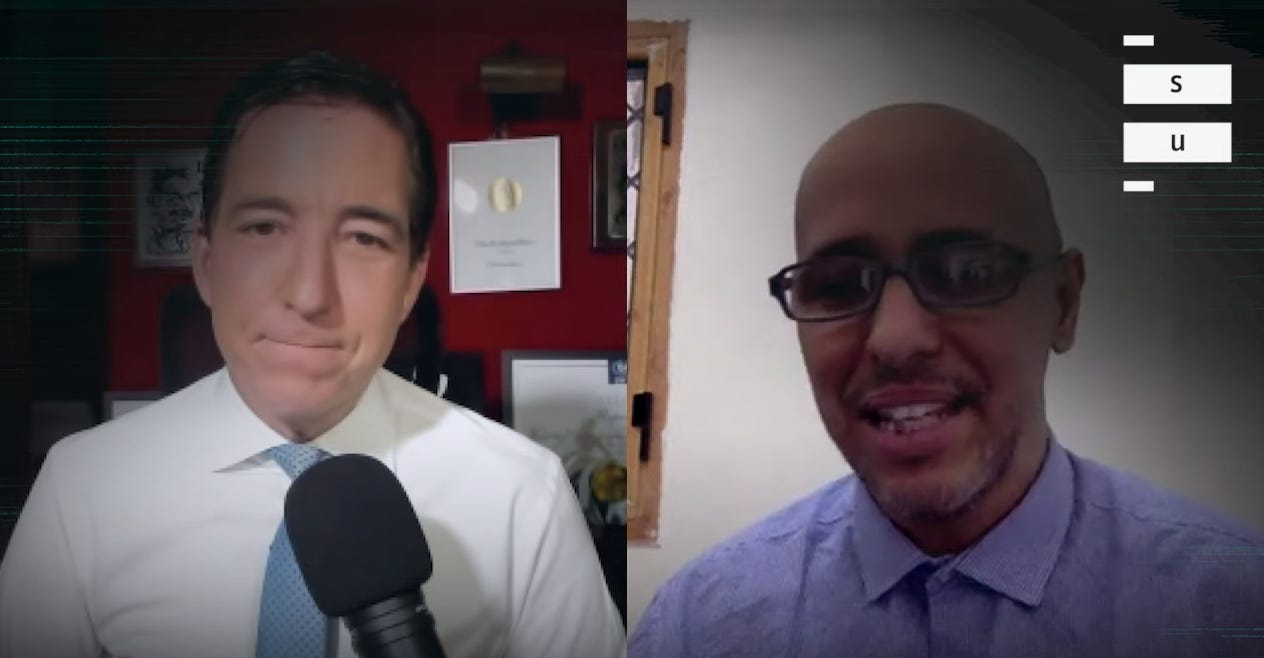
Mohamedou Slahi is an extraordinary person with a harrowing past and a remarkable, still-unfolding story. The interview I conducted with him on Saturday, which can be viewed below, is one I sincerely hope you will watch. He has much to say that the world should hear, and, with a new War on Terror likely to be launched in the U.S., his story is particularly timely now.
Known as the author of the best-selling Guantánamo Diary — a memoir he wrote during his fourteen years in captivity in the U.S. prison camp at Guantánamo — he is now the primary character of a new Hollywood feature film about his life, The Mauritanian. The first eight years of Slahi’s imprisonment included multiple forms of abuse in four different countries and separation from everything he knew, but it afforded no charges, trials, or opportunities to refute or even learn of the accusations against him. . . Read More
Jury Selection Delayed in Derek Chauvin Trial
Jury selection is starting Monday in the trial of Derek Chauvin, who is charged with second-degree murder and manslaughter in the May 2020 death of George Floyd
The post Jury Selection Delayed in Derek Chauvin Trial appeared first on NTD.
Jury Selection to Begin in Derek Chauvin Trial After Protest, Riot Threats
Jury selection is starting Monday in the trial of Derek Chauvin, who is charged with second-degree murder and manslaughter in the May 2020 death of George Floyd
The post Jury Selection to Begin in Derek Chauvin Trial After Protest, Riot Threats appeared first on NTD.
Organizers Say They Have Enough Signatures to Put Newsom Recall Vote on Ballot
Organizers of the recall California Gov. Gavin Newsom campaign on Sunday announced they have accumulated enough signatures to trigger a special election later this year.
The post Organizers Say They Have Enough Signatures to Put Newsom Recall Vote on Ballot appeared first on NTD.
Live Q&A: What Trump Telling GOP To Stop Using His Name Means for the Republican Party
Donald Trump called on the GOP to stop using his name for fundraising, in a move that suggests his changed relationships with the Republican Party going into the 2022 midterm elections. In this live Q&A with Crossroads host Joshua Philipp we’ll be discussing this story and others, and answering questions from the audience. These stories […]
The post Live Q&A: What Trump Telling GOP To Stop Using His Name Means for the Republican Party appeared first on NTD.
WSJ Editorial Board Suggests Revising Section 230 Protections for Big Tech
The Wall Street Journal (WSJ) editorial board came out this week to express support for curtailing broad legal protections for technology companies after one of the newspaper’s opinion articles was fact-checked by Facebook. “We’ve been leery of proposals in Congress to modify Section 230 protections that shield internet platforms from liability. But social-media giants are […]
The post WSJ Editorial Board Suggests Revising Section 230 Protections for Big Tech appeared first on NTD.
Supreme Court Dismisses Lin Wood Election Lawsuit Without Comment
The Supreme Court on Monday morning dismissed a Nov. 3 election-related case filed by defamation lawyer Lin Wood.
The post Supreme Court Dismisses Lin Wood Election Lawsuit Without Comment appeared first on NTD.