
Cynthia Phillips was mesmerized when she saw the latest pictures of her favorite moon. Here at last was a fresh look at Europa, an icy satellite of Jupiter. The moon resembles a truffle drizzled haphazardly with strips of melted white chocolate, as if the universe had rushed to finish a baking-show challenge. The images gave us a new sense of Europa’s topography, its collection of ridges and troughs appearing more intricate than ever. The lighting was different this time, Phillips told me, and the shadows brought out dramatic shapes in the terrain.
The images were taken by a Jupiter-observing spacecraft as it swept past Europa last week, coming within just 222 miles (358 kilometers) of the frozen surface. Phillips, a planetary geologist at NASA’s Jet Propulsion Laboratory, immediately reached for the Europa globe on her desk and began comparing the real-world views with the topography stretched over the plastic orb. The last probe to come this close to Europa was disposed of in 2003, when NASA deliberately plunged it into Jupiter’s atmosphere after the mission started running low on fuel. “We haven’t seen Europa’s surface in this level of detail for 20 years,” Phillips said.
Europa might be the best place to search for life elsewhere in the solar system. Scientists are almost certain that beneath the Jovian moon’s frozen surface is a salty ocean with more water than all of Earth’s oceans combined. And such a watery subsurface environment could provide a comfortable home for small Europan life forms.
[Read: Jupiter’s frozen moon is studded with 50-foot blades of ice]
Two years from now, another NASA spacecraft will depart for the Jupiter system, specifically designed to study Europa. The probe will swing past the moon dozens of times, sometimes coasting just 16 miles (25 kilometers) above the surface. Each pass will bring scientists closer to understanding the workings of this celestial truffle and its mysterious interior. Beneath that frosty coating could be the answer to one of our biggest questions: Is there life anywhere else in the universe?
Europa is enveloped in a thick coat of water ice. (Some other moons in our solar system have ice made of methane and nitrogen—the cosmos is a weird place.) The criss-crossing lines visible in the new pictures are actually cracks and fissures in that frozen exterior. Scientists suspect that they’re caused by the stretching and squashing that Europa experiences as it orbits giant Jupiter. The moon’s terrain is sprinkled with chemical compounds such as sodium chloride and magnesium sulfate—more commonly known to Earthlings as table salt and Epsom salt—and they could indicate briny waters below.
A close-up view of Europa’s textured surface (NASA / JPL-Caltech / SWRI / MSSS
Scientists got their best evidence that a Europan ocean might exist two decades ago, when that earlier NASA spacecraft detected a magnetic connection between Europa and Jupiter that could easily be explained by the presence of a salty, global sea. This deep into the solar system, Europa’s underground ocean wouldn’t feel the warmth of the sun; it would stay liquid because of Jupiter’s gravitational tugging. In recent years, telescopes have detected signs of plumes of water vapor spewing out of the cracks and into space. Scientists believe that Europa’s ocean could be as old as the moon itself, about 4 billion years or so, which would give life plenty of time and a stable environment in which to evolve, Phillips said.
[Read: Europa’s mysterious glow]
The data suggest that Europa has a rocky mantle—the layer between the moon’s crust and core—and when rock and water come together, magical things can happen: Chemical interactions between them are known to produce hydrogen-rich materials for tiny creatures to metabolize. “On our own planet, hydrothermal systems at the seafloor provide energy for communities of microorganisms,” Samantha Trumbo, a planetary scientist at Cornell who studies icy ocean worlds like Europa, told me.
The upcoming NASA mission, named Clipper—a nod to the speedy, lightweight vessels favored by 19th-century merchants—will study nearly every bit of the Europan surface. If it gets lucky, the spacecraft could fly through some plume particles, take a sip, and analyze the contents. Alyssa Rhoden, a planetary geophysicist at the Southwest Research Institute who studies Europa, is most excited about a Clipper instrument designed to detect warmer-than-usual spots on the moon’s surface. “When you look at Europa’s surface, you can see a lot of pits where the surface seems to have dropped down a little bit, places where the surface has been disrupted,” Rhoden told me. “We think that that’s happening from heating coming from below.” That signature could simply indicate the presence of melted bits of ice near the frigid crust—or it could mean a roiling sea has floated toward the surface, perhaps bringing any tiny inhabitants with it.
[Read: Exploring the oceans of the outer solar system]
The Clipper mission is not meant to find definitive proof that life exists on Europa, only explore whether the moon has the right conditions and chemistry to make life possible. Evidence of life will require more missions, guided by Clipper’s data, that could land on the Europan surface and drill into the ice. NASA is also searching for life elsewhere in the solar system, notably on Mars, where a rover is collecting samples from a dried-up river delta. But Europa is a more tantalizing target, and so are the other ocean moons sprinkled across the solar system, such as Enceladus and Titan, which orbit Saturn, and Triton, around Neptune. The Mars mission is designed to search for signs of fossilized life that existed several billion years ago, when water once flowed on the planet. “It’s quite possible that Mars could have had life in the past, in a warmer-weather era, and it’s possible that there are subsurface pockets on Mars that could have remnants of this living biosphere,” Phillips said. “But on somewhere like Europa, life could exist there now.”
And what might humanity, by way of carefully engineered machines, find on Europa, once we’ve figured out which melty bits to inspect? “I would love for there to be Europan whales swimming around in that ocean,” Phillips said with a laugh. But alien life, if it exists, is likely to be small and simple. Energy sources are limited in the Europan depths, and scientists don’t think the environment can support the development of more complex organisms, Phillips said. Still, even the discovery of a single microbe would mark an explosive event in human history. It would mean that life had managed to spring up in two different places around the same star—in a universe absolutely brimming with stars. If it happened more than once here, in our own solar system, it’s likely happened elsewhere in the cosmos, around someone else’s sun. This is why scientists are so eager to catch a glimpse of Europa, and prepare as much as they can for the exploration to come. “We all want it to be water,” Rhoden said. “We all want it to be a cool plumbing system in the shell with lots of activity, and someday we’ll get down there and find little Europan sea urchins clinging to the bottom of the ice.”
Skip The Scoop | Seek Understanding
Are Effective COVID Medications Like Ivermectin Being Suppressed Because Their Successful Treatments Could Cause Vaccines to Lose Government Funding?

Guest post by Kevin Moncla
Are effective COVID medications like Ivermectin being suppressed because they could cause vaccines to lose government funding?
Not very long after the pandemic lockdowns began last year, we heard of a potential treatment for COVID-19 involving the off-label use of an existing medication called Hydroxychloroquine (HCQ).
A French doctor published two studies which showed amazing results. Soon thereafter President Trump mentioned the drug in a press conference as a potential game changer. Dr. Fauci dismissed the studies as “anecdotal”.
Hospital trials and observational studies soon began but they quickly showed the medication to be ineffective as a prophylaxis or as a treatment. But in every study, there was something wrong. Either the dosage was way too high or too low, it was only given to patients in severe stages impossible to recover or without Zinc, which was imperative. It seemed as if only minutes later, HCQ and anyone who mentioned it were viciously attacked for promoting quacks and snake oil.
Then an observational study was published in prestigious medical journals that claimed HCQ was ineffective and dangerous, causing cardiac-related complications. Ongoing trials and testing were halted immediately, and the FDA issued a warning advising HCQ not be used to treat COVID. Then, for the first time in history, the FDA restricted doctors from prescribing an approved medication for off-label use. The WHO and the rest of the world immediately followed suit literally stopping all research and testing of HCQ overnight.
Months later we learn that same study was completely fabricated and fraudulent after an investigative journalist analyzed the data. The study was retracted, but the damage had already been done.
At the time, it defied logic for someone to sabotage such an effective and promising medication.
Then In December, Senator Ron Johnson (WI) held a hearing on potential treatment options for Covid-19. Dr. Pierre Kory was one of the first to testify and he explained that himself, and some of the country’s top practitioners in their field formed a group at the outset of the pandemic called Front Line COVID-19 Critical Care Alliance, or FLCCC. Their sole objective was to find existing medications which could be repurposed to treat those with COVID. The doctor said they had discovered exactly that with Ivermectin. An FDA-approved medication introduced in 1981, it has been prescribed to over 3 billion people as an antiparasitic agent. Dr. Kory said the medication is proving to be a “wonder drug”, highly effective both as a prophylaxis and for early treatment of Covid-19.
8 months later we have witnessed the same disturbing pattern as we saw with HCQ. The group of doctors who brought news of the treatment to the public have been attacked, censored, and ridiculed. The video of the United States Senate hearing described above was even removed from YouTube. Studies and trials proving Ivermectin’s effectiveness were suppressed and marginalized. Clinical trials have been sabotaged using the same tactics as were used to affect the HCQ studies, and in one case, the conclusion of a study was rewritten after being submitted for peer review.
Through subterfuge and sabotage, censorship and subversion, reports of Ivermectin’s success have been stymied and contained in the United States.
But those powerful forces didn’t work everywhere.
Remember that it was not long ago when India was facing an overwhelming surge in cases and death. Remdesivir was widely administered and failed miserably.
Faced with an insurmountable humanitarian crisis of apocalyptic proportion, many areas of India were willing to try almost anything to stop the suffering and death. Ivermectin was introduced into the standard treatment protocol against WHO advisements. In those areas the virus was obliterated just as Dr. Kory described. Ivermectin stopped a raging surge of death in its tracks. The results were nothing short of miraculous.
With the successful results of India, the effectiveness of Ivermectin in treating COVID-19 is no longer debatable. Anyone can see that it is every bit of effective as Dr. Kory described during the senate hearing in December of last year. Yet the FDA warns against taking Ivermectin for the treatment of COVID-19. While the WHO advises that Ivermectin only be used to treat COVID-19 within clinical trials, and the NIH recommends that there is insufficient evidence for the COVID-19 Treatment Guidelines Panel.
We know Ivermectin works. We know Ivermectin is safe, cheap, approved by the FDA, and available now. The obvious question is:
Why are the FDA, CDC and WHO suppressing Ivermectin?
From the FDA website it may be related to Emergency Use Authorization (EUA)?
An Emergency Use Authorization (EUA) is a mechanism to facilitate the availability and use of medical countermeasures, including vaccines, during public health emergencies, such as the current COVID-19 pandemic. Under an EUA, FDA may allow the use of unapproved medical products, or unapproved uses of approved medical products in an emergency to diagnose, treat, or prevent serious or life-threatening diseases or conditions when certain statutory criteria have been met, including that there are no adequate, approved, and available alternatives. Taking into consideration input from the FDA, manufacturers decide whether and when to submit an EUA request to FDA.
The Emergency Use Authorization for the COVID-19 vaccines is contingent upon “…no adequate, approved, and available alternatives.”.
If the CDC, FDA or WHO acknowledge the existence of an effective treatment, such as Ivermectin, then the pharmaceutical companies lose their cash-cow vaccines and their immunity from liability. The vaccine would be subject to normal safety requirements with which the vaccines arguably could not meet. Under the EUA, the safety standard of a medication is extremely low. For instance:
“…FDA must determine that the known and potential benefits outweigh the known and potential risks of the vaccine.”
In other words, the minimum safety threshold is that it only helps more people than those it hurts. The lesser of two evils, and something is better than nothing comes to mind. If there were another more effective treatment option available, those emergency-calibrated standards would no longer apply.
With the quick emergence of variants, waning effectiveness of the vaccine’s protection and the spike in number of hospitalizations, we have no effective therapy for those getting sick. Like before, even after testing positive for COVID-19, the standard treatment outpatient recommendations are nearly the same as last year. Go home, rest, drink lots of fluids and wait for your lips to turn blue before going to the hospital.
An effective therapeutic and prophylactic treatment like Ivermectin is exactly what is desperately needed and needed now.
It is just what the doctor would have ordered if the doctor wasn’t conditioned, pressured and threatened of being ostracized to ignore his medical training and only follow the CDC guidelines.
For more information on clinical trials and studies of Ivermectin, please visit:
Oops. Pre-Print Study Shows mRNA ‘Vaccinated’ Individuals At Greater Risk For Delta Disease Than Those With Natural Immunity
This study would explain why highly ‘vaccinated’ nations with mRNA technology are having their hospitals overrun with SEVERE Covid-19 patients. . . . who are fully vaccinated.
Title: Comparing SARS-CoV-2 natural immunity to vaccine-induced immunity: reinfections versus breakthrough infections
“Results SARS-CoV-2-naïve vaccinees had a 13.06-fold (95% CI, 8.08 to 21.11) increased risk for breakthrough infection with the Delta variant compared to those previously infected, when the first event (infection or vaccination) occurred during January and February of 2021. The increased risk was significant (P<0.001) for symptomatic disease as well. When allowing the infection to occur at any time before vaccination (from March 2020 to February 2021), evidence of waning natural immunity was demonstrated, though SARS-CoV-2 naïve vaccinees had a 5.96-fold (95% CI, 4.85 to 7.33) increased risk for breakthrough infection and a 7.13-fold (95% CI, 5.51 to 9.21) increased risk for symptomatic disease. SARS-CoV-2-naïve vaccinees were also at a greater risk for COVID-19-related-hospitalizations compared to those that were previously infected.
Conclusions This study demonstrated that natural immunity confers longer lasting and stronger protection against infection, symptomatic disease and hospitalization caused by the Delta variant of SARS-CoV-2, compared to the BNT162b2 two-dose vaccine-induced immunity. Individuals who were both previously infected with SARS-CoV-2 and given a single dose of the vaccine gained additional protection against the Delta variant.”
Evacuations resume in Kabul after deadly attacks that killed 100-plus including 13 U.S. troops
Evacuations resumed Friday in Afghanistan, one day after two suicide bombings outside the international airport in the capital city of Kabul killed 13 U.S. service members and roughly Afghans waiting and hoping for a flight out of the country.
The deadly terror attack Thursday was the worst of the chaos and violence at the airport since the Taliban, with unexpected swiftness, took control of the country roughly two weeks ago, sending Americans and their Afghan allies fleeing.
The bombings – a suicide bomb near an airport gate and a car bomb outside of a nearby hotel – killed at least 95 Afghans and the 13 American service members, including four Marines and a Navy corpsman, U.S. officials said.
Thursday was the deadliest day for American forces in Afghanistan since August 2011, according to the Associated Press.
The U.S. says over 100,000 people have so far been evacuated from Kabul, with roughly 1,000 Americans and tens of thousands more Afghans still awaiting departure.
The White House said Friday morning that in the past 24 hours 8,500 evacuees had been flown out of Kabul aboard U.S. military aircraft, and about 4,000 people on coalition flights – roughly the same numbers as before the attacks, the wire service also reports.
The crowds of thousands that have waited outside the Hamid Karzai International Airport since the Aug. 15 takeover in hopes of being evacuated returned after the bombings, the wire service also reports.
The U.S. and allies are rushing to withdrawal all troops from Afghanistan by the Aug. 31 deadline agreed upon with the Taliban. . . .
Rice University Discovers Inaccurate COVID-19 Positive Rate After Delaying In-person Classes
Rice University in Houston, Texas, announced last week that the first two weeks of the fall semester would be moved online because of a high number of COVID-19 cases among students. It now says the data the decision was based upon were flawed.
In an Aug. 22 letter to the campus community, Rice’s Vice President for Administration Kevin E. Kirby said “anomalies” in the initial testing data prompted the university to retest dozens of students deemed positive for COVID-19, and “all but one of those have turned out to be negative.”
According to the letter, Rice started to ramp up its testing program on Aug. 13 with three different test providers and conducted about 4,500 tests over 9 days with initial results showing 81 positive results. This positivity rate of 2 percent, although much lower than that of the city of Houston, Kirby said in the letter, was still concerning enough that the university officials delayed the start of in-person classes.
“For Rice, a 2 percent rate would be significantly higher than our historical positivity rate of 0.24 percent over the last year when we ran about 150,000 tests,” Kirby said. “This unusual campus positivity rate prompted us to take quick action and assume a more cautionary posture until we could determine whether there was a significant risk of widespread infection.”
Rice began investigating the results when it realized that over 90 percent of the positive infections came from a single test provider, and most of those cases involved people who reported no symptoms or had been fully vaccinated. It turned out that the provider had changed its testing protocol without the university’s knowledge.
“Then we retested about 50 people who initially tested positive. Each of them was tested two additional times, on two different days, by two different test providers, and all but one came back negative,” Kirby wrote, adding that the university released students who were falsely determined to be COVID-19 positive from isolation.
Rice officials said they’ll stick to two weeks of online classes, considering that many of the students and faculty had already adjusted their plans based on that schedule. But students who were told to delay moving on campus until after Sept. 3 can now move in as soon as they want.
“Our commitment is to be fast, flexible, and nimble responding to anything involving the safety of individuals and the overall health of our community,” the letter reads. “We recognize and regret that these testing anomalies have caused tremendous difficulties for all involved.” . . .
[Epoch Times]
Why So Many Jews Vote for Democrats–And How to Change That

It is objectively true that the Democratic Party has become the party of institutionalized anti-Semitism and is clearly anti-Israel as well. Leftist organizations such as Black Lives Matter are committed to the destruction of Israel and the persecution of Jews. And although most Republicans and those on the right support Israel and religion, it is also objectively true that the vast majority of American Jews support the left.
There are a number of reasons why Jews typically support the left and vote Democrat. Some are historical. The modern state of Israel was founded during the Democratic administration of Harry Truman, and many Jews believe (incorrectly) that it was Democratic support that created Israel. (In fact, Truman was “a reluctant Cyrus but pro-Israel). When Jews were being persecuted in Russia in the early 20th century, and again in Germany in the 1930s, they were welcomed into the United States as legal immigrants. Proudly they would study and ultimately receive American citizenship after coming from countries where they never enjoyed the rights of full citizens. Whether by choice or pressure, the United States under a Democratic administration supported Israel in the Six Day War, and Congress was supportive of Jewish causes and Israel.
There were also theological reasons to support the left. For thousands of years, Judaism has been concerned with the wellbeing of the weak and downtrodden. There was a time when unions were needed to protect against child labor and sweatshops, and Jews resonated with these causes. The Jewish values of free will and individual responsibility fit in well with many of the social causes of the left in the 1960s and 1970s. Jews were at the forefront of the civil rights movement. Great rabbis like Abraham Joshua Heschel were intimately involved with the work of Dr. Martin Luther King, and Jews were early supporters of the creation of the NAACP.
But all of these historical reasons are no longer valid, and haven’t been for over 40 years. Starting with Jimmy Carter, the left’s support of Israel has declined. The Democratic Party has now been taken over by vocal anti-Semites like “the squad,” and BLM is the violent arm of the Democrats. Conversely, President Trump was the most pro-Israel/pro-Jewish president in history (and has an Orthodox Jewish daughter and grandchildren); the Republican Party is constantly supporting Israel; and anti-Semitic individuals and groups are rejected from the mainstream of the Republican Party, as opposed to the Democratic Party, which embraces anti-Semites.
So why do Jews continue to support the Democrats and the left? . . . .
France: Soldiers, Firemen Must Take Vaccine
In France, the vaccine mandate has been extended from health care workers to other professions. But as the mandate deadline approaches, some military service members and firemen are speaking out against it.
Judge Sanctions 9 Trump Campaign Attorneys Over Election Lawsuit
A federal judge in Michigan on Aug. 25 sanctioned Sidney Powell, Lin Wood, and seven other attorneys who represented the Trump campaign in a lawsuit challenging the outcome of the 2020 presidential election.
U.S. District Judge Linda Parker, an Obama appointee, referred the nine attorneys for investigation and possible disbarment or suspension by relevant state authorities. Parker also ordered the sanctioned individuals to pay the court fees tied to the election lawsuit and to take legal education classes.
“This lawsuit represents a historic and profound abuse of the judicial process,” Parker wrote in a 110-page opinion (pdf). “It is one thing to take on the charge of vindicating rights associated with an allegedly fraudulent election. It is another to take on the charge of deceiving a federal court and the American people into believing that rights were infringed, without regard to whether any laws or rights were in fact violated.”
The attorney representing seven of the sanctioned lawyers, including Powell and Wood, didn’t immediately respond to a request by The Epoch Times for comment. . . .
Democratic Congressional Campaign Committee Chairman Partied Maskless at Billionaire’s Estate in France After State Dept. Issued ‘Do Not Travel’ Warning
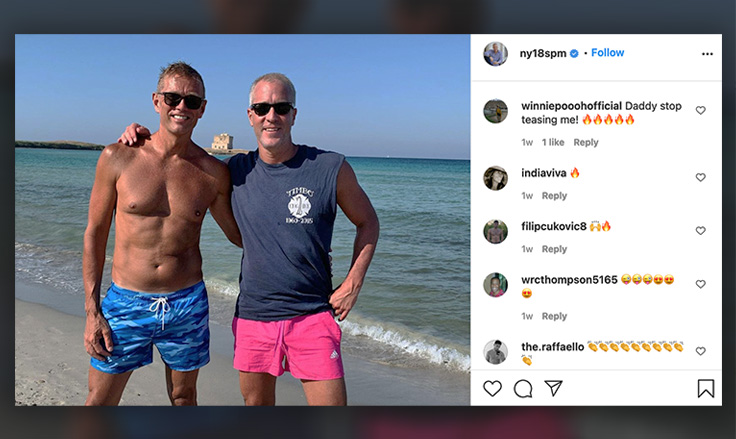
The chairman of the Democratic Congressional Campaign Committee defied State Department guidelines by traveling to France this month. That didn’t stop him from lecturing Americans about the importance of following federal health and safety protocols.
“We all have to do our part to crush this virus,” Rep. Sean Patrick Maloney (D., N.Y.) wrote on Aug. 14, in the middle of his maskless European vacation. “Get your shot, wear a mask, and follow CDC guidelines. It’s just the right thing to do.”
A Washington Free Beacon investigation of the Instagram accounts of Maloney and his husband, Randy Florke, found that the power couple’s trip in France was in violation of U.S. health and safety guidelines. The State Department’s website is unequivocal: “Do not travel to France due to COVID-19.”
While in France against the advice of the U.S. government, the congressman appeared to exercise little to no caution against the coronavirus. His Instagram stories included footage from a wedding at the Villa et Jardins Ephrussi de Rothschild, which is outside of Nice on the Mediterranean coast. None of the guests were wearing masks. The bride is a longtime ally of Manhattan district attorney Cy Vance (D.), who declined to prosecute sex criminal Harvey Weinstein.
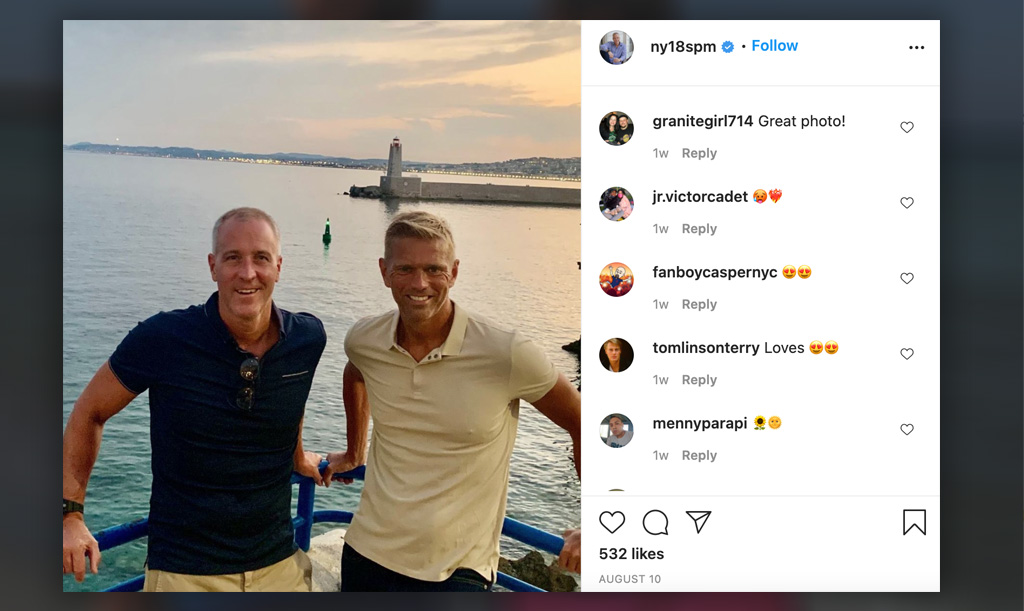
Maloney and his husband also traveled to Italy, even though the State Department has recommended that Americans “reconsider travel” to the country because of COVID-19. Once again, the couple did not do their part to “crush the virus,” as they were photographed without masks at an indoor art studio in Puglia.

After he returned to the United States, the congressman traveled to Napa Valley for a Democratic fundraiser that featured House Speaker Nancy Pelosi (D., Calif.), Secretary of Energy Jennifer Granholm, and Secretary of Commerce Gina Raimondo. Donors paid as much as $29,000 for tickets to the élite soirée. Servants were fully masked; Maloney and the other guests were not.
The fundraiser took place near the French Laundry, the luxury restaurant where Gov. Gavin Newsom (D., Calif.) was infamously busted for violating his own COVID-19 guidelines by attending a maskless dinner party in Nov. 2020.
Maloney’s trips come at a perilous time for elected Democrats, many of whom spent the summer engaging in the sort of activities they have sought to discourage among the general population. Rep. Rashida Tlaib (D., Mich.), for example, was caught dancing without a mask at an indoor wedding, in violation of county guidelines, on the same day she attacked Sen. Rand Paul (R., Ky.) for criticizing COVID-19 restrictions.
Earlier this month, former president Barack Obama threw himself a massive birthday party at his $17.5 million estate on Martha’s Vineyard. Several weeks after the super-spreader event, the island’s only hospital is struggling to cope with the surge in patients testing positive for the so-called Obama variant of of the deadly virus. . . .
As COVID Surges Among Fully Vaccinated, CDC Fails to Properly Track Breakthrough Cases
As the number of breakthrough COVID cases continues to climb, there is growing concern fully vaccinated people may be more vulnerable to serious illness than previously thought — and some fully vaccinated people now sick with the virus are speaking out.
According to the most recent data from the Centers for Disease Control and Prevention (CDC), there were 9,716 breakthrough cases resulting in hospitalization or death as of Aug. 16. However, the agency states those numbers are underreported. On May 1, the CDC made a decision to stop tracking all breakthrough cases and instead only track cases in the fully vaccinated that resulted in hospitalization or death.
That leaves public health officials without the full data that can answer questions as the new Delta variant spreads.
In an interview with PBS News Hour, Jessica Malaty Rivera, an infectious disease epidemiologist and research fellow at Boston Children’s Hospital and former science communications lead at the COVID Tracking Project, said not tracking breakthrough data with as much granularity as we would hope is “basically creating blind spots in our understanding of the true impact of the virus, especially the variants that are circulating so widely in the United States.”
Rivera said she has yet to see an explicit explanation for why the CDC stopped tracking all breakthrough cases. “I’ve heard rumors of things like lack of resources, lack of funding, lack of staff. But to me, it seems pretty, from an epidemiology standpoint, not defensible,” she said.
A breakthrough case refers to a person who is diagnosed with COVID after being fully vaccinated. A person is considered fully vaccinated 14 days after receiving the second dose of either the Pfizer or Moderna COVID vaccine, or two weeks after receiving the single-dose Johnson & Johnson (J&J) vaccine.
The New York Times recently published data from seven states — California, Colorado, Massachusetts, Oregon, Utah, Vermont and Virginia — that keeps particularly detailed records on breakthrough cases.
Analysis showed that in six of the states, breakthrough infections made up 18% to 28% of all newly diagnosed cases of COVID in the past several weeks, and 12% to 24% of all COVID-related hospitalizations, with reported deaths higher than the CDC’s original estimate of .5%.
The figures on non-hospitalized breakthrough infections are also assumed to be underestimations since many fully vaccinated people who become infected may not feel sick enough to be tested for the virus, The Times reported.
About 30% of the new COVID cases in Los Angeles are breakthrough cases, Deadline reported. The number is up from 13% in July and 5% in April.
As of Aug. 17, more than 12,500 fully vaccinated Massachusetts residents had tested positive for COVID and an additional 18 had died, according to NBC Boston.
Fully vaccinated celebrities, elected officials speak out after getting COVID
Melissa Joan Hart, the former “Sabrina the Teenage Witch” star is “really mad” she has a breakthrough case. Hart shared on Instagram Aug. 19 that despite being vaccinated, she got COVID.
“I never do videos but I feel like this is important,” Hart, who recently moved to Tennessee, told her 1.6 million followers. “I got COVID. I am vaccinated. And I got COVID. And it’s bad. It’s weighing on my chest, it’s hard to breathe.”
Heart’s oldest son, Mason, also tested positive for COVID, as did her youngest son — who experienced no symptoms. Her middle child tested negative and her husband is still waiting for his results.
Hart blamed the vaccine’s failure to protect her on her kids not having to wear masks in school. Tennessee Gov. Bill Lee on Aug. 16 signed an executive order allowing parents to choose whether their child should wear a mask in school.
“I’m mad, really mad,” Hart said, “because we tried, and we took precautions and we cut our exposure by a lot. But we got a little lazy, and I think as a country we got lazy. And I’m really mad that my kids didn’t have to wear masks at school because I’m pretty sure that’s where this came from.”
Celebrity Hilary Duff, revealed she had COVID on Instagram Aug. 20. Duff said she was experiencing a bad headache, brain fog, sinus pressure and a loss of taste and smell despite being vaccinated.
“That Delta … she’s a little b****,” Duff wrote, referring to the variant that accounts for 98.8% of current U.S. infections, according to the latest data from the Centers for Disease Control and Prevention (CDC).
Slipknot singer Corey Taylor, 47, was devastated after testing positive for COVID and was forced to call off his upcoming appearance at a Michigan pop culture convention this weekend, Rolling Stone reported.
“I wish I had better news,” said Taylor in a recorded video message last week on Facebook. “I woke up today and tested positive and I’m very, very sick.”
The singer assured fans he “should be okay” because it’s the flu and he’s vaccinated.
Rev. Jesse Jackson, and his wife, Jacqueline, remained under doctors’ observation Monday at a Chicago hospital after getting COVID. Both were “responding positively to treatments,” Politico reported.
The couple was admitted to Northwestern Memorial Hospital Aug. 20 so physicians could carefully monitor their condition, one of the couple’s five children, said in a statement.
Jackson, a Chicago civil rights leader, was fully vaccinated and received his first dose in January during a publicized event where he urged others to receive the vaccine as soon as possible.
Three U.S. senators — John Hickenlooper (D-Colo.), Angus King (I-Maine) and Roger Wicker (R-Miss.) — announced Aug. 19 they tested positive for COVID despite being fully vaccinated, CBS News reported.
“Despite taking precautions and receiving the vaccine, this morning I tested positive for COVID-19,” King tweeted. “While I am not feeling great, I’m definitely feeling much better than I would have without the vaccine.”
The news came days after Texas Gov. Greg Abbott, who also was fully vaccinated, tested positive for COVID.
Illinois state Sen. Dan McConchie announced Aug. 21 he had a “breakthrough” case of COVID. The Republican leader of the Illinois Senate said in a statement he was vaccinated against the virus this spring, and he urged others to get vaccinated.
COVID data show waning immunity
Of 514 patients in Israel hospitalized with COVID as of Aug. 15, 59% were fully vaccinated, according to an article from Science. The article cited national data tracked by Israel’s largest health management organization. The figures suggest breakthrough infections may be more common than previously thought.
Most of the vaccinated patients who were hospitalized, about 87%, were at least 60 years old.
“This is a very clear warning sign for the rest of the world,” said Ran Balicer, CIO at Clalit Health Services, Israel’s largest health maintenance organization. “If it can happen here, it can probably happen anywhere,” Balicer told Science.
Israel has one of the world’s highest COVID vaccination levels with 78% of the population over age 12 fully vaccinated — mostly with Pfizer’s vaccine. The country now has one of the highest infection rates in the world.
Brian Hooker, Ph.D., P.E., Children’s Health Defense chief scientific officer and professor of biology at Simpson University, said “What we’re seeing is virus evolution 101.”
Hooker said the more a variant deviates from the original sequence used for the vaccine, the less effective the vaccine will be on that variant, which could explain why fully vaccinated people are getting infected with the Delta variant.
This isn’t the case for natural immunity, Hooker explained:
“The vaccine focuses on the spike protein, whereas natural immunity focuses on the entire virus. Natural immunity — with a more diverse array of antibodies and T-cell receptors — will provide better protection overall as it has more targets in which to attack the virus, whereas vaccine-derived immunity only focuses on one portion of the virus, in this case, the spike protein. Once that portion of the virus has mutated sufficiently, the vaccine no longer is effective.”
As The Defender reported Aug 2, vaccinated people may play a key role in aiding the evolution of COVID variants.
Scientific Reports research: highest risk for establishing a vaccine-resistant virus strain occurs when large fraction of population has already been vaccinated but transmission is not controlled.
SUBSCRIBE #TheDefender: https://t.co/zL66Edfiw5https://t.co/LpHKxgIbg0
— Robert F. Kennedy Jr (@RobertKennedyJr) August 3, 2021
According to research published July 30 in Scientific Reports, the highest risk for establishing a vaccine-resistant virus strain occurred when a large fraction of the population has already been vaccinated but the transmission is not controlled.
The data was consistent with a CDC study, also released July 30, which showed vaccinated people may transmit the Delta variant just as easily as the unvaccinated.
According to a pre-print study published Aug. 10 in The Lancet, vaccinated individuals carry 251 times the load of SARS-CoV-2 viruses in their nostrils compared to the unvaccinated.
The study, by the Oxford University Clinical Research Group, demonstrated widespread vaccine failure and transmission under tightly controlled circumstances in a hospital lockdown in Ho Chi Minh City, Viet Nam. . . .
Florida doctors urge unvaccinated to get shots: ‘It’s the worst it’s ever been right now’
Most of the more than 70 physicians at the gathering work for the Jupiter Medical Center and the Palm Beach Gardens Medical Center, The Palm Beach Post reported.
“It’s the worst it’s ever been right now,” neurologist Robin Kass told the Post at the gathering. “And I just think that nobody realizes that.”
The doctors appealed to the community they serve, asking the residents to believe the doctors who have taken care of them for years.
“If you identify with one of these doctors up here, we’ve cared for your family and you’ve listened to us then, the time really is now [to get vaccinated],” the organizer of the event, neurologist Jennifer Buczyner, said.
The gathering was made up of a variety of medical professionals including neurologists, emergency room doctors, plastic surgeons, infectious diseases experts and others, according to the local outlet.
Florida has seen COVID-19 cases rising since July, Johns Hopkins University data shows, with the number of cases and hospitalizations spiking in August.
Florida and other states across the country have had health care resources strained as the delta variant has spread faster than previous COVID-19 strains.
The state has 53 percent of its population fully vaccinated against the virus but has still begun postponing elective surgeries again due to the rise in cases straining resources. . . .
More Than 267,000 Excess Infants Deaths Were Reported Worldwide In 2020 Due To Economic Fallout From COVID-19, Study Suggests
More than 267,000 excess infants deaths were reported worldwide in 2020 due to economic fallout from COVID-19, study suggests
- A new study looked at GDPs for 128 low- and lower middle-income countries and the infant mortality rate per 1,000 children
- An excess 267,000 infant deaths were reported in 2020, which is 7% higher than the 248,000 fatalities initially projected last year
- The highest number of estimated excess infant deaths were seen in India, which had a total of 99,642
- Researchers say the economic fallout likely led to malnutrition, lack of ability to access healthcare services and poor quality of these services . . .
Hundreds of thousands of babies died last year due to the economic fallout from COVID-19, a new modeling study suggests.
Researchers from World Bank Group, a financial institution headquartered in Washington, DC, estimated that an extra 267,000 infant fatalities were reported n 2020 in low- and middle-income countries.
This is seven percent higher than the number of newborns that usually die in the course of a year. . . .
While Praising Mask Wearing For Covid-19, The Most Widely Referenced Study By The American Institute of Physics Admits 40% to 54% Of Aerosolized Exhalants Pass Through R95 and KN95 Masks
Because the results of mask wearing were so dismal for efficiently keeping aerosol build up down, AIP could draw no conclusion other than even low ventilation of a space out performs even the best masks being worn for the prevention of Covid-19.
“The results also suggest that, while higher ventilation capacities are required to fully mitigate aerosol build-up, even relatively low air-change rates (2h−1) lead to lower aerosol build-up compared to the best performing mask in an unventilated space.”
Mosque bomber now identifies as a woman, says right-wing blogs fueled “inner-conflict” leading up to attack

David Joles, Star Tribune
The militia leader who’s facing life in prison for masterminding the bombing of a Minnesota mosque now identifies as a woman, according to court documents.
Emily Claire Hari — previously known as Michael Hari — is asking a judge to legally acknowledge her transgender identity. Hari, 50, says a combination of gender dysphoria and right-wing misinformation fueled her “inner conflict” during the time that she was convicted of bombing Dar Al-Farooq Islamic Center in Bloomington.
“She strongly desired making a full transition but knew she would be ostracized from everyone and everything she knew,” Hari’s defense attorney, Shannon Elkins, wrote in court documents. “Thus, as she formed a ragtag group of freedom fighters or militia men and spoke of missions to Cuba and Venezuela, Ms. Hari secretly looked up ‘sex change,’ ‘transgender surgery,’ and ‘post-op transgender’ on the Internet. As she purchased military fatigues for their ‘missions’ she also purchased dresses and female clothing for a planned trip to Bangkok, Thailand, for male-to-female surgery. She was living a double life.”
Elkins cites these as factors in asking U.S. District Judge Donovan Frank to give Hari no more than a 30-year prison sentence — the mandatory minimum for Hari’s conviction — and not the life term sought by prosecutors. She has also asked for an amended prison placement based on her transgender identity, but the details of the request are under seal. Elkins could not be reached for comment.
In December, a jury found Hari, of Clarence, Ill., guilty on civil rights and hate crimes charges related to bombing the mosque. Throughout the 2 ½-week trial in St. Paul, prosecutors for Minnesota’s U.S. Attorney’s Office described Hari as a hater of Islam and immigrants who viewed both as threats to American culture. After the 2016 election of Donald Trump, Hari bid on a federal government contract to build the U.S.-Mexico border wall, which Hari viewed as a symbol of protecting American values. Hari later graduated to violent action, manipulating uneducated and financially vulnerable men from Hari’s rural community to help “harass the untouchables.”
The list of targets included the Dar Al-Farooq Islamic Center in Bloomington, which Hari told acolytes served as a training and recruiting ground for ISIS. . . .
Taliban Executed Civilians, Recruited Child Soldiers, UN Rights Chief Warns
The United Nations high commissioner for human rights announced on Tuesday she obtained “credible reports” of serious human rights violations, including “summary executions,” by Taliban terrorists in Afghanistan.
Michelle Bachelet didn’t provide additional details on the findings while speaking at an emergency meeting with the UN Human Rights Council, but she urged members of the council to set up a mechanism to closely monitor the actions of the Taliban.
“At this critical moment, the people of Afghanistan look to the Human Rights Council to defend and protect their rights,” Bachelet said.
“I urge this Council to take bold and vigorous action, commensurate with the gravity of this crisis, by establishing a dedicated mechanism to closely monitor the evolving human rights situation in Afghanistan,” she added.
Those that faced execution include civilians and former Afghan security forces, according to the high commissioner, who noted that she will make a fuller written report on the allegations in March 2022. . . .
ACLU Claims South Carolina Ban on School Mask Mandates Violates Rights
A civil liberties group has filed a lawsuit against South Carolina officials, asserting the state’s ban on school mask mandates violates federal laws aimed at protecting the rights of disabled Americans.
South Carolina’s legislature included a prohibition on school mask mandates in its budget, which it passed in June, and Molly Spearman, South Carolina’s education superintendent, later told each school board that because of that the school districts were barred from requiring students or employees to wear the face coverings.
That order violated the rights of students with disabilities, including those with certain underlying medical conditions that increase their risk of contracting the virus that causes COVID-19, the American Civil Liberties Union (ACLU) argued in a complaint lodged this week.
More specifically, the barring of school mask mandates goes against the Americans with Disabilities Act and the Rehabilitation Act, the group said.
“Both federal disability rights laws prohibit outright exclusion, denial of equal access, or unnecessary segregation for students with disabilities in public education. Both laws also prohibit methods of administration that defeat the fundamental goals of public schools, that is, to provide an education. Finally, both federal disability rights laws impose affirmative obligations on covered entities to proactively provide reasonable modifications or reasonable accommodations to ensure that individuals with disabilities have an equal opportunity to benefit from their public education,” their lawsuit stated.
The group noted that the Centers for Disease Control and Prevention (CDC) recommends masking in schools, even though many other countries have forgone masking children because they’re at low-risk of contracting serious cases of COVID-19. They cited a collaborative that said recently that data from 100 school districts in North Carolina experienced low COVID-19 transmission when masking was in place.
“This finding strengthens CDC’s claim that ‘when teachers, staff, and students consistently and correctly wear a mask, they protect others as well as themselves,’” the suit stated.
COVID-19 is the disease caused by the CCP (Chinese Communist Party) virus. . . .
Virginia Democratic nominee McAuliffe: ‘Make it hard’ for unvaccinated to enter planes, theaters
The campaign for Virginia GOP nominee for governor Glenn Youngkin is taking aim at Democrat rival Terry McAuliffe for recently suggesting the only way for the country to finally beat back COVID-19 is to “make it hard” for unvaccinated Americans to fly on airplane and enter a movie theatre.
“We have 93 million Americans today that are not vaccinated,” McAuliffe said a conference earlier this month in Las Vegas. “And we need to do everything that we possibly can. I tell my private businesses all the time, ‘I hope you mandate vaccine for people coming in.’
“Until we make it hard for people to get on planes or go to movie theaters, people just aren’t going to do it. We’re not going door to door right, but you make life difficult.”
Team Youngkin tweeted a video taken from a panel discussion at the event, hosted by the company HIMSS21.
Court Rules Judicial Watch Lawsuit Can Proceed against Colorado Officials to Force Cleanup of State’s Voter Rolls
(Washington, DC) – Judicial Watch announced today that a federal court ruled its lawsuit can proceed against Colorado officials to force a cleanup of the state’s voter rolls.
Judicial Watch filed the lawsuit October 5, 2020, in the U.S. District Court for the District of Colorado on behalf of itself and three residents of Colorado against Jena Griswold, Colorado Secretary of State, and the State of Colorado for failing to clean the state’s voter rolls as required by the National Voter Registration Act of 1993 (NVRA).
The court’s recent ruling to allow Judicial Watch’s claims to proceed came after Colorado’s motion to dismiss the case, which the court denied in all key respects.
The court ruled that the individual plaintiffs have standing to sue based on the fact that “noncompliance with the NVRA undermines the individual plaintiffs’ confidence in the integrity of the electoral process and discourages their participation [in elections].”
In his ruling, Chief District Judge Philip A. Brimmer also ruled that Judicial Watch’s allegations about Colorado’s voting lists were enough to allow the lawsuit to proceed:
[Judicial Watch’s] claims that the Secretary is not complying with the NVRA are based on public records and statistical analysis. Plaintiffs insist that they have shown not only high registration rates, which they claim courts have found indicative of an NVRA violation, but also that the Secretary sends too few Confirmation Notices, removes too few registrants, and has too high a number of inactive voters on the rolls. . . . [T]he Court finds that plaintiffs have met their burden and have plausibly alleged that Colorado’s list maintenance program does not comply with the NVRA.
In its lawsuit against Colorado Judicial Watch argues:
- A 2019 study showed that 40 of Colorado’s 64 counties had voter registration rates exceeding 100% of the eligible citizen voting-age population. The share of Colorado counties with registration rates exceeding 100% was the highest in the nation.
- Data Colorado itself provided to the federal Election Assistance Commission (EAC) showed that Colorado was lagging in the processing and removal of certain classes of ineligible registrations belonging to those who had moved out of state.
- In the last two years, 60 of Colorado’s 64 counties had a higher percentage of inactive registrations than the national median.
- In eight Colorado counties, more than one in six registrations belonged to an inactive voter.
Judicial Watch notes that registration rates over 100%, poor processing of out-of-date registrations, and high levels of inactive registrations “indicate an ongoing, systemic problem with Colorado’s voter list maintenance efforts.” Colorado’s “failure to comply with their … voter list maintenance obligations” injures lawfully registered voters by “undermining their confidence in the integrity of the electoral process, discouraging their participation in the democratic process, and instilling in them the fear that their legitimate votes will be nullified or diluted.”
Judicial Watch has asked the court to declare that Colorado and its Secretary of State are violating the NVRA and to order them to “develop and implement a general program that makes a reasonable effort to remove the registrations of ineligible registrants from the voter rolls in Colorado …”
“Dirty voting rolls can mean dirty elections. And this court victory highlights how Colorado citizens and voters have a right to expect that the state’s voting rolls are reasonably kept up to date, as federal law requires,” said Judicial Watch President Tom Fitton.
Judicial Watch is a national leader for cleaner elections.
In 2020, Judicial Watch also sued North Carolina and Pennsylvania for failing to clean their voter rolls.
In 2018, the Supreme Court upheld a voter-roll cleanup program that resulted from a Judicial Watch settlement of a federal lawsuit with Ohio. California settled a federal lawsuit with Judicial Watch and in 2019 began the process of removing up to 1.6 million inactive names from Los Angeles County’s voter rolls.
Kentucky also began a cleanup of hundreds of thousands of old registrations after it entered into a consent decree to end another Judicial Watch lawsuit. In September of last year, the U.S. District Court for the Eastern District of Kentucky agreed to extend the consent decree through 2025 after finding that that Kentucky’s former Democrat Secretary of State Alison Lundergan Grime breached its terms by delaying sending out voter notices, which allowed the names of people who have died or moved away to remain on the Commonwealth’s voter rolls.
In September 2020, Judicial Watch filed a lawsuit on behalf of the Illinois Conservative Union (ICU) and three of its officers, after Illinois state officials refused to allow them to obtain a copy of the state’s voter registration database. In June 2021, a federal court ruled the lawsuit could proceed.
In October 2020, Judicial Watch released a study that found 353 counties nationwide that had more voter registrations than citizens old enough to vote, i.e., counties where registration rates exceed 100%. These counties combined had about 1.8 million registrations over the 100%-registered mark.
Judicial Watch’s 2019 study found 378 counties nationwide that had more voter registrations than citizens old enough to vote, i.e., counties where registration rates exceed 100%. These 378 counties combined had about 2.5 million registrations over the 100%-registered mark.
Judicial Watch Attorney Robert Popper is the director of Judicial Watch’s clean elections initiative. Judicial Watch is assisted by John Zakhem of Jackson Kelly PLLC in Denver, Colorado. . . .
Charlie Watts, the Unlikely Soul of the Rolling Stones
On some superficial level, Charlie Watts had always seemed the oddest Rolling Stone, the one who never quite fit as a member of rock’s most Dionysian force.
While his bandmates cultivated an attitude of debauched insouciance, Watts, the band’s drummer since 1963, kept a quiet, even glum, public persona. He avoided the limelight, wore bespoke suits from Savile Row tailors and remained married to the same woman for more than 50 years.
Watts even seemed barely interested in rock ’n’ roll itself. He claimed that it had little influence on him, preferring — and long championing — the jazz heritage of Charlie Parker, Buddy Rich and Max Roach. “I never liked Elvis until I met Keith Richards,” Watts told Mojo, a British music magazine, in 1994. “The only rock ’n’ roll player I ever liked when I was young was Fats Domino.”
Even the Stones’ celebrated longevity represented less of a life’s mission to Watts than a tedious job punctuated by brief moments of excitement. In the 1989 documentary “25×5: The Continuing Adventures of the Rolling Stones,” he summed up what was then a quarter-century on the clock with one of the world’s greatest rock ’n’ roll bands: “Work five years, and 20 years hanging around.”
And yet Watts, who died on Tuesday at 80 as the Stones’ longest-serving member outside of Richards and Mick Jagger, was a vital part of the band’s sound, with a rhythmic approach that was as much a part of the Stones’ musical fingerprint as Richards’s sharp-edged guitar or Jagger’s sneering vocals.
“To me, Charlie Watts was the secret essence of the whole thing,” Richards wrote in his 2010 memoir, “Life.” . . .
Dr. Malone, mRNA Technology Inventor, Discusses Covid-19 mRNA ‘Vaccine’ Adverse Reactions & “The Ultimate Gaslighting” | Video: 4 Minutes 26 Seconds
“So she’s had this cascade of events. And she’s surrounded by friends, family, social contacts that all believe that the vaccines are fully safe and she must be crazy. It can’t possibly be that there is any relationship between vaccine acceptance, uptake, and her symptoms. So let’s say this person goes on Facebook and joins the Facebook group that’s been created for people that have had, believe they’ve had symptoms that have been triggered by vaccines. So there’s a group there and they build up to a hundred, one hundred and fifty thousand people. Facebook deletes them. The practical implication is, for this cohort of people, who believe they’ve had post vaccination syndrome, whether or not they did, they’re getting all kinds of social messaging from the top of the government all the way down. . . . They’re not even able to communicate on social media with others and they’re all isolated, of course, to discuss what their symptoms are as opposed to somebody else’s symptoms. It is the ultimate gaslighting.”
Here Is The Evidence Based Data On A ‘Vaccine’ So Safe Mandates Are Called For Worldwide | The Total Number Of Deaths Reported For the mRNA ‘Vaccine’ Is Greater Than The Number Of Deaths Associated With All Other Vaccines Combined Since 1990
As of August 13, 2021, there have been 595,622 cases reported of adverse effects of taking the Covid-19 mRNA shot. These are only the ones where the connections seems strong enough to report to VAERS. Including ‘masked’ adverse reactions, where other conditions in a patient masks the fact that it was the mRNA ‘vaccine’ that caused an adverse reaction would make all of these numbers even higher. Here is the breakdown of the data:
| High-Level Summary | COVID19 vaccines (Dec’2020 – present) | All other vaccines 1990-present | US Data Only COVID19 vaccines (Dec’2020 – present) |
US Data Only All other vaccines 1990-present |
|---|---|---|---|---|
| Number of Adverse Reactions | 595,622 | 814,322 | 464,769 | 714,030 |
| Number of Life-Threatening Events | 13,811 | 13,421 | 7,765 | 9,571 |
| Number of Hospitalizations | 54,142 | 77,834 | 27,440 | 37,712 |
| Number of Deaths | 13,068* | 8,871 | 6,018 | 5,006 |
| # of Permanent Disabilities after vaccination | 17,228 | 19,074 | 6,868 | 12,007 |
| Number of Office Visits | 98,760 | 42,270 | 92,567 | 40,995 |
| # of Emergency Room/Department Visits | 72,643 | 208,963 | 63,302 | 200,044 |
| # of Birth Defects after vaccination | 376 | 137 | 266 | 88 |
Vindication for the Swedish model of non-coercive pandemic mitigation? | Mask-free Sweden had near zero COVID-19 daily deaths in July, fared better than expected economically with no lockdowns in place
While many U.S. policy makers are suggesting that states return to lockdowns and impose vaccine or mask mandates to engage in everyday life as new coronavirus variants surface, Sweden’s population of 10.3 million fared better than expected after implementing no lockdowns over the last year.
In April of last year, Björn Olsen, professor of infectious medicine at the University of Uppsala, issued a report suggesting that if lockdowns weren’t implemented a “tragedy” would soon befall Sweden.
An Imperial College model suggested that 85,000 people would die without a lockdown, and an Uppsala University team projected that 40,000 people would die from COVID-19 by May 1, 2020 and nearly 100,000 by June.
But by May, Sweden reported roughly six deaths for every one million people, according to the Financial Times, with 48.9% of its initial coronavirus deaths taking place in nursing homes, according to an analysis by the Swedish Public Health Agency.
More than a year later, Sweden recorded 1.1 million coronavirus cases with 1.07 million people having recovered from the virus, and 14,620 coronavirus-linked deaths, according to woldometers.info as of Aug. 8, 2021.
Of the currently 12,248 people who have tested positive for COVID-19, 12, 219 are experiencing mild symptoms (99.8%) and 29 (0.2%) are in serious or critical condition, according to woldometers.info.
While the Financial Times warned that Sweden wouldn’t likely see an economic benefit from its no-lockdown approach, in May 2020, Sweden fared better than expected. According to an analysis by Nordetrade.com: “Covid-19 has had a rather limited impact on [Sweden’s] economy compared with most other European countries. Softer preventative restrictions against Covid-19 earlier in the year and a strong recovery in the third quarter contained the GDP contraction.”
With the rise of the so-called Delta variant, Sweden has held fast in not imposing a lockdown or a mask mandate, having lifted its last face covering requirement on public transit July 1. Still, its population had a total of eight coronavirus-related deaths in July, or an average of 0.26 coronavirus-linked deaths a day. Daily hospitalizations were also close to zero in July, with between zero and two COVID-19 cases requiring hospital treatment nationwide.
Sweden’s numbers are considerably lower compared to 74 and 329 coronavirus-related daily fatalities in the U.K. and U.S., respectively, over the same period. . . .
One Fully Vaccinated. The Other Not. Yet Both In The Hospital. | “Rev. Jesse Jackson and Wife Remain Hospitalized for Covid-19”

Chicago (AP) — Civil rights leader the Rev. Jesse Jackson and his wife, Jacqueline, remained hospitalized Monday after testing positive for COVID-19, family members said.
Jesse Jackson, 79, has been fully vaccinated, receiving his first shot in January at a public event where he urged others to do the same. But Jacqueline Jackson, 77, has not been vaccinated, according to longtime family spokesman Frank Watkins. He declined to elaborate Monday.
The couple, married nearly 60 years, were admitted to Northwestern Memorial Hospital, family members announced Saturday, with their age as a factor. A day later, their son Jonathan Jackson said both parents were resting comfortably at the hospital and “responding positively to their treatments.”
“The status of my parents has not changed,” Jonathan Jackson said in a Monday statement. “We are ever mindful that COVID-19 is a serious disease and we ask that you continue in prayer for my parents, as we remain prayerful for yours.” . . .
Freedom at Stake
In this episode of Counterculture, “Gun Control and COVID-19,” host Danielle D’Souza Gill explores American freedoms that are being taken away by our government little by little. She also delves into how COVID-19 and gun control are linked together. This video gives us vital information about how the government and Democrats in particular want to take our freedoms and how we can preserve them.
In a fable about a frog that is put into a pot of hot water, once the frog hits the hot water, it immediately jumps out. However, if the water is lukewarm and slowly heated to boiling, the frog will stay in the water, not realizing what is happening until it is too late. A similar situation is happening in our country, with one thing after another being taken away or restricted.
COVID-19
As COVID-19 has swept through our country, it has been used as a reason to impose more and more restrictions on citizens and businesses—all done under the guise of “public safety.”
- Masks: For over a year now, we have been wearing masks. In some places, especially states that are primarily Democratic, there are mandates requiring them in stores, theaters, airports, and even some schools. It may be some time yet before we no longer are required to wear masks.
- Lockdowns: In many states, lockdowns were implemented, making citizens stay inside their homes. Events that were planned, like funerals and weddings, had to be canceled and rescheduled for a later date. Many concerts and sporting events were also canceled. The sick and elderly also suffered countless days of loneliness with no visitors allowed.
- Shutdowns: In 2020, many businesses were forced to shut down or the restrictions were so severe that they were no longer able to stay in business. Many small business owners lost their whole livelihoods. Any business not deemed “essential” by the government suffered this fate. Some churches were even closed.
- Vaccinations: President Joe Biden and his administration are pushing for everyone to be subject to mandatory vaccinations. If this is put into place, citizens may be required to show a “vaccination passport” to travel or enter certain places and even some states.
Just because citizens are forced to live under these restrictions doesn’t mean that members of the government lead by example. The host gives a good example of this. Former President Barack Obama had a big birthday bash in Martha’s Vineyard and did not follow social distancing protocols or masks. Several celebrities were in attendance and two who posted pictures with Obama, who was not wearing a facemask, were asked to take down their posts after he came under criticism. Definitely a “do as I say, not as I do” situation. Another example is when salons were shut down in the state of California, Nancy Pelosi was able to find a salon to get her hair done.
So, one might ask what does the Second Amendment have to do with COVID-19? Gill explains that as the government takes away more and more freedoms, there is no way to tell when it will stop, and Democrats have had the 2nd Amendment in their sights for quite some time. Every time rights are taken away “for our own good,” it always ends up giving the government more power. . . .
FDA Approves Pfizer Vaccine After CDC Admitted Vaccines Cause ‘Increased Risk Of Severe Disease,’ Evidence Of ‘Waning Vaccine Effectiveness’

The Food and Drug Administration (FDA) on Monday granted full approval for the Pfizer-BioNTech COVID-19 vaccine, opening the door for vaccine mandates across the US.
This comes just days after the Director of the Center for Disease Control (CDC) Rochelle Walensky said that COVID-19 “vaccine effectiveness against SARS-CoV-2 is waning,” adding that those who were “vaccinated early” are at an “increased risk of severe disease.”
The FDA has fully approved the Pfizer coronavirus vaccine for people ages 16 and older, paving the way for vaccine mandate policies, according to mainstream media reports. “While this and other vaccines have met the FDA’s rigorous, scientific standards for emergency use authorization, as the first FDA-approved COVID-19 vaccine, the public can be very confident that this vaccine meets the high standards for safety, effectiveness, and manufacturing quality the FDA requires of an approved product,” said Acting FDA Commissioner Janet Woodcock in an FDA news release. The Pfizer vaccine will now be marketed as “Comirnaty” (koe-mir’-na-tee). (READ MORE: Tennessee Woman Left Paralyzed And Unable To Walk After Taking Pfizer Vaccine)
CNN: Full approval of the Pfizer-BioNTech #COVID19 vaccine opens the door for more vaccination-only mandates throughout the U.S.pic.twitter.com/makGPUX9El
— Disclose.tv (@disclosetv) August 23, 2021
“The FDA and Centers for Disease Control and Prevention have monitoring systems in place to ensure that any safety concerns continue to be identified and evaluated in a timely manner. In addition, the FDA is requiring the company to conduct postmarketing studies to further assess the risks of myocarditis and pericarditis following vaccination with Comirnaty. These studies will include an evaluation of long-term outcomes among individuals who develop myocarditis following vaccination with Comirnaty. In addition, although not FDA requirements, the company has committed to additional post-marketing safety studies, including conducting a pregnancy registry study to evaluate pregnancy and infant outcomes after receipt of Comirnaty during pregnancy,” the release states. (READ MORE: CNN Shocked When NFL Legend Brett Favre Expresses Skepticism Toward COVID Vaccines)
The FDA approval of the Pfizer vaccine comes just days after the Director of the CDC admitted that the effectiveness of the COVID-19 vaccines are “waning,” confirming earlier reports by National File. “We are seeing concerning evidence of waning vaccine effectiveness over time and against the Delta variant,” Rochelle Walensky said during a White House Press Briefing. “Reports from our international colleagues, including Israel, suggest increased risk of severe disease amongst those vaccinated early.”
Americans Are Being Overwhelmed By Dems On Purpose | The Pfizer ‘Vaccine’ Magically Approved Today Because President Joe Biden Said Speed It Up | Video: 2 Minutes 56 Seconds
Exclusive: FBI finds scant evidence U.S. Capitol attack was coordinated – sources

WASHINGTON, Aug 20 (Reuters) – The FBI has found scant evidence that the Jan. 6 attack on the U.S. Capitol was the result of an organized plot to overturn the presidential election result, according to four current and former law enforcement officials.
Though federal officials have arrested more than 570 alleged participants, the FBI at this point believes the violence was not centrally coordinated by far-right groups or prominent supporters of then-President Donald Trump, according to the sources, who have been either directly involved in or briefed regularly on the wide-ranging investigations.
“Ninety to ninety-five percent of these are one-off cases,” said a former senior law enforcement official with knowledge of the investigation. “Then you have five percent, maybe, of these militia groups that were more closely organized. But there was no grand scheme with Roger Stone and Alex Jones and all of these people to storm the Capitol and take hostages.”
Stone, a veteran Republican operative and self-described “dirty trickster”, and Jones, founder of a conspiracy-driven radio show and webcast, are both allies of Trump and had been involved in pro-Trump events in Washington on Jan. 5, the day before the riot.
FBI investigators did find that cells of protesters, including followers of the far-right Oath Keepers and Proud Boys groups, had aimed to break into the Capitol. But they found no evidence that the groups had serious plans about what to do if they made it inside, the sources said. . . .
Biden Effect: Taliban Fighters in Suicide Vests March in Zabul Carrying US-Made Weapons – Military Commander in Kabul Shows Off Fleet of US Humvees

Taliban suicide bombers marched during its military parade at Zabul, #Afghanistan today.
The bombers showed off their US-made weapons. Suicide bombers are also considered the special forces of the Taliban.
Today the Taliban have American Assault rifles with thermal sights and night vision goggles thanks to Joe Biden and his woke generals.
Watch suicide Bombers of #Taliban during its military parade at #Zabul, #Afghanistan today. They show off their #US made weapons. Suicide bombers are also considered the special forces of Taliban. Now they have American Assault rifles with thermal sights & night vision goggles! pic.twitter.com/niEl2A4f4c
— Babak Taghvaee – Μπάπακ Τακβαίε – بابک تقوایی (@BabakTaghvaee) August 20, 2021
In Kabul a Taliban commander showed off a fleet of US humvees captured by the Taliban or left behind by the woke US generals.
Watch one of the #Taliban‘s military commanders showing-off the #US Military equipment including tens of HMMWVs which they have now in their service in #Kabul, #Afghanistan‘s capital. pic.twitter.com/Zm7bVkBBOz
— Babak Taghvaee – Μπάπακ Τακβαίε – بابک تقوایی (@BabakTaghvaee) August 20, 2021
Judicial Watch: U.S. Capitol Police Tell Federal Court January 6 Disturbance Videos Are Not Public Records
(Washington, DC) – Judicial Watch announced today the U.S. Capitol Police seeks to shut down a public records lawsuit for January 6 disturbance video and emails by arguing to a federal court that the requested are “not public records.”
Judicial Watch filed the lawsuit in February 2021 under the common law right of access to public records after the Capitol Police refused to provide any records in response to a January 21, 2021, request for:
- Email communications between the U.S. Capitol Police Executive Team and the Capitol Police Board concerning the security of the Capitol on January 6, 2021. The timeframe of this request is from January 1, 2021 through January 10, 2021.
- Email communications of the Capitol Police Board with the Federal Bureau of Investigation, the U.S. Department of Justice, and the U.S. Department of Homeland Security concerning the security of the Capitol on January 6, 2021. The timeframe of this request is from January 1, 2021 through January 10, 2021.
- All video footage from within the Capitol between 12 pm and 9 pm on January 6, 2021.
Regarding withholding the videos, the Capitol Police told the court:
The USCP’s camera security system, including footage recorded by it within the Capitol and sought by [Judicial Watch], is solely for national security and law enforcement purposes.
Access to video footage from the USCP’s camera security system is limited to narrow circumstances and strictly controlled by USCP policy.
The USCP has not made any public disclosures of video footage from January 6 from its camera security system.
There are currently pending criminal investigations and prosecutions of individuals involved in the events at the U.S. Capitol on January 6, 2021.
There are currently pending congressional investigations into the events at the U.S. Capitol on January 6, 2021.
In its motion, the Capitol Police also argues the case should be closed because, among other assertions, even if the records Judicial Watch asks for are “public records,” the USCP’s interests in confidentiality “outweigh any public interest in those materials.”
It also claims not to have access to many of the emails sought by Judicial Watch.
“To cut to the chase, the US Capitol Police is hiding a reported 14,000 hours of January 6 video from the American people to help Nancy Pelosi’s abusive targeting of Trump supporters and other political opponents,” said Judicial Watch President Tom Fitton. “Any other police department in America would be investigated and defunded for such abusive secrecy. The Pelosi Congress is in cover-up mode regarding January 6.”
Judicial Watch is conducting an extensive investigation into the January 6 events in Washington, DC.
Earlier this month, Judicial Watch uncovered documents from Washington, DC’s Office of the Chief Medical Examiner (OCME) related to Air Force veteran and San Diego native Ashli Babbitt. These documents reveal that OCME submitted a request for permission to cremate Babbitt only two days after taking custody of her body and that due to the “high profile nature” of Babbitt’s case, Deputy Chief Medical Examiner Francisco Diaz requested that a secure electronic file with limited access be created for Babbitt’s records. Additionally, Babbitt’s fingerprints were emailed to a person supposedly working for the DC government, which resulted in Microsoft “undeliverable” messages written in Chinese characters being returned.
In July, Judicial Watch filed a FOIA lawsuit against the DOJ for records of communication between the FBI and several financial institutions about the reported transfer of financial transactions made by people in DC, Maryland and Virginia on January 5 and January 6, 2021. The FBI refused to confirm or deny any such records exist. Also in July, Judicial Watch filed a lawsuit against the U.S. Postal Service (USPS) for information relating to the tracking and collecting of Americans’ social media posts through its Internet Covert Operations Program (iCOP).
In May, Judicial Watch sued both the Department of the Interior and the Department of Defense for records regarding the deployment of armed forces around the Capitol complex in Washington, D.C., in January and February of 2021.
In March, Judicial Watch sued the District of Columbia for the autopsy of Capitol Police Officer Brian Sicknick and related records. Pressure from this lawsuit helped lead to the disclosure that Capitol Police Officer Brian Sicknick died of natural causes. Also in March, Judicial Watch filed a FOIA lawsuit against the U.S. Department of Defense for records about House Speaker Nancy Pelosi’s January 8, 2021, telephone call with Chairman of the Joint Chiefs of Staff Mark Milley. . . .
She Was Declared a Witch at Salem. These Middle Schoolers Want to Clear Her Name.

More than three centuries after being tarnished by the hysteria of the Salem witch trials, a Massachusetts woman convicted of witchcraft could finally receive a pardon from the state because of the lobbying efforts of an unlikely constituency: an eighth-grade civics class.
The woman, Elizabeth Johnson Jr., who lived in what is now North Andover, Mass., was one of 28 members of her extended family who faced allegations of witchcraft in 1692, according to historians. She was born around 1670 and may have been mentally disabled.
She was sentenced to death in 1693 after she confessed to being a witch, only to be granted a reprieve by the governor of Massachusetts at the time. She died in 1747, at the age of about 77.
But in contrast with a vast majority of other people who were wrongfully convicted and carried the stigma associated with the witch trials long after their deaths, Johnson had no known descendants to try to clear her name.
That’s why a group of middle school students from North Andover decided last year to take up her cause, pressing their state senator to introduce legislation that they helped craft and that would exonerate Johnson, who never married and had no children.
“To right a wrong, it’s worth doing,” Carrie LaPierre, the teacher of the eighth-grade civics class at North Andover Middle School, said on Thursday.
As part of their civics education, Ms. LaPierre said, the students are taught about acceptance.
“It’s something we talk a lot about: identity and stereotypes and respecting people who are different than you,” she said.
At least 172 people from Salem and surrounding towns, which include what is now North Andover, were accused of witchcraft in 1692 as part of a Puritanical inquisition that was rooted in paranoia and xenophobia, according to historians. . . .
Minnesota GOP Head Resigns After Sex Trafficking Allegations Against Top Donor
Minneapolis (AP) — The embattled leader of the Minnesota Republican Party has been forced to resign following accusations that she ran a “morally bankrupt” operation that was rife with verbal abuse, intimidation and sexual misconduct.
Jennifer Carnahan initially resisted calls to resign, saying she had no knowledge of sex-trafficking allegations against a prominent donor and a local college Republican chapter leader. She said a “mob mentality came out in this way to defame, tarnish and attempt to ruin my personal and professional reputation.”
Late Thursday, the party’s 15-member board voted 8-7 to give Carnahan three months salary, about $38,000. Carnahan cast the deciding vote on her severance.
The board also approved investigations into the party’s finances and human resources protocols.
“It has been the honor of a lifetime to serve as chairwoman for the Republican Party of Minnesota,” Carnahan said in a statement after the vote. “However, I signed up for this party to help us elect Republicans and I want to ensure that we can continue to do that.” . . . .
‘Unfit to Lead’: Biden Supporters Enraged After Afghanistan Debacle
As Afghanistan continues its descent into chaos, prominent media figures are beginning to have doubts after supporting President Joe Biden (or at least strongly opposing Trump) during the 2020 election.
In an Instagram post on Thursday, Meghan McCain, former co-host of The View, said she felt “physically ill” over what has happened in Afghanistan and declared that President Biden is “unfit to lead.” Though Meghan McCain has not yet said for whom she cast her vote in the 2020 election, she virulently opposed former President Donald Trump on the basis of character, often spoke fondly of Biden throughout the election cycle, said she felt “relieved” upon Biden’s victory, and supported Trump’s impeachment.
“I have been physically ill, more depressed than I have been since the beginning stages of the pandemic and filled nothing short of pure rage and anger since the calamity of a ‘pull out’ which will be seen as one of the greatest foreign policy catastrophes of my lifetime,” McCain said in her Instagram post on Thursday. . . .
Naval Academy expels 18 midshipmen after finding they cheated on physics exam
Nearly 20 midshipmen were separated after a Naval Academy investigation found they cheated on a December 2020 physics exam.
Superintendent Vice Adm. Sean Buck initiated an investigation into the General Physics I final after being made aware that midshipmen possibly used outside sources, including visiting websites, during their online exam, according to a press release from the academy. Midshipmen also used an anonymous chat platform to discuss the exam after.
The academy announced the investigation in December.
There were 653 midshipmen who took the General Physics I exam, mostly in their second year at the academy, according to the release. Of the 653, 105 midshipmen were investigated and went through the academy’s honor system. . . .
So Much For ‘Amnesty’: Taliban Going Door-to-Door Executing U.S. Allies
There’s a price to be paid for stupidity and incompetence in government. And Afghans who helped the U.S. during the occupation are paying it.
Two days ago, the Taliban promised a general “amnesty” for all those who collaborated with the U.S. military and the Afghan national government. The only people who believed that besides Biden administration officials were liberals and 5-year-old children.
In truth, the Taliban’s idea of “amnesty” is quite different from how you or I would define the term. A report from the Norwegian Center for Global Analyses — an organization that provides intelligence to the UN — paints a much more accurate picture of how the Taliban defines “amnesty.”
“There are a high number of individuals that are currently being targeted by the Taliban and the threat is crystal clear,” Christian Nellemann, who leads the Norwegian Center, told the BBC. “It is in writing that, unless they give themselves in, the Taliban will arrest and prosecute, interrogate and punish family members on behalf of those individuals.” . . . .
Philadelphia Mayor Rejects Calls for National Guard Amid Surge in Murders
Philadelphia’s mayor will not try to bring in the National Guard to help deal with rising crime in the city.
“The National Guard is traditionally not an urban police department. We used the National Guard in the civil unrest period to secure areas that needed to be secured from looting and burning, and it freed up the police to do other things,” Philadelphia Mayor Jim Kenney told reporters during a press conference this week.
“But to send in the National Guard and a troop carrier into a neighborhood in Philadelphia, to me, is not respectful to that neighborhood, number one. Number two, they are not capable or trained to do urban policing, or do policing of any kind,” he added.
Kenney, a Democrat, would have to ask Pennsylvania Gov. Tom Wolf, another Democrat, to order the Guard to Philadelphia, unless Wolf made the order without Kenney’s support.
Wolf, who activated the Guard to help deal with potential unrest in April as jurors prepared to announce the verdict in the trial of former Minneapolis police officer Derek Chauvin, could not be reached.
Murders have spiked in Philadelphia this year, part of a crime wave that stretches back in many major U.S. cities to early 2020.
The 340 homicides recorded through Aug. 18 is a jump of 20 percent from the same time period, according to city data. . . .
Miami, Tampa school boards impose mask mandates, in defiance of state law
The Florida board of education threatened this week to penalize local school board members and officials in Broward and Alachua counties following their decisions to require students to don face masks at school.
The threats, however, did not appear to deter the Miami-Dade schools district, or the Hillsborough County district, which includes Tampa and Palm Beach County, from mandating similar masking rules this week.
“Over the week, I’ve spoken with employees and their relatives, begging me to do the right thing,” said Miami-Dade public school Superintendent Alberto Carvalho.
Earlier this month, GOP Gov. Ron DeSantis ordered Florida school districts to give parents the power to opt out of masking requirements for their children. He is also making available private school voucher applications for parents whose children feel “bullied” or otherwise victimized by mask mandates.
The Hillsborough County Public School board had an emotional meeting Wednesday, during which it was decided, by a vote of 5-2, that mask opt-outs would be limited to students with medical exemptions.
The meeting featured masked parents, some of them evidently health care workers, arguing with unmasked parents, some of whom wore “Freedom Fighter” T-shirts.
The Miami-Dade and Hillsborough districts are both arguing that their mandates comply with state health regulations and DeSantis’s order. But the state board of education does not see it that way. . . .
Joe Biden Hopes You’ll Forget His Afghan Incompetence by August 31. No, Seriously. That’s Their Strategy.
Joe Biden, the most popular president in the history of history, is scheduled to give a “press” conference at 1:00 on Friday. Whether or not reporters are allowed to ask questions or whether Joe Biden will turn his back and walk away while people yell at him for a third time is anyone’s guess. To the untrained eye, it looks like gross incompetence at best. Or the fact that there is something seriously wrong with President Puddingbrain at worst. Turns out, it is actually brilliantly crafted strategy! According to Reuters, the White House plan is to keep avoiding the press and lying to the American people, figuring we’ll forget about it in a few weeks.
Yes. Joe Biden choking on an interview they set up with a patsy? Where he doesn’t know what day it is, snaps when asked about people falling off of airplanes, and LITERALLY knocks on wood that no one has been killed while he was speaking? Meh. The White House is hoping we all forget about it by August 31. We’ll take the “what if this was Donald Trump” as implied.
They expect the Afghanistan story to recede from the headlines, replaced by the resurgence in COVID-19 cases, the economic recovery and other issues, people familiar with the matter said.
Got it. So, to distract from the war in Afghanistan, Biden is going to declare war against Ron DeSantis and Greg Abbott. Hoping the American people will focus more on that and NOT Joe Biden’s incompetence.
Let’s take a look at what’s being reported this morning as news breaks that the White House is hoping you’ll forget.
A source tells me, “Situation [in Afghanistan] is rapidly deteriorating… We’ve had Americans get beaten throughout the night.” One of them, an American woman, was beaten “twice” even though she was carrying a U.S. passport.
Yesterday @PentagonPresSec said Americans are not being impeded as they travel to the Kabul airport, no Americans harmed. The Taliban agreed to let them evacuate. What I am hearing suggests otherwise. Americans have been injured and stopped from boarding planes.
Joe Biden and/or the people who control Joe Biden are hoping you’ll forget this in two weeks. It’s their strategy. That, and to try to hide Biden from the public as best they can until you do.
But, at least as of this writing, Biden is scheduled to give a “press” conference Friday afternoon. Three-to-one he doesn’t take questions. Two-to-one if he does, they find a hack to make sure the first question is about Ron DeSantis. It’s a push that if he does take questions, he winds up lashing out at a reporter. Most likely a female one. . . .
Dr. Malone, The Inventor Of The mRNA Technology, Explains Why The Covid ‘Vaccine’ Does Not Prevent The Spread Of The Virus | Video: 2 Minutes 14 Seconds
“What we’re told is we have to all get vaccinated to reach herd immunity. That’s the logic. The problem is that is a fallacy. . . What would herd immunity mean? It would mean that we have what is called sterilizing immunity, in some way. If we get infected, we don’t spread it to somebody else. That means we’re not producing virus and shedding virus. Just today the World Health Organization made an announcement, clear and unequivocal, you gotta start using masks because none of these ‘vaccines’ are preventing infection. They’re preventing disease. They’re not preventing transmission.” – Dr. Robert Malone, Inventor of mRNA Vaccine Technology