
Chris Matthews
SARS-CoV-2 Spike Protein Impairs Endothelial Function via Downregulation of ACE 2 | Salk Institute
SARS-CoV-2 (severe acute respiratory syndrome coronavirus 2) infection relies on the binding of S protein (Spike glycoprotein) to ACE (angiotensin-converting enzyme) 2 in the host cells. Vascular endothelium can be infected by SARS-CoV-2,1 which triggers mitochondrial reactive oxygen species production and glycolytic shift.2 Paradoxically, ACE2 is protective in the cardiovascular system, and SARS-CoV-1 S protein promotes lung injury by decreasing the level of ACE2 in the infected lungs.3 In the current study, we show that S protein alone can damage vascular endothelial cells (ECs) by downregulating ACE2 and consequently inhibiting mitochondrial function. . .
Attempt to ban vaccine passports in Arizona fails
A legislative effort to ban vaccine passports and punish businesses that require proof of COVID-19 inoculations narrowly failed in Arizona.
The Senate called House Bill 2190 for a vote Thursday, even though a couple of Republicans were missing from what was expected to be a party-line vote.
Should it have succeeded, the measure would have banned government entities, businesses, ticket venues and others from either discriminating against unvaccinated people or offering special benefits to those based on vaccination status.
Individuals breaking the law faced felony charges. Businesses that defied the law would have seen any state-issued business licenses suspended.
The bill exempted much of the health care industry from the requirements.
Gov. Doug Ducey banned public entities from requiring any proof of vaccination via an executive order he signed in April.
With a couple of absent Republicans, the party needed every member of their caucus to support the bill. . . .
BUSTED: CDC Caught Manipulating Data to Hide New COVID Cases Among those Who Were Already Vaxxed
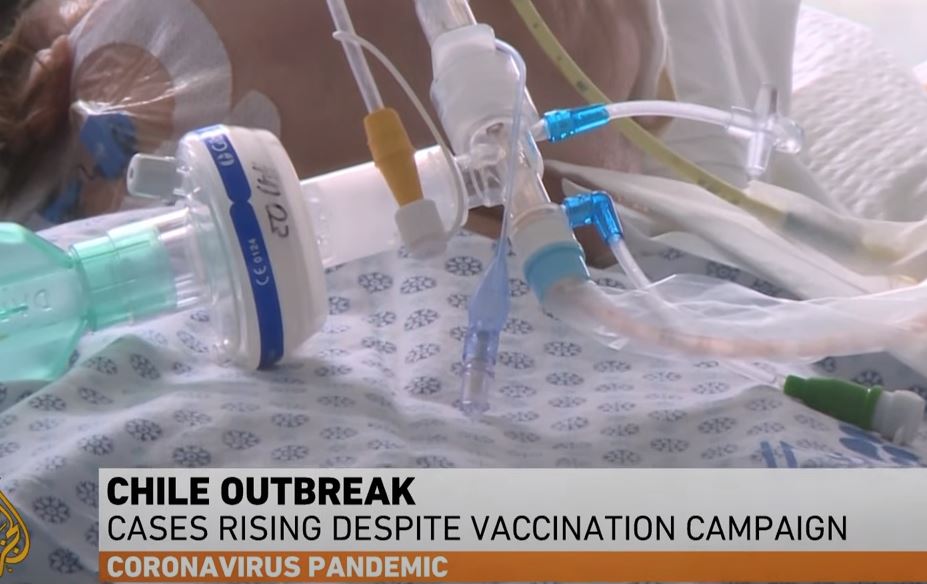
Chile has one of the world’s most ambitious and successful coronavirus vaccination schemes. One-third of the population has received either one or both jabs.
But for some strange reason, Chile is experiencing a surge in Coronavirus cases.
That’s weird?
Two weeks ago, Seychelles announced a new surge in COVID cases despite being the most vaccinated country on Earth.
35% of the new COVID cases were those who were already vaxxed.
This appears to be a trend.
Now the CDC is manipulating data to hide new COVID cases among those who were already vaxxed.
This is a crime.
They are willfully lying to the American public.
And they got caught.
New policies will artificially deflate “breakthrough infections” in the vaccinated, while the old rules continue to inflate case numbers in the unvaccinated.
The Off-Guardian reported:
The US Center for Disease Control (CDC) is altering its practices of data logging and testing for “Covid19” in order to make it seem the experimental gene-therapy “vaccines” are effective at preventing the alleged disease.
They made no secret of this, announcing the policy changes on their website in late April/early May, (though naturally without admitting the fairly obvious motivation behind the change).
The trick is in their reporting of what they call “breakthrough infections” – that is people who are fully “vaccinated” against Sars-Cov-2 infection, but get infected anyway.
Essentially, Covid19 has long been shown – to those willing to pay attention – to be an entirely created pandemic narrative built on two key factors:
- False-postive tests. The unreliable PCR test can be manipulated into reporting a high number of false-positives by altering the cycle threshold (CT value)
- Inflated Case-count. The incredibly broad definition of “Covid case”, used all over the world, lists anyone who receives a positive test as a “Covid19 case”, even if they never experienced any symptoms.
Without these two policies, there would never have been an appreciable pandemic at all, and now the CDC has enacted two policy changes which means they no longer apply to vaccinated people.
The post BUSTED: CDC Caught Manipulating Data to Hide New COVID Cases Among those Who Were Already Vaxxed appeared first on The Gateway Pundit.
200+ scientists, doctors promote vitamin D to ward off Covid-19
Scientific evidence indicates vitamin D reduces infections and deaths. That’s according to more than 200 scientists and doctors. They have issued an open letter addressed to “all governments, public health officials, doctors, and healthcare workers”. Research shows low vitamin D levels almost certainly promote COVID-19 infections, hospitalizations, and deaths. Given its safety, we call for immediate widespread increased vitamin D intakes […]
U.S. Nonprofit with Ties to Wuhan Lab Violated Federal Law by Failing to Disclose Taxpayer Funding, Complaint Alleges
by Andrew Kerr
A U.S. nonprofit with close ties to the Wuhan Institute of Virology violated federal law by failing to disclose that taxpayer funds supported its work, according to a complaint a taxpayer watchdog group filed Monday.
EcoHealth Alliance (EHA) diverted $600,000 in taxpayer funds to the WIV in the form of National Institutes of Health subgrants between 2014 and 2019 as part of a research project studying coronaviruses from Chinese bats. But press releases from EHA describing the project failed to disclose that the project was backed by federal dollars, an omission that, according to the White Coat Waste Project, is a violation of a federal law known as the Stevens Amendment.
“Virtually all of EHA’s press releases reporting its taxpayer-funded experiments over the last three years violate the Stevens Amendment,” the White Coat Waste Project wrote in its complaint filed Monday with the National Institutes of Health Office of Management Assessment. “The releases fail to acknowledge federal funding, and/or fail to report the amount of taxpayer money spent, and/or fail to report the percentage of the project paid for with taxpayer funds.”
 The Stevens Amendment requires that any group that receives funding from the departments of Labor, Health and Human Services and Education disclose the percentage of costs financed with federal funds and the federal dollar amount in any statements, press releases, bid solicitations and other documents describing a project supported by those agencies, according to the Government Accountability Office.
Approximately 92% of EHA’s revenue in 2018 was from government contracts, the group disclosed in its 2018 financial statements. The bulk of EHA’s funding comes from the Department of Defense, however, the group has received over $14.7 million from the Department of Health and Human Services since 2002.
The White Coat Waste project flagged in its complaint three EHA press releases that touted its work on bat-based coronaviruses in China that did not disclose the percentage or dollar amount of project costs financed with federal dollars. EHA’s work with the WIV studying bat-based coronaviruses was funded with a $3.4 million NIH grant, according to The Wall Street Journal.
While some press releases on EHA’s website do disclose that NIH funded its work, the Daily Caller News Foundation did not locate any that indicated the dollar amount or percentage of costs funded by federal funds.
The White Coat Waste Project’s complaint called on the NIH, an agency within the HHS, “permanently disqualify EHA from receiving taxpayer funding” in light of its alleged transparency violations.
“Taxpayers have a right to know — and federal law requires that we’re told — exactly how much of our money EcoHealth has shipped to the notorious CCP-run Wuhan animal lab for reckless coronavirus experiments that may have caused the pandemic,” White Coat Waste Project spokesman Justin Goodman told the DCNF. “EcoHealth’s rampant violations of federal transparency law are yet another example of the group and its President Peter Daszak obscuring their close ties to — and financial support for — the Wuhan Animal Lab.”
Sen. Joni Ernst told the DCNF that she will demand an investigation into the federal government’s failure to enforce the Stevens Amendment in light of the revelations in the White Coat Waste Project’s letter.
“The federal government is failing to comply with the law and disclose how many American taxpayer dollars go to research labs around the world, like the Wuhan Institute of Virology—a reported and potential origin of the novel coronavirus,” the Iowa Republican said. “The American people deserve answers.”
“I’m demanding an investigation to compel HHS to comply with the law,” Ernst continued. “This isn’t Communist China; the law isn’t optional.”
EHA’s alleged failure to comply with the Stevens Amendment is emblematic of widespread non-enforcement of the law. The Government Accountability Office reported in March 2019 that most subagencies under the departments of Labor, Health and Human Services and Education do not monitor grantees for compliance with the Stevens Amendment.
Ernst issued a letter to HHS Principal Deputy Inspector General Christi Grimm on Thursday urging a thorough review of the department’s enforcement and compliance of the Stevens Amendment.
The WIV’s past work conducting gain-of-function research on bat-based coronaviruses, its proximity to the first known cases of COVID-19 and China’s lack of transparency surrounding the lab has led to widespread speculation that the virus could have entered the human population due to an accidental leak from the institution.
Gain-of-function is a type of research in which scientists intentionally make pathogens more deadly in a lab setting with the intention of getting ahead of any future outbreaks. Critics of the procedure say it’s not worth the risk as it introduces the possibility that a non-natural pathogen could enter into the human population.
The NIH banned funding of gain-of-function research in 2014 due to safety concerns, but the ban was lifted in 2017.
U.S. diplomats wrote two cables to Washington D.C. in 2018 warning of safety issues at WIV. The cables specifically noted that researchers at the lab had discovered new bat-based coronaviruses that could easily infect human, Politico reported. Their warnings went ignored.
Daszak, the EHA president, was the only American member of the World Health Organization’s 2021 team that investigated the origins of COVID-19 in China. Daszak said Wednesday that the WHO team did not ask to review a database of at least 16,000 virus samples that the WIV deleted in September 2019 because he personally vouched for the lab, saying the data did not contain relevant information on the pandemic’s origins.
Daszak’s involvement in the WHO probe has been described as a major conflict of interest due to his financial and professional ties with the WIV. Critics have also noted that Daszak appeared to have made up his mind on the lab leak theory at the onset of the pandemic, having organized a statement in The Lancet medical journal in February 2020 condemning “conspiracy theories” suggesting that COVID-19 does not have a natural origin.
A spokesperson for Daszak later admitted to The Wall Street Journal that Daszak’s letter was intended to protect Chinese scientists from online criticism.
The WHO team announced during a joint press conference with Chinese officials in February that their investigation concluded that it’s “highly unlikely” that COVID-19 could have accidentally leaked from a Chinese lab and that the theory was not worth further investigation.
WHO Director-General Tedros Ghebreyesus walked back the announcement just days later, saying that all theories on the origins of the pandemic, including the lab leak hypothesis, “remain open and require further study.”
The WHO scrapped earlier plans to release an interim report on its investigation in China amid growing scientific concerns over the legitimacy of its investigation. The team said on March 4 that it plans to release a full report on its findings “in coming weeks.”
EHA did not immediately return a request for comment.
– – –
Andrew Kerr is a reporter at Daily Caller News Foundation.
The post U.S. Nonprofit with Ties to Wuhan Lab Violated Federal Law by Failing to Disclose Taxpayer Funding, Complaint Alleges appeared first on The Georgia Star News.
Dr. Fauci Backed Controversial Wuhan Lab with U.S. Dollars for Risky Coronavirus Research
Dr. Anthony Fauci is an adviser to President Donald Trump and something of an American folk hero for his steady, calm leadership during the pandemic crisis. At least one poll shows that Americans trust Fauci more than Trump on the coronavirus pandemic—and few scientists are portrayed on TV by Brad Pitt.
But just last year, the National Institute for Allergy and Infectious Diseases, the organization led by Dr. Fauci, funded scientists at the Wuhan Institute of Virology and other institutions for work on gain-of-function research on bat coronaviruses.
In 2019, with the backing of NIAID, the National Institutes of Health committed $3.7 million over six years for research that included some gain-of-function work. The program followed another $3.7 million, 5-year project for collecting and studying bat coronaviruses, which ended in 2019, bringing the total to $7.4 million.
Newsweek Newsletter sign-up >
Many scientists have criticized gain of function research, which involves manipulating viruses in the lab to explore their potential for infecting humans, because it creates a risk of starting a pandemic from accidental release.
SARS-CoV-2 , the virus now causing a global pandemic, is believed to have originated in bats. U.S. intelligence, after originally asserting that the coronavirus had occurred naturally, conceded last month that the pandemic may have originated in a leak from the Wuhan lab. (At this point most scientists say it’s possible—but not likely—that the pandemic virus was engineered or manipulated.) . . .
No One Can Find The Animal That Gave People Covid-19
A wild-animal trader who caught a strange new virus from a frozen pangolin. A lab worker studying bat viruses who slipped up and sniffed the air under her biosafety hood. A man who suddenly fell ill after collecting bat guano from a cave to use for fertilizer.
Were any of these scenarios what touched off the covid-19 pandemic?
That is the question facing a joint international research team appointed by China and the World Health Organization that is now searching for the source of covid-19. What the researchers know so far is that a coronavirus very similar to some found in horseshoe bats made the jump into humans, appeared in the Chinese city of Wuhan by December 2019, and from there ignited the biggest health calamity of the 21st century.
We also know they haven’t found the critical detail: if it was in fact a virus with an origin in horseshoe bats, how did it make its way into humans from creatures living hundreds of miles away in remote caves?
An 300-page report from the group is expected soon. It is intended to summarize everything that’s known about the early days of the outbreak and the Chinese effort to locate its source, and it’s likely to forward a favored hypothesis: that the virus, SARS-CoV-2, reached humans from bats via “an intermediate host species,” such as a wild animal sold as a food delicacy in Wuhan’s markets.
That’s a reasonable theory: other bat coronaviruses have jumped to humans the same way. In fact, it was the origin of SARS, a similar coronavirus that panicked the world in 2003 when it spread out of southern China and sickened 8,000 people. With SARS, researchers tested caged market animals and quickly found a nearly identical virus in Himalayan palm civet cats and racoon dogs, which are also eaten locally.
This time, though, the intermediate-host hypothesis has one big problem. More than a year after covid-19 began, no food animal has been identified as a reservoir for the pandemic virus. That’s despite efforts by China to test tens of thousands of animals, including pigs, goats, and geese, according to Liang Wannian, who leads the Chinese side of the research team. No one has found a “direct progenitor” of the virus, he says, and therefore the pandemic “remains an unsolved mystery.”
Politics at play
It’s important to know how the pandemic started, because after killing more than 2.5 million people and causing trillions of dollars in economic losses, it’s not over. The virus may well be establishing itself in new species, like wild rabbits or even house pets. Learning how the pandemic began could help health experts avert the next one, or at least react more swiftly.
We know that the payoffs of origin hunting are real. After the 2003 SARS outbreak, researchers started building up a big knowledge base about this type of virus. That knowledge is what turbocharged the development process for vaccines against the new coronavirus in early 2020. One Chinese company, Sinovac Biotech, actually dusted off a 16-year-old vaccine design it had shelved after the SARS outbreak was contained.
But some fear that all the research into bat viruses may have backfired in a shocking way. These people point to a striking coincidence: the Wuhan Institute of Virology, the world epicenter of research on dangerous SARS-like bat coronaviruses, to which SARS-CoV-2 is related, is in the same city where the pandemic first broke loose. They suspect that covid-19 is the result of an accidental leak from the lab.
“It’s possible they caused a pandemic they were intending to prevent,” says Matthew Pottinger, a former deputy national security advisor at the White House. Pottinger, who was a journalist working in China during the original SARS outbreak, believes it is “very much possible that it did emerge from the laboratory” and that the Chinese government is loath to admit it. Pottinger says that is why Beijing’s joint research with the WHO “is completely insufficient as far as a credible investigation.”

What’s certain is that the research to find the pandemic’s cause is politically charged because of the way it could assign blame for the global disaster. Since last spring, the hunt for the origin of what former president Donald Trump called the “China virus” has been in the crossfire of US-China trade battles and American charges that the WHO has played patsy for Beijing. China, meanwhile, has sought opportunities to spread responsibility. Chinese researchers have found ways to suggest that covid-19 started in Italy or that it arrived in Wuhan on frozen meat. This “cold chain” theory could cast the origin, and the blame, far beyond China’s borders.
One price of the politically charged atmosphere is that an entire year passed before WHO origins investigators got on the ground, arriving in January for a closely chaperoned trip. “It’s a year later, so you have to ask what took so long,’” says Alan Schnur, a former WHO epidemiologist in China who helped track the original SARS outbreak. During that year, memories faded and so did antibodies, possibly erasing key clues. . . .
Data Leak Shows Regulators Had Major Concerns About Pfizer’s mRNA Vaccine
By Serena Tinari
As it conducted its analysis of the Pfizer-BioNTech COVID-19 vaccine in December, the European Medicines Agency (EMA) was the victim of a cyberattack. More than 40 megabytes of classified information from the agency’s review were published on the dark web, and several journalists — including from The BMJ — and academics worldwide were sent copies of the leaks. They came from anonymous email accounts and most efforts to interact with the senders were unsuccessful. None of the senders revealed their identity, and the EMA says it is pursuing a criminal investigation.
The BMJ has reviewed the documents, which show that regulators had major concerns over unexpectedly low quantities of intact mRNA in batches of the vaccine developed for commercial production.
EMA scientists tasked with ensuring manufacturing quality — the chemistry, manufacturing and control aspects of Pfizer’s submission to the EMA — worried about “truncated and modified mRNA species present in the finished product.” Among the many files leaked to The BMJ, an email dated Nov. 23 by a high ranking EMA official outlined a raft of issues. In short, commercial manufacturing was not producing vaccines to the specifications expected, and regulators were unsure of the implications. EMA responded by filing two “major objections” with Pfizer, along with a host of other questions it wanted addressed.
The email identified “a significant difference in % RNA integrity/truncated species” between the clinical batches and proposed commercial batches — from around 78% to 55%. The root cause was unknown and the impact of this loss of RNA integrity on safety and efficacy of the vaccine was “yet to be defined,” the email said.
Ultimately, on Dec. 21, EMA authorized Pfizer-BioNTech’s vaccine. The agency’s public assessment report, a technical document published on its website, noted, “the quality of this medicinal product, submitted in the emergency context of the current (COVID-19) pandemic, is considered to be sufficiently consistent and acceptable.
It’s unclear how the agency’s concerns were satisfied. According to one of the leaked emails dated Nov. 25, positive news had come from an undisclosed source in the US: “The latest lots indicate that % intact RNA are back at around 70 – 75%, which leaves us cautiously optimistic that additional data could address the issue,” the email said.
A near miss?
It’s also unclear whether the events in November constitute a near miss in the commercial manufacturing of mRNA vaccines.
EMA says the leaked information was partially doctored, explaining in a statement that “whilst individual emails are authentic, data from different users were selected and aggregated, screenshots from multiple folders and mailboxes have been created, and additional titles were added by the perpetrators.”
But the documents offer the broader medical community a chance to reflect on the complexities of quality assurance for novel mRNA vaccines, which include everything from the quantification and integrity of mRNA and carrier lipids to measuring the distribution of particle sizes and encapsulation efficiency. Of particular concern is RNA instability, one of the most important variables relevant to all mRNA vaccines that has thus far received scant attention in the clinical community. It is an issue relevant not just to Pfizer-BioNTech’s vaccine but also to those produced by Moderna, CureVac, and others as well as a “second generation” mRNA vaccine being pursued by Imperial College London. . . .
Top Researchers Are Calling For A Real Investigation Into The Origin Of Covid-19
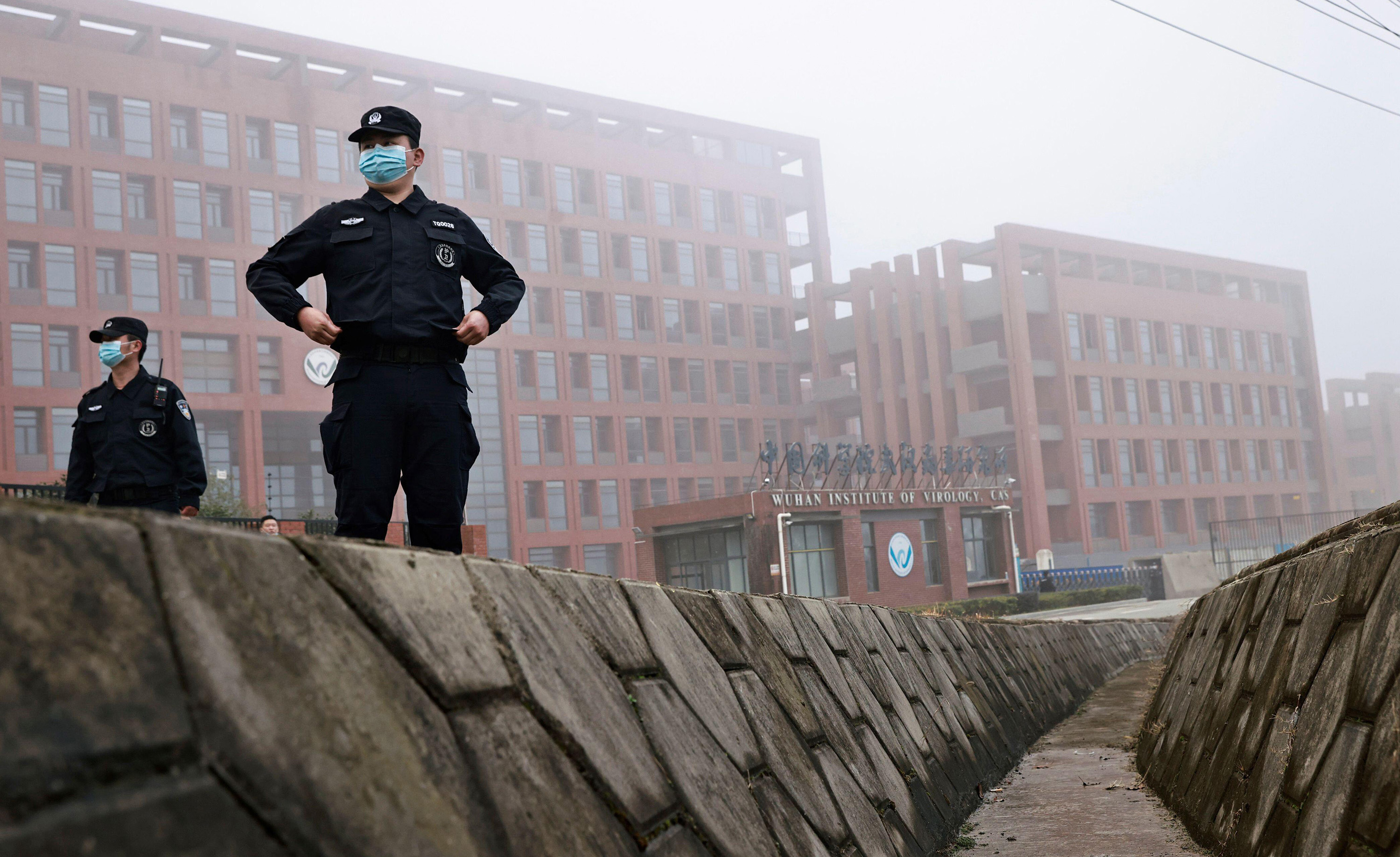
Photo By REUTERS/Thomas Peter
A group of prominent biologists say there needs to be a “safe space” for asking whether the coronavirus came out of a lab.
A year ago, the idea that the covid-19 pandemic could have been caused by a laboratory accident was denounced as a conspiracy theory by the world’s leading journals, scientists, and news organizations. But the origin of the virus that has killed millions remains a mystery, and the chance that it came from a lab has become the theory that cannot be put to rest.
Now, in a letter in the journal Science, 18 prominent biologists—including the world’s foremost coronavirus researcher—are lending their weight to calls for a new investigation of all possible origins of the virus, and calling on China’s laboratories and agencies to “open their records” to independent analysis.
“We must take hypotheses about both natural and laboratory spillovers seriously until we have sufficient data,” the scientists write.
Full Article: [Top researchers are calling for a real investigation into the origin of covid-19]
Worse Than the Disease? Reviewing Some Possible Unintended Consequences of the mRNA Vaccines Against COVID-19 | International Journal of Vaccine Theory, Practice, and Research

Abstract
Operation Warp Speed brought to market in the United States two mRNA vaccines, produced by Pfizer and Moderna. Interim data suggested high efficacy for both of these vaccines, which helped legitimize Emergency Use Authorization (EUA) by the FDA. However, the exceptionally rapid movement of these vaccines through controlled trials and into mass deployment raises multiple safety concerns. In this review we first describe the technology underlying these vaccines in detail. We then review both components of and the intended biological response to these vaccines, including production of the spike protein itself, and their potential relationship to a wide range of both acute and long-term induced pathologies, such as blood disorders, neurodegenerative diseases and autoimmune diseases. Among these potential induced pathologies, we discuss the relevance of prion-protein-related amino acid sequences within the spike protein. We also present a brief review of studies supporting the potential for spike protein “shedding”, transmission of the protein from a vaccinated to an unvaccinated person, resulting in symptoms induced in the latter. We finish by addressing a common point of debate, namely, whether or not these vaccines could modify the DNA of those receiving the vaccination. While there are no studies demonstrating definitively that this is happening, we provide a plausible scenario, supported by previously established pathways for transformation and transport of genetic material, whereby injected mRNA could ultimately be incorporated into germ cell DNA for transgenerational transmission. We conclude with our recommendations regarding surveillance that will help to clarify the long-term effects of these experimental drugs and allow us to better assess the true risk/benefit ratio of these novel technologies.
[ The Paper ]