
Information Is Power
Good, solid information is the best resource that the public can use. Primary sources when possible and good discussions and studies when informative.
Is it AI | Elon Musk and Donald Trump Danceathon | Video: 36 Seconds
Haters will say this is AI 🕺🕺 pic.twitter.com/vqWVxiYXeD
— Elon Musk (@elonmusk) August 14, 2024
The Undeniable Hate Of The Left | Elon Musk | X | Video: 59 Seconds
— Elon Musk (@elonmusk) July 30, 2024
Officer video shows Floyd struggle, then takedown
George Floyd’s struggle with three police officers trying to arrest him, seen on body-camera video, included Floyd’s panicky cries of “I’m sorry, I’m sorry” and “I’m claustrophobic!” as the officers tried to push Floyd into the back of a police SUV.
Ex-cop told onlooker George Floyd was big, ‘probably on something’

A security-camera scene of people joking around inside the store soon gave way to the sight of officers pulling Floyd from his SUV at gunpoint, struggling to push him into a squad car as he writhed, cried out and complained of being claustrophobic, and then putting him on the pavement.
MINNEAPOLIS — After the ambulance took George Floyd away, the Minneapolis officer who had pinned his knee on the Black man’s neck defended himself to a bystander by saying Floyd was “a sizable guy” and “probably on something,” according to police video played in court Wednesday.
The video was part of a mountain of footage — both official and amateur — and witness testimony at Officer Derek Chauvin ‘s murder trial that all together showed how Floyd’s alleged attempt to pass a phony $20 bill at a neighborhood market last May escalated into tragedy one video-documented step at a time.
A security-camera scene of people joking around inside the store soon gave way to the sight of officers pulling Floyd from his SUV at gunpoint, struggling to push him into a squad car as he writhed, cried out and complained of being claustrophobic, and then putting him on the pavement.
When Floyd was finally taken away by paramedics, Charles McMillian, a 61-year-old bystander who recognized Chauvin from the neighborhood, told the officer he didn’t respect what Chauvin had done.
“That’s one person’s opinion,” Chauvin could be heard responding. “We gotta control this guy ’cause he’s a sizable guy … and it looks like he’s probably on something.”
Floyd was 6-foot-4 and 223 pounds, according to the autopsy, which also found fentanyl and methamphetamine in his system. Chauvin’s lawyer said the officer is 5-foot-9 and 140 pounds.
Chauvin, 45, is charged with murder and manslaughter, accused of killing the 46-year-old Floyd by kneeling on Floyd’s neck for 9 minutes, 29 seconds, as he lay face-down in handcuffs. The most serious charge against the now-fired white officer carries up to 40 years in prison.
Floyd’s death, along with the harrowing bystander video of him gasping for breath as onlookers yelled at Chauvin to get off him, triggered sometimes violent protests around the world and a reckoning over racism and police brutality across the U.S.
Jurors were shown police bodycam video of the approximately 20 minutes between when police approached Floyd’s vehicle and when he was loaded into the ambulance.
Officers were clearly exasperated and could be heard cursing as Floyd braced himself against the squad car and arched his body while the police tried to get him inside. He resisted going in, saying over and over that he was claustrophobic. At one point, he threw his upper body out of the car, and officers tried to push him back in.
Once in the backseat, he twisted and writhed, and officers eventually pulled him out and brought him to the ground. Floyd thanked officers as they took him out of the squad car.
Once Floyd was on the ground — with Chauvin’s knee on his neck, another officer’s knee on his back and a third holding his legs — the officers talked calmly about whether he might be on drugs.
Officer Thomas Lane was heard saying officers found a “weed pipe” on Floyd and wondered if he might be on PCP, saying Floyd’s eyes were shaking back and forth fast.
“He wouldn’t get out of the car. He just wasn’t following instructions,” Lane was recorded saying. The officer also asked twice if the officers should roll Floyd on his side, and later said calmly that he thinks Floyd is passing out.
As Floyd was pinned down by Chauvin and other officers, McMillian, the bystander, could be heard on video saying to Floyd, “You can’t win” and “Get up and get in the car.”
Floyd replied: “I can’t.”
The defense has argued that Chauvin did what he was trained to do and that Floyd’s death was not caused by the officer’s knee, as prosecutors contend, but by Floyd’s illegal drug use, heart disease, high blood pressure and the adrenaline flowing through his body.
Events spun out of control earlier that day soon after Floyd allegedly handed a cashier at Cup Foods, 19-year-old Christopher Martin, a counterfeit bill for a pack of cigarettes.
Martin testified Wednesday that he watched Floyd’s arrest outside with “disbelief — and guilt.”
“If I would’ve just not tooken the bill, this could’ve been avoided,” Martin lamented, joining the burgeoning list of witnesses who expressed a sense of helplessness and lingering guilt over Floyd’s death.
Martin said he immediately believed the $20 bill was fake. But he said he accepted it, despite believing the amount would be taken out of his paycheck by his employer, because he didn’t think Floyd knew it was counterfeit and “I thought I’d be doing him a favor.”
Martin then second-guessed his decision and told a manager, who sent Martin outside to ask Floyd to return to the store. But Floyd and a passenger in his SUV twice refused to go back into the store to resolve the issue, and the manager had a co-worker call police, Martin testified.
Martin said that when Floyd was inside the store buying cigarettes, he spoke so slowly “it would appear that he was high.” But he described Floyd as friendly and talkative.
After police arrived, Martin went outside as people were gathering on the curb and yelling at officers. He said he saw Officer Tou Thao push one of his co-workers. Martin said he also held back another man who was trying to defend himself after being pushed by Thao.
Wednesday morning’s testimony was briefly interrupted when a juror stood and raised her hand and gestured toward the door. She later told the judge that she had been feeling stress and having trouble sleeping, but told the judge she was OK to proceed.
Why the Media Uses George Floyd for Their Systemic Racism Narrative | Larry Elder
According to the Democrats and mainstream media, George Floyd’s death represents police engagement in systemic racism. Never mind the fact that research shows the police are more hesitant and reluctant to use force on a black suspect than a white suspect. In this episode, Larry shares three stories that arguably demonstrate systemic racism but that didn’t make the media hyperventilation cut. He also shares why the media hand-picks tragedies to fit the narrative and manipulate the masses. Larry Elder with Epoch Times show available on YouTube, Rumble, Youmaker, and The Epoch Times website. It also airs on cable on NTD America. Find out where you can watch us on TV.
Derek Chauvin Defense Blames “George Floyd Himself for His Own Death,” Not the Police “Blood Choke”
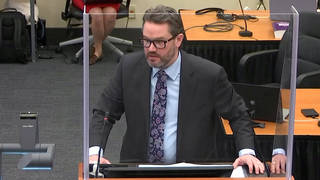
As the murder trial of former police officer Derek Chauvin continues, we speak with Minneapolis civil rights lawyer Nekima Levy Armstrong, who says prosecutors in the case clearly established that “the actions of Derek Chauvin played the most critical role in cutting off the air supply of George Floyd,” leading to his death, while the defense appears to be resorting to a strategy of victim-blaming. “I was really dismayed to see them try to deflect blame to bystanders and to blame George Floyd himself for his own death,” says Armstrong, a former president of the Minneapolis NAACP.
Teen who shot George Floyd video says he was “begging for his life”
MINNEAPOLIS — The teenager who shot the harrowing video of George Floyd under the knee of the Minneapolis police officer now charged in his death testified Tuesday that she began recording because “it wasn’t right, he was suffering, he was in pain.”
Darnella Frazier, 18, said she was walking to a convenience store with her younger cousin when she came upon the officers, and sent the girl into the store because she didn’t want her to see “a man terrified, scared, begging for his life.”
Frazier grew emotional at times, breathing heavily and crying as she viewed pictures of officer Derek Chauvin kneeling on Floyd last May.
Floyd’s death and the video of Floyd pleading for his life and onlookers angrily yelling at Chauvin to get off him triggered sometimes-violent protests around the world and a reckoning over racism and police brutality in the U.S.
One of the bystanders, who identified herself as a Minneapolis firefighter, pleaded repeatedly with officers to check Floyd’s pulse, but Chauvin continued to kneel on Floyd’s neck, and he and fellow officer Tou Thao wouldn’t let onlookers get close, Frazier said.
“They definitely put their hands on the Mace and we all pulled back,” she told the jury.
Frazier said of Chauvin: “He just stared at us, looked at us. He had like this cold look, heartless. He didn’t care. It seemed as if he didn’t care what we were saying.”
Chauvin attorney Eric Nelson sought to show that Chauvin and his fellow officers found themselves in an increasingly tense and distracting situation, with the growing crowd of onlookers becoming agitated and menacing over Floyd’s treatment.
But when Frazier was asked by a prosecutor whether she saw violence anywhere on the scene, she replied: “Yes, from the cops. From Chauvin, and from officer Thao.”
When asked to identify the officer, Chauvin stood up in the courtroom and took off his mask, appearing somber as he looked down and away before putting his mask on.
Earlier Tuesday, a man who was among the onlookers shouting at Chauvin to get off Floyd testified that he called 911 after paramedics took Floyd away, “because I believed I witnessed a murder.”
Donald Williams, a former wrestler who said he was trained in mixed martial arts, including chokeholds, returned to the witness stand a day after describing seeing Floyd struggle for air and his eyes roll back into his head. He said he watched Floyd “slowly fade away … like a fish in a bag.”
On Tuesday, prosecutors played back Williams’ 911 call, on which he is heard identifying Chauvin by his badge number and telling the dispatcher that Chauvin had been keeping his knee on Floyd’s neck despite warnings that Floyd’s life was in danger. She offers to switch him to a sergeant.
As he is being switched, Williams can he heard yelling at the officers, “Y’all is murderers, bro!”
During cross-examination, Chauvin attorney Eric Nelson pointed out that Williams seemed to grow increasingly angry at police on the scene, swearing at and taunting Chauvin with “tough guy,” “bum” and other names, then calling Chauvin expletives, which the defense lawyer repeated in court.
Williams initially admitted he was getting angrier, but then backtracked and said he was controlled and professional and was pleading for Floyd’s life but wasn’t being heard.
Williams said he was stepping on and off the curb, and at one point, Thao, who was controlling the crowd, put his hand on Williams’ chest. Williams admitted under questioning that he told Thao he would beat the officers if Thao touched him again.
Williams was among the first witnesses as Chauvin, 45, went on trial on charges of murder and manslaughter in Floyd’s death.
Prosecutors led off their case by playing part of the bystander video of Floyd’s arrest. Chauvin and three other officers were fired soon after the footage became public.
Prosecutor Jerry Blackwell showed the jurors the video after telling them that the number to remember was 9 minutes, 29 seconds — the amount of time Chauvin had Floyd pinned to the pavement “until the very life was squeezed out of him.”
Nelson countered by arguing: “Derek Chauvin did exactly what he had been trained to do over his 19-year career.”
The defense attorney also disputed that Chauvin was to blame for Floyd’s death, as prosecutors contend.
Floyd, 46, had none of the telltale signs of asphyxiation and had fentanyl and methamphetamine in his system, Nelson said. He said Floyd’s drug use, combined with his heart disease, high blood pressure and the adrenaline flowing through his body, caused a heart rhythm disturbance that killed him.
Firefighter says police did not allow her to help George Floyd on scene
A firefighter who gave eyewitness testimony Tuesday at former Minneapolis police officer Derek Chauvin’s trial said police did not allow her to give lifesaving aid to George Floyd as Chauvin pressed his knee into the unarmed Black man’s neck.
Genevieve Hansen, 27, said that when she arrived at the scene, she saw multiple officers “leaning over” Floyd’s body and appearing to press “the majority of their weight” into him.
“He was not moving,” Hansen said of Floyd. “The first thing that concerned me was his face was like … smushed into the ground, swollen.”
Ben Shapiro: No, the Derek Chauvin trial isn’t a referendum on American racism
The following article, Ben Shapiro: No, the Derek Chauvin trial isn’t a referendum on American racism, was first published on BizPac Review.

Op-ed views and opinions expressed are solely those of the author. Since the death of George Floyd, our esteemed media, as well as their Democratic allies, have […]
Continue reading Ben Shapiro: No, the Derek Chauvin trial isn’t a referendum on American racism …
‘Very Few’ Disparities Linked to Racism: UK Commission
British society is not rigged against ethnic minorities and very few racial disparities are caused by racism, an independent review has found. The review was published on Wednesday by the independent Commission on Race and Ethnic Disparities, which was set up by Prime Minister Boris Johnson in July 2020 to examine inequality in the UK in the wake of Black Lives Matter (BLM) protests over the death of George Floyd. “Put simply we no longer see a Britain where the system is deliberately rigged against ethnic minorities,” said Dr. Tony Sewell, a veteran education consultant who chairs the Commission, in the report’s foreword. “The impediments and disparities do exist, they are varied, and ironically very few of them are directly to do with racism.” Instead, “the evidence shows that geography, family influence, socio-economic background, culture, and religion have more significant impact on life chances than the existence of racism,” he …
Derek Chauvin’s bodycam seen discarded under patrol car during George Floyd’s arrest
- Derek Chauvin’s murder trial continued for a third day on Wednesday in Minneapolis
- The prosecution played never-before-seen footage from Chauvin’s body camera, showing his perspective as he approached Floyd
- He was seen with his hands around Floyd’s neck as he and Officer Thomas Lane struggled to get him into a squad car
- After a chaotic, blurred portion of footage, Chauvin’s camera fell to the tarmac
- In footage recorded by Lane’s body camera, Chauvin’s camera could be seen lying beneath the squad car
- It’s unclear exactly how the camera came to be on the ground during the confrontation
‘Forgive Me’: CNN’s Brooke Baldwin Chokes Up After Witness Becomes Emotional At Derek Chauvin Trial
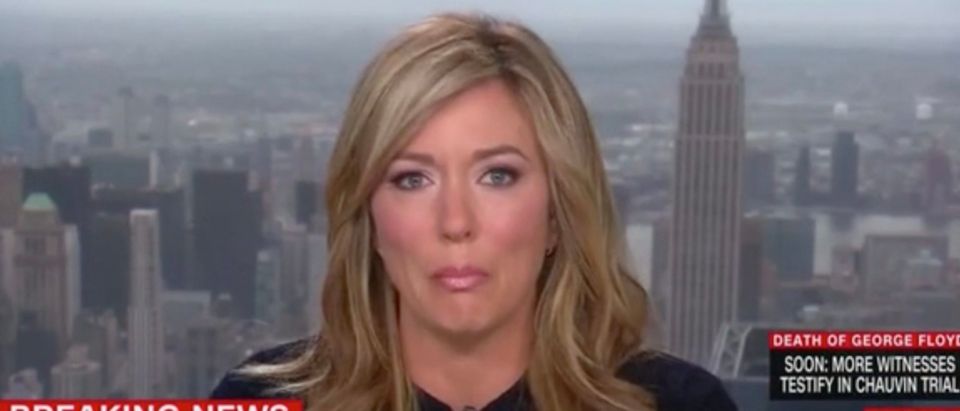
CNN’s Brooke Baldwin choked up live on air Wednesday after watching a witness in the Derek Chauvin trial become emotional while testifying.
Baldwin and CNN analyst Elie Honig were watching the trial during the broadcast of “CNN Newsroom” when witness Charles McMillan broke down crying while watching video evidence of George Floyd’s arrest, prompting the court to recess.
Christopher Martin Says He Regrets Accepting Fake Bill From George Floyd

The teenage store clerk who first confronted George Floyd about his use of a fake $20 bill said in court on Wednesday that he felt “disbelief and guilt” when he saw Derek Chauvin kneeling on Mr. Floyd’s neck in front of the store after a co-worker called 911.
The clerk, Christopher Martin, 19, said he had quickly recognized that the $20 bill that Mr. Floyd used to buy cigarettes at the Cup Foods convenience store on May 25 appeared to be fake. At the urging of a manager, Mr. Martin twice went outside to Mr. Floyd’s car and asked him to come inside the store to pay for the cigarettes or talk with the manager.
Mr. Martin said he thought Mr. Floyd, unlike a friend of Mr. Floyd’s who had tried to use a fake bill earlier that day, had not realized that the bill was fake. “I thought I’d be doing him a favor” by accepting it, Mr. Martin said.
Pelosi Might Steal an Iowa House Seat
With her narrow majority, the Speaker could pull a trick from the Gilded Age by challenging the minority’s narrow or suspect victories and replacing them with their own or declaring the seat vacant, provoking a time-consuming special election. Between the 44th Congress (1875-77) and the 58th (1903-05), the parties flipped a total of 59 seats through such challenges.
Lawyer Linked to Steele Dossier is Working for House Dems to Overturn Results of Iowa Election
by Chuck Ross
House Democrats have hired Marc Elias (pictured above, right), the elections lawyer linked to the infamous Steele dossier, to help in their bid to overturn the results of an Iowa House race won by a Republican incumbent.
According to Politico, the Democratic Congressional Campaign Committee (DCCC) is paying Elias to represent the campaign of Rita Hart, a Democrat who lost by six votes to Rep. Mariannette Miller-Marks.
Hart has appealed to Congress to adjudicate the outcome of the election after state officials declared Miller-Marks the winner. Hart claims that Iowa officials failed to count 22 ballots that would have swayed the election in her favor.
 House Democrats will have significant control over the appeals process, raising concerns among Republicans that the process will be rigged against them. The House Administration Committee, which is chaired by Rep. Zoe Lofgren, a close ally of House Speaker Nancy Pelosi, will hear part of the Hart appeal. The entire House will have to vote to overturn the results of the contest.
“Federal law provides that this contest is the proper avenue to ensure that all legal ballots are counted and we have presented credible evidence to support their inclusion in the final tally,” Elias said in a statement issued through the DCCC, according to Politico.
Elias has suffered one major loss during the 2020 election cycle. He represented the campaign for Ted Brindisi, an incumbent Democrat who challenged his loss to Claudia Tenney in a New York House race.
Elias alleged that “irregularities” in voting machines switched votes from Brindisi to Tenney. The case drew some national attention because the argument mirrored Republicans’ baseless claims that voting machine irregularities were responsible for Donald Trump losing to President Joe Biden in some states.
A judge ruled in favor of Tenney on Feb. 5 after finding insufficient evidence of any widespread problems with voting machines.
Elias, a partner at the firm Perkins Coie, is perhaps best known outside Democratic circles for his links to the Steele dossier.
Elias was the attorney who hired Fusion GPS on behalf of the DNC and Clinton campaign to investigate Donald Trump’s possible ties to Russia. As part of the project, Fusion GPS hired former British spy Christopher Steele to conduct the investigation.
Perkins Coie paid Fusion GPS just over $1 million for the project.
Elias “vigorously” denied any involvement in the dossier before it was reported that the Clinton campaign and DNC had funded the project. A New York Times reporter said in October 2017, after details of the dossier were first revealed, that Elias had falsely told him he had no link to the dossier.
The dossier’s most significant claims remain either uncorroborated or have been discredited outright. Steele claimed in the dossier that the Trump campaign was involved in a “well-developed conspiracy of cooperation” with the Kremlin to influence the 2016 election.
Federal investigators ultimately found no evidence of a conspiracy between the Trump campaign and Russia.
– – –
Chuck Ross is a reporter at Daily Caller News Foundation.
The post Lawyer Linked to Steele Dossier is Working for House Dems to Overturn Results of Iowa Election appeared first on The Georgia Star News.
Israel Election Results Show Stalemate
TEL AVIV — Israel’s fourth election in two years has ended in another stalemate, with neither Prime Minister Benjamin Netanyahu nor his opponents able to win a parliamentary majority, according to final results released Thursday by the Israeli election authority.
The results set the stage for weeks or even months of protracted coalition negotiations that many analysts expect may fail, prompting yet another election in late summer.
Côte d’Ivoire: Hundreds arrested languishing in detention following presidential election unrest
-
Six detainees allegedly tortured while in custody
-
Overuse of pre-trial detentions and violation of fair trials
-
Dire conditions of detention aggravated by COVID-19
-
Progress noted in investigations into electoral violence
Hundreds of people in Côte d’Ivoire are languishing in dire conditions in prison after being arrested during violence and election-related protests last year, including many who are in pre-trial detention with limited access to lawyers, Amnesty International said today.
The organization interviewed 52 people during a mission in Côte d’Ivoire last month, including former detainees, families of detainees, lawyers, victims of violence and activists. Researchers also met with authorities to assess the judicial response to the protests and violence that occurred between August and November 2020, surrounding the presidential election in October.
At least 300 people including activists, protesters, opposition supporters, and alleged perpetrators of violence from across the political spectrum have been arrested and detained. It was not possible to ascertain the exact number of people currently in detention in the context of these events as the authorities did not provide this information, and Amnesty delegates were not allowed to visit the prisons despite a formal request.
“Detainees are suffering dire conditions in already overcrowded prisons. Many of them have limited access to lawyers or medical treatment, and current COVID-19 restrictions impede visits from their families. They must be treated humanely and must be able to communicate with their families and lawyers,” said Samira Daoud, Amnesty International West and Central Africa Director.
“We call on authorities in Côte d’Ivoire to put an end to the systematic use of pre-trial detention, especially, to immediately and unconditionally release those arbitrarily detained and to expedite proceedings for the other detainees in due respect of the rights of the defense.”
Amnesty International welcomes the progress that has been made in investigating the violence that raged between supporters of the ruling and the opposition parties in many towns, as families of victims of killings during such violence are still in need of justice, truth and reparations. The delegation noted that investigations are ongoing, and some arrests have already been made.
However, the organization documented several human rights violations linked with the judicial process of protesters and other people, including arbitrary arrests, systematic pre-trial detention, lack of legal assistance, allegations of torture or other ill-treatment, and poor detention conditions.
Arbitrary detentions
In August 2020, demonstrations were called by opposition parties to denounce President Alassane Ouattara’s candidacy for a third term. From that point on, many people were arbitrarily arrested, including opposition members and civil society activists, for exercising their rights to freedom of expression and peaceful assembly.
Although some people have since been released after having spent days, weeks, or months in detention, many remain behind bars. Among them is Pulchérie Edith Gbalet, the president of social justice organization Alternative Citoyenne Ivoirienne (ACI).
Pulchérie was arrested on 15 August 2020 by masked individuals after she called for peaceful demonstrations. She was charged with compromising public order, participation in an insurrectionary movement, undermining the state’s authority, willful destruction of public properties, and causing a gathering.
Three of her colleagues, Gbaou Gedeon Junior, Kouakou N’Goran Aime Cesar and Djehi Bi Cyrille were arrested on the same charges. They all remain in detention at MACA central prison in Abidjan.
“Pulchérie Edith Gbalet, her three colleagues and other people arbitrarily detained must be immediately and unconditionally released. They must be allowed to return to their family safely and be able to continue with their legitimate activist work,” said Michèle Eken, Amnesty International West Africa researcher.
The organization documented several cases of people who were arbitrarily detained, including many who did not participate in the protests.
One businessman was arrested in November 2020 on his way to his office, which is near the headquarters of an opposition party. He is still detained at MACA after being charged with public disorder.
Another detainee was arrested in August 2020 while going to a pharmacy on a day that protests were occurring and has been in pre-trial detention ever since.
Systematic pre-trial detention and inadequate legal assistance
Many of those arrested in connection with the protests and violence have been in pre-trial detention for months. Many did not have access to a lawyer from the moment they were detained and appeared in front of the investigating judge without a lawyer to dispute the charges and the need for detention.
“Pre-trial detention should be the exception, not the norm. It should never be used as an advance punishment for people who have not been – and may never be- found guilty. It is important to respect the presumption of innocence and the right to fair trial of all people subject to criminal charges, including the right to have a lawyer,” said Samira Daoud.
Allegations of torture
Six individuals were allegedly forced to accept the charges against them after being subject to torture or other ill-treatment.
One man who was arrested on 31 October 2020 spent nearly a month at the Directorate for the Surveillance of the Territory (DST) where he and five others were allegedly tortured with power lead and tasers, then beaten with machetes, before signing the statements that they were not allowed to read. They were then transferred to MACA.
A youth leader of an opposition party was arrested in November, handcuffed, and taken to the DST where he was allegedly punched and beaten before being charged with eight counts, including disturbing public order and conspiracy against the state.
Another man who was arrested on 18 October spent six days at the DST where he was allegedly beaten with machetes and power leads.
“Authorities in Côte d’Ivoire must immediately launch independent, impartial and effective investigations into allegations that some detainees were tortured and threatened while in custody,” said Michèle Eken.
Dire prison conditions
Lawyers and authorities told Amnesty International that most detainees, including those arrested in other towns, are being held at MACA central prison.
As of January 2020, the prison held 7,782 people more than half pre-trial detainees, far beyond its capacity for 1,500. Eyewitnesses described how the MACA has become more overcrowded following the wave of arrests between August and November last year.
As well as severe overcrowding, they described unsanitary conditions that led to illnesses. At least one detainee who arrived at MACA in August tested positive for COVID-19. Another was not allowed to shower for three days.
In the women’s section of the prison, former detainees said they showered, washed dishes and did laundry in the same hot and mosquito-filled cell.
Ill-health made worse by lack of medical care
At least one person arrested surrounding those events and held at MACA has died.
Aristide Ahui died on 9 March 2021 after he was transferred to the hospital. He had been arrested on 29 October 2020 for undermining the state authority while he was on his way to get drinks and had then been detained at MACA prison pending his trial. His right foot was paralyzed, and his health quickly deteriorated while he was in pre-trial detention.
According to information received by Amnesty International, Aristide Ahui’s condition got so bad that he was unable to speak or move. He was transferred to the hospital once early in February this year then sent back to prison where his condition deteriorated.
Following pressure from several figures, Aristide Ahui was hospitalized again at ‘’CHU Cocody’’ hospital at the end of February, where he died on 9 March. The hospital bills were covered by his family.
A family member told Amnesty International:
“After his arrest I was unable to visit him due to COVID-19 restrictions. They searched the house. He did not have a lawyer. He was not sick before his arrest. I was told he first suffered from tuberculosis. He was chained to the hospital bed.”
Another detainee had been arrested on 13 August along with dozens of others, charged with public disorder and sent to MACA prison. He was diagnosed with a heart condition before being arrested and has been unable to see a heart specialist since his detention. He was sent to the hospital when he arrived at the prison as he could not breathe well due to chest pain. He was given a weeklong treatment of antibiotics, which helped him feel a bit better but he later relapsed.
“As prison overcrowding worsens, and amid the ongoing COVID-19 pandemic, we reiterate our call on authorities to ensure more people are released, in particular detainees with underlying medical conditions, in accordance with the recommendations of the African Commission on Human and Peoples’ Rights,’’ said Samira Daoud.
“Authorities should ensure that pre-trial detention is only used as a measure of last resort.”
More Democrats Express Alarm Over House Leadership’s Bid to Overturn Iowa Election Results
Several Democratic lawmakers have expressed alarm at House Democrats’ bid to overturn the results of Iowa’s 2nd Congressional District election in favor of Democrat Rita Hart. “I’m sorry, I cannot support overturning an election, especially given everything that’s gone on,” Rep. Elissa Slotkin (D-Mich.), a swing district Democrat, told the “Skullduggery” podcast. “I can’t turn […]
The post More Democrats Express Alarm Over House Leadership’s Bid to Overturn Iowa Election Results appeared first on NTD.
New Election Lawsuits
Pelosi Congress Assault on Election Integrity Raises Constitutional Questions
Lawsuit: 2,400 Illegal Alien Criminals Released under San Francisco Sheriff’s Office Sanctuary Policy
Judicial Watch Sues Georgia Secretary of State for Records about Changes to Processing of Absentee Ballots in 2020 Election, and 2021 Trump/Raffensperger Call
Fauci Update: Judicial Watch Sues for NIH Funding and Other Records Tied to China’s Wuhan Institute of Virology
Judicial Watch Sues OPM for Records on Agency Personnel Classes, Seminars in China; Breach of OPM Data
Pelosi Congress Assault on Election Integrity Raises Constitutional Questions
Robert Popper is a Judicial Watch senior attorney who served as the deputy chief of the voting section of the Civil Rights Division of the U.S. Department of Justice from 2008 to 2013. In the following op-ed for The Hill he reveals the massive power grab the Left plans on elections across the land:
Ever since House Resolution 1, the Democrats’ 886-page partisan wish list of a voting bill, passed the House on a party-line vote earlier this month, its critics have had a lot to say. They correctly point out that the bill federalizes election law on a historically unprecedented scale, systematically impairs existing federal and state laws concerning election integrity, and imposes new burdens and restrictions on political speech and activity. All of this is apparent from the text of the bill.
Less obvious — indeed, almost hidden from anyone who does not specialize in voting law — is a provision of H.R. 1 requiring states to draw federal congressional districts in a way that favors Democrats: “Districts shall comply with the Voting Rights Act … including by creating any districts where two or more politically cohesive groups protected by such Act are able to elect representatives of choice in coalition with one another.” The bill adds that districts must “ensure the practical ability” of such groups to “elect representatives of choice … regardless of whether or not such protected group constitutes a majority” of a district.
“In coalition with one another” — these innocent-seeming words are, in fact, an attempt to reverse particular rulings of the Supreme Court and compel the drawing of what are known as “coalition” districts specially constructed to ensure Democratic majorities.
The checkered history of coalition districts is bound up with cases interpreting Section 2 of the Voting Rights Act, which forbids any practice that causes members of a racial group to “have less opportunity than other members of the electorate to participate in the political process and to elect representatives of their choice.” This clause has long been interpreted to forbid at-large elections where these allow a racial majority to dominate a racial minority.
Here is how this might happen: In an at-large election for, say, a city council of seven members, every member is elected by the entire population of the city; if voting is racially polarized, a racial majority of only 55 percent of the city’s voters has the power to elect all seven council members, effectively denying the large minority any representation whatsoever. The remedy for this kind of violation of Section 2 is the imposition of electoral districts. These allow the city-wide minority a chance to prevail locally in at least a few of those districts. But before compelling such a remedy — that is, before throwing out a jurisdiction’s chosen electoral system and imposing a district plan — the Supreme Court logically requires that a racial minority at least have a chance of forming a majority in one of the new districts.
In the intervening years, the plaintiffs suing to enforce Section 2 have most often been Black or Hispanic voters. In any particular jurisdiction, they may not have sufficient numbers to make up a majority in a new district. Further, many of these voters tend to vote for Democrats, and the requirement that they be placed in districts where they can form a majority often conflicts with the desire of Democratic operatives that they be placed strategically to maximize the party’s electoral chances.
Enter the concept of coalition districts. Suppose there are too few black voters to form a majority in a new district. The idea is that, if enough white voters join them, or if enough Hispanic or other minority voters join them, and if this “coalition” is large enough to constitute a voting majority in that district, then drawing it becomes legally necessary to ensure minority voters’ opportunity “to elect representatives of their choice.”
This is a transparent partisan trick. What special interest do minority voters in such a district share with other minority or majority voters who may join them to form a majority? The only answer is that they all intend to vote the same way. . . .
Trump Lauds Georgia Republicans for Enacting Election Reforms
Former President Donald Trump on March 26 praised the Republicans in Georgia for passing and enacting a package of election reforms. “Congratulations to Georgia and the Georgia State Legislature on changing their voter Rules and Regulations. They learned from the travesty of the 2020 Presidential Election, which can never be allowed to happen again. Too bad these changes could not have been done sooner!” Trump said in a statement released via his Save America political action committee. Georgia Gov. Brian Kemp on March 25 signed a package of election reform bills into law. The newly-enacted measure will require absentee voters to provide a copy of their photo ID and enhance security measures for ballot drop boxes, among other changes. Kemp wrote on Twitter that the omnibus bill will ensure that Georgia’s elections are “secure, fair, and accessible.” The 95-page bill passed the state House by a 100-75 vote and the …
Michigan GOP claims they can sidestep Gov Whitmer and ensure ‘fair, safe, and open’ elections in 2022 (Video)

Michigan Republicans have introduced a whole slew of proposed election reforms and they believe they have a veto-proof way to sidestep Democrat Gov. Gretchen Whitmer to ensure a chance at a fair election in 2022. […]
Continue reading Michigan GOP claims they can sidestep Gov Whitmer and ensure ‘fair, safe, and open’ elections in 2022 …
Zuckerberg’s Election Rigging Group Sends VP to Be Biden’s Tech Director.
A former Vice President of the Chan Zuckerberg Initiative – which funneled $350,000,000 to the Center for Tech and Civic Life – now serves as Special Assistant to the President and Director of Technology in the Biden White House…
The post Zuckerberg’s Election Rigging Group Sends VP to Be Biden’s Tech Director. appeared first on The National Pulse.