
Information Is Power
Good, solid information is the best resource that the public can use. Primary sources when possible and good discussions and studies when informative.
Is it AI | Elon Musk and Donald Trump Danceathon | Video: 36 Seconds
Haters will say this is AI 🕺🕺 pic.twitter.com/vqWVxiYXeD
— Elon Musk (@elonmusk) August 14, 2024
The Undeniable Hate Of The Left | Elon Musk | X | Video: 59 Seconds
— Elon Musk (@elonmusk) July 30, 2024
In rural Minnesota, where cops and community are familiar, Derek Chauvin trial looks different

Waseca County Deputy Sheriff Doug Gerdts | Photo By Richard Tsong-Taatarii, Star Tribune
Waseca County Deputy Sheriff Doug Gerdts said that he knows there are people who feel they have been treated negatively by law enforcement, but he does his best to keep interactions positive.
WASECA – When Doug Gerdts was growing up on a Waseca County farm, he heard stories about Great-uncle Don. Don Eustice had been the sheriff until he was shot and killed in 1976 while conducting a welfare check.
Gerdts never met his great-uncle, but Eustice was a legend in the boy’s mind. In family lore, the sheriff played by his own rules. He would take in a troubled youth instead of putting him in jail. He once brought his sons to a grocery store robbery and had the 8-year-old dust for fingerprints.
In the two decades Gerdts has worked as a sheriff’s deputy in Waseca County, things have changed in law enforcement. And tension from incidents like George Floyd’s death, which happened an hour’s drive north, have reverberated even in this rural expanse of farms, lakes and prairie.
One thing about the job, however, stays the same: Law enforcement officers here are people, neighbors, not some anonymous badge.
Vaccinations Rise, but Variants and Factory Mix-Up Present Hurdles
Officials worry that the debacle at a Baltimore plant that ruined 15 million doses of the Johnson & Johnson vaccine will erode public confidence just when states are expanding capacity to deliver shots.
Iowa governor signs bill allowing permitless purchase, carry of handguns
Iowa Gov. Kim Reynolds (R) on Friday signed a bill that allows people to purchase and carry handguns in the state without a permit.”Today I s…
Beijing Accelerating Timeline for Possible Invasion of Taiwan, Expert Warns
TAIPEI, Taiwan—The Chinese communist regime is accelerating its plans to invade Taiwan, an expert warns, as Beijing ratchets up military maneuvers against the island. Twenty Chinese military aircraft—including four nuclear-capable H-6K bombers, 10 J-16 fighter jets, two Y-8 anti-submarine warfare aircraft, and a KJ-500 airborne early warning and control aircraft—entered Taiwan’s air defense identification zone (ADIZ) on March 26, according to Taiwan’s Ministry of National Defense. It was the largest incursion ever reported by the ministry. Taiwan’s ADIZ, located adjacent to the island’s territorial airspace, is an area where incoming planes must identify themselves to the island’s air traffic controller. The incursion caps off a significant increase in hostility by Beijing against Taiwan since 2020. Taiwan’s President Tsai Ing-wen, re-elected last January, has taken a hard line against threats posed by the Chinese Communist Party (CCP), while the island has deepened its cooperation with the United States—prompting the regime to …
Crowds gather at holy sites across Jerusalem for Easter as the country unlocks
Many holy sites in Israel were open for Easter, thanks to the country’s ambitious vaccination campaign that has seen more than half its population receive two doses.
Commentary: History of Easter
by Brent Landau
Today we celebrate Easter, the day on which the resurrection of Jesus is said to have taken place. The date of celebration changes from year to year.
The reason for this variation is that Easter always falls on the first Sunday after the first full moon following the spring equinox.
I am a religious studies scholar specializing in early Christianity, and my research shows that this dating of Easter goes back to the complicated origins of this holiday and how it has evolved over the centuries.
Easter is quite similar to other major holidays like Christmas and Halloween, which have evolved over the last 200 years or so. In all of these holidays, Christian and non-Christian (pagan) elements have continued to blend together.
Easter as a rite of spring
Most major holidays have some connection to the changing of seasons. This is especially obvious in the case of Christmas. The New Testament gives no information about what time of year Jesus was born. Many scholars believe, however, that the main reason Jesus’ birth came to be celebrated on December 25 is because that was the date of the winter solstice according to the Roman calendar.
Since the days following the winter solstice gradually become longer and less dark, it was ideal symbolism for the birth of “the light of the world” as stated in the New Testament’s Gospel of John.
Similar was the case with Easter, which falls in close proximity to another key point in the solar year: the vernal equinox (around March 20), when there are equal periods of light and darkness. For those in northern latitudes, the coming of spring is often met with excitement, as it means an end to the cold days of winter.
Spring also means the coming back to life of plants and trees that have been dormant for winter, as well as the birth of new life in the animal world. Given the symbolism of new life and rebirth, it was only natural to celebrate the resurrection of Jesus at this time of the year.
The naming of the celebration as “Easter” seems to go back to the name of a pre-Christian goddess in England, Eostre, who was celebrated at beginning of spring. The only reference to this goddess comes from the writings of the Venerable Bede, a British monk who lived in the late seventh and early eighth century. As religious studies scholar Bruce Forbes summarizes:
“Bede wrote that the month in which English Christians were celebrating the resurrection of Jesus had been called Eosturmonath in Old English, referring to a goddess named Eostre. And even though Christians had begun affirming the Christian meaning of the celebration, they continued to use the name of the goddess to designate the season.”
Bede was so influential for later Christians that the name stuck, and hence Easter remains the name by which the English, Germans and Americans refer to the festival of Jesus’ resurrection.
The connection with Jewish Passover
It is important to point out that while the name “Easter” is used in the English-speaking world, many more cultures refer to it by terms best translated as “Passover” (for instance, “Pascha” in Greek) – a reference, indeed, to the Jewish festival of Passover.
In the Hebrew Bible, Passover is a festival that commemorates the liberation of the Jewish people from slavery in Egypt, as narrated in the Book of Exodus. It was and continues to be the most important Jewish seasonal festival, celebrated on the first full moon after the vernal equinox.
At the time of Jesus, Passover had special significance, as the Jewish people were again under the dominance of foreign powers (namely, the Romans). Jewish pilgrims streamed into Jerusalem every year in the hope that God’s chosen people (as they believed themselves to be) would soon be liberated once more.
On one Passover, Jesus traveled to Jerusalem with his disciples to celebrate the festival. He entered Jerusalem in a triumphal procession and created a disturbance in the Jerusalem Temple. It seems that both of these actions attracted the attention of the Romans, and that as a result Jesus was executed around the year A.D. 30.
Some of Jesus’ followers, however, believed that they saw him alive after his death, experiences that gave birth to the Christian religion. As Jesus died during the Passover festival and his followers believed he was resurrected from the dead three days later, it was logical to commemorate these events in close proximity.
Some early Christians chose to celebrate the resurrection of Christ on the same date as the Jewish Passover, which fell around day 14 of the month of Nisan, in March or April. These Christians were known as Quartodecimans (the name means “Fourteeners”).
By choosing this date, they put the focus on when Jesus died and also emphasized continuity with the Judaism out of which Christianity emerged. Some others instead preferred to hold the festival on a Sunday, since that was when Jesus’ tomb was believed to have been found.
In A.D. 325, the Emperor Constantine, who favored Christianity, convened a meeting of Christian leaders to resolve important disputes at the Council of Nicaea. The most fateful of its decisions was about the status of Christ, whom the council recognized as “fully human and fully divine.” This council also resolved that Easter should be fixed on a Sunday, not on day 14 of Nisan. As a result, Easter is now celebrated on the first Sunday after the first full moon of the vernal equinox.
The Easter bunny and Easter eggs
In early America, the Easter festival was far more popular among Catholics than Protestants. For instance, the New England Puritans regarded both Easter and Christmas as too tainted by non-Christian influences to be appropriate to celebrate. Such festivals also tended to be opportunities for heavy drinking and merrymaking.
The fortunes of both holidays changed in the 19th century, when they became occasions to be spent with one’s family. This was done partly out of a desire to make the celebration of these holidays less rowdy.
But Easter and Christmas also became reshaped as domestic holidays because understandings of children were changing. Prior to the 17th century, children were rarely the center of attention. As historian Stephen Nissenbaum writes,
“…children were lumped together with other members of the lower orders in general, especially servants and apprentices – who, not coincidentally, were generally young people themselves.”
From the 17th century onward, there was an increasing recognition of childhood as time of life that should be joyous, not simply as preparatory for adulthood. This “discovery of childhood” and the doting upon children had profound effects on how Easter was celebrated.
It is at this point in the holiday’s development that Easter eggs and the Easter bunny become especially important. Decorated eggs had been part of the Easter festival at least since medieval times, given the obvious symbolism of new life. A vast amount of folklore surrounds Easter eggs, and in a number of Eastern European countries, the process of decorating them is extremely elaborate. Several Eastern European legends describe eggs turning red (a favorite color for Easter eggs) in connection with the events surrounding Jesus’ death and resurrection.
Yet it was only in the 17th century that a German tradition of an “Easter hare” bringing eggs to good children came to be known. Hares and rabbits had a long association with spring seasonal rituals because of their amazing powers of fertility.
When German immigrants settled in Pennsylvania in the 18th and 19th centuries, they brought this tradition with them. The wild hare also became supplanted by the more docile and domestic rabbit, in another indication of how the focus moved toward children.
As Christians celebrate the festival this spring in commemoration of Jesus’ resurrection, the familiar sights of the Easter bunny and Easter eggs serve as a reminder of the holiday’s very ancient origins outside of the Christian tradition.
– – –
Brent Landau, Lecturer in Religious Studies, University of Texas at Austin
The post Commentary: History of Easter appeared first on The Georgia Star News.
Why Is Jesus Still Wounded After His Resurrection?
“The risen but scarred body of Christ is the ultimate signifier of divine empathy.”
Hackers leak phone numbers and personal data from 533 MILLION Facebook users online
Personal information from users around the world is being offered for a few euros’ worth of digital credit on a well-known site for digital hackers.
Facebook removes Capitol attack suspect’s page

Facebook has removed the account belonging to the suspect in Friday’s attack at the Capitol that killed one Capitol Police officer and wounded another. The platform confirmed […]
Continue reading Facebook removes Capitol attack suspect’s page …
Virgil: The Great Reset Continues — Facebook’s New Imperial Order
Mark Zuckerberg and Facebook have been fashioning themselves into some sort of world state. But empires can rise as well as fall, and they can also be regulated.
Zuckerberg-Funded Group Spent over $30 Million in Texas in the 2020 Election
by Eric Lendrum
A report released Tuesday by the Public Interest Legal Foundation (PILF) revealed that the Center for Technology and Civic Life (CTCL), a group funded by Facebook founded Mark Zuckerberg, spent over $36 million in 14 urban counties in the state of Texas in an effort to influence the outcome of the 2020 election, according to Breitbart.
The report states that “Texas counties were given money to help shift voting to the mail and away from traditional procedures in Texas law. The large blue-leaning counties received huge sums to transform their elections,” while “smaller red counties did not receive anything close.” Among the initiatives that were pursued by this funding were “drive-thru voting, mail voting sorting assets, polling place rental expenses, and…voter education/outreach/radio costs.”
The county that most benefited from these funds was Dallas County, which received just over $15 million, followed by Harris County (where Houston is located) at $9.6 million. The remaining 12 counties all received less than $3 million.
CTCL did provide further funding to 101 other counties across the state, though not to the same level as the 14 heavily urban counties. This means that out of the state’s 254 counties overall, 115 were influenced in some way by Zuckerberg’s money.
The push for increased mail-voting and other tactics was widely seen as increasing the likelihood for fraud, and there is overwhelming evidence that such fraud did occur in the 2020 election across several key states, ultimately swinging the election away from President Donald Trump and in favor of Joe Biden.
– – –
Eric Lendrum reports for American Greatness.
Photo “Mark Zuckerberg” by Anthony Quintano CC 2.0.
The post Zuckerberg-Funded Group Spent over $30 Million in Texas in the 2020 Election appeared first on The Georgia Star News.
Mark Zuckerberg’s cellphone number goes online after massive Facebook hack
A massive trove of hacked data from more than 500 million Facebook users was made easily accessible Saturday — including Mark Zuckerberg’s cellphone number, according to one security expert. The information was initially stolen in January, after hackers exploited a vulnerability related to phone numbers associated with Facebook accounts, ultimately creating a massive database of…
Facebook data on more than 500M accounts found online
NEW YORK — Details from more than 500 million Facebook users have been found available on a website for hackers.
The information appears to be several years old, but it is another example of the vast amount of information collected by Facebook and other social media sites, and the limits to how secure that information is.
The availability of the data set was first reported by Business Insider. According to that publication, it has information from 106 countries including phone numbers, Facebook IDs, full names, locations, birthdates, and email addresses.
Facebook has been grappling with data security issues for years. In 2018, the social media giant disabled a feature that allowed users to search for one another via phone number following revelations that the political firm Cambridge Analytica had accessed information on up to 87 million Facebook users without their knowledge or consent.
In December 2019, a Ukrainian security researcher reported finding a database with the names, phone numbers and unique user IDs of more than 267 million Facebook users — nearly all U.S.-based — on the open internet. It is unclear if the current data dump is related to this database.
“This is old data that was previously reported on in 2019,” the Menlo Park, California-based company said in a statement. “We found and fixed this issue in August 2019.”
Clear Thinking on Elections from Clarence Thomas
The Supreme Court shut the door on the 2020 election late last month, but Justice Clarence Thomas got the last word. In a dissent directed at the court’s decision not to take up two cases involving the Pennsylvania Supreme Court and mail-in ballots, Thomas encapsulated the world of electoral woe surrounding the 2020 presidential contest.
“We failed to settle this dispute before the election,” Thomas wrote, “and thus provide clear rules. Now we again fail to provide clear rules for future elections. The decision to leave election law hidden beneath a shroud of doubt is baffling. By doing nothing, we invite further confusion and erosion of voter confidence.”
The Pennsylvania cases centered on which state bodies have the ultimate authority to set election rules, the legislature or the judiciary? The U.S. Constitution says that the “Times, Places and Manner of holding Elections…shall be prescribed in each State by the Legislature thereof.” But state courts often intervene.
In the run-up to the presidential election, the Pennsylvania state legislature gave all Pennsylvania voters the option of casting mail-in ballots. But it left in place a November 3 deadline for ballots to be in. Unhappy with the deadline, Democrats sued, arguing that in light of the Covid-19 pandemic, the deadline violated a voting-rights clause in the state constitution stating that elections “shall be free and equal.” The Pennsylvania Supreme Court agreed, extending the deadline for mail-in ballots by three days.
The U.S. Supreme Court declined petitions to intervene in the case before the election. In February, with the election settled, petitioners tried again. The high court again declined to hear the cases, prompting the Thomas dissent.
It’s worth reading in its entirety. Thomas zeroes in on two key issues: legislative versus judicial power, and problems with mail-in voting.
Both “before and after the 2020 election,” Thomas notes, “nonlegislative officials in various States took it upon themselves to set the rules,” resulting in “an unusually high number of petitions and emergency applications” to the high court.
The Pennsylvania changes undermine confidence in the electoral system. “Changing the rules in the middle of the game is bad enough,” Thomas writes. “Such rule changes by officials who may lack the authority to do so is even worse.”
Thomas is clear-sighted on the problems of mail-in voting. “Voting by mail was traditionally limited to voters who had defined, well-documented reasons to be absent,” he notes. But in recent years, “many States have become more permissive, a trend greatly accelerated by Covid-19.”
The opportunity for cheating in mail-in or absentee balloting is substantial, Thomas writes. He cites a 2012 New York Times article that notes the “vastly more prevalent” risk of fraud in mail-in balloting. He cites ballot fraud cases in Pennsylvania and North Carolina. He reminds us that Heather Gerken—now dean of Yale Law School—told the Times in the same article that absentee voting allows for “simpler and more effective alternatives to commit fraud.”
At Judicial Watch, we’ve been tracking ballot fraud for years. We’ve noted that as far back as 2005, the bi-partisan Carter-Baker Commission warned that “absentee ballots remain the largest source of potential voter fraud.” In July, we pointed to California Governor Gavin Newsom’s rapid escalation of mail-in voting and reported on a New Jersey fraud case. Read the JW bulletin here.
The thanks Justice Thomas got for his rigorous dissent was to be attacked by Democrats and the progressive media. But the complex issues surrounding election fraud aren’t going away. The country owes Clarence Thomas a debt of gratitude for his clear thinking on the coming crisis.
***
Micah Morrison is chief investigative reporter for Judicial Watch. Follow him on Twitter @micah_morrison. Tips: mmorrison@judicialwatch.org
Investigative Bulletin is published by Judicial Watch. Reprints and media inquiries: jfarrell@judicialwatch.org
The post Clear Thinking on Elections from Clarence Thomas appeared first on Judicial Watch.
Psaki Doubles Down On Biden’s ‘Four Pinocchio’ Claim That Georgia Election Bill Ends Voting Hours Early
White House press secretary Jen Psaki doubled down Thursday on President Joe Biden’s claim that the recently passed Georgia election bill ends voting hours early, for which he earned four “Pinocchios” from The Washington Post.
Major League Baseball bends to bullies, endorses lies about Georgia voting law
It’s beyond ridiculous that Major League Baseball has caved to partisan politics and media hysteria by moving this year’s All-Star Game, plus the draft, out of Atlanta over Georgia’s new election law. Pressured by Democratic politicians and Twitter mobs, MLB is endorsing the overwrought and fundamentally false agitprop campaign. Democrats from President Joe Biden on…
South Carolina Democrat Introduces Bill Banning Minors from Gender-Reassignment Surgery
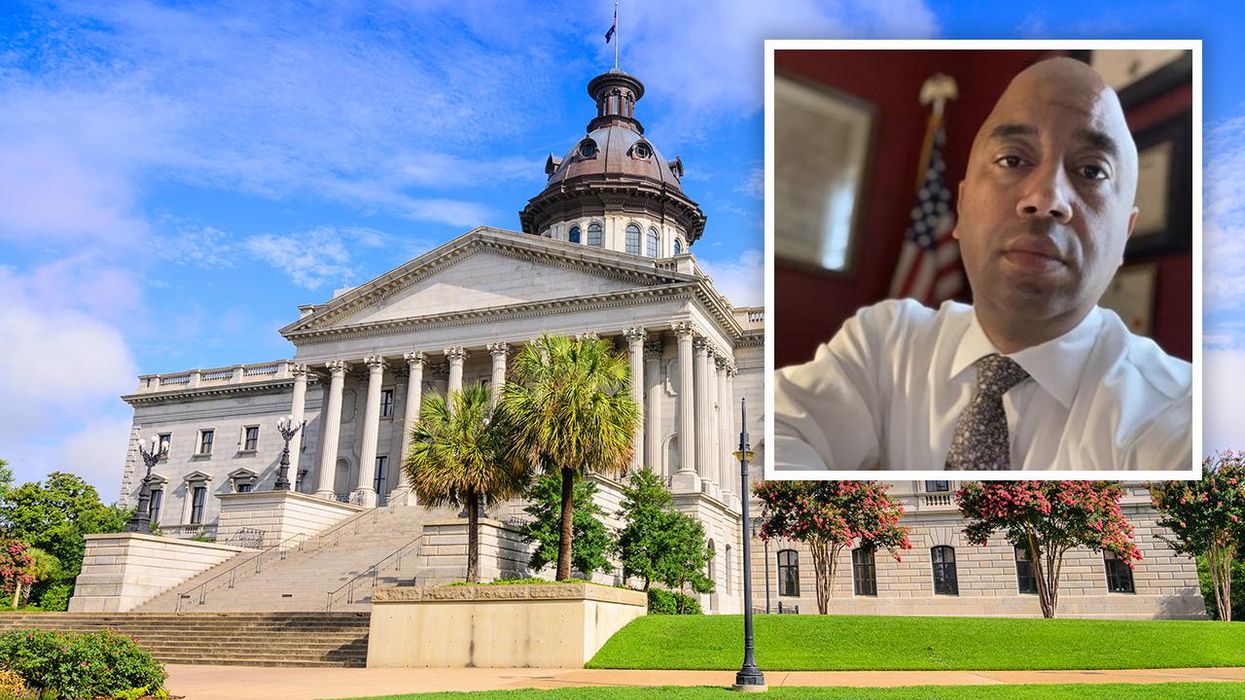
The debate over whether minors should be allowed life-altering gender reassignment surgery is, for whatever reason, contentious and partisan. The people in opposition tend to be Republican. Sen. Rand Paul had a well-publicized dust-up over the issue with Assistant Health Secretary Rachel Levine. The Republican-led Alabama Senate is putting forth a bill they say is to protect kids. In South Carolina, there is a similar bill being introduced banning minors from this life-altering surgery. Only it’s being introduced by a Democrat.
Democrat State Rep. Cezar McKnight has introduced the South Carolina Vulnerable Child Compassion and Protection Act. From the bill:
No person shall engage in, counsel, make a referral for, or cause any of the following practices to be performed upon a minor if the practice is performed for the purpose of attempting to alter the appearance of or affirm the minor’s perception of the minor’s gender or sex, if that perception is inconsistent with the minor’s sex as defined in this chapter.
If signed into law, not only would the bill make it illegal for minors to receive the treatment, but violating the law would be a felony with up to twenty years in prison. Rep. McKnight had this to say to the Associated Press:
Black Democrats tend to be more conservative than white progressives. I would not have ever put this bill forward if I didn’t think the people in my district wouldn’t be receptive, and they are. Pastors, young parents, older parents, they all tell me the same thing: If you want to do this, wait until you’re 18.
Where this legislation and legislation like it go from here will be interesting to watch. Rep. McKnight shows that there is bipartisan support for such legislation. Opposition so far comes entirely from the partisan far left. If more states start to take up this debate and activists on both sides organize for or against it, I can’t imagine any resolution without the Supreme Court chiming in. Nationally, the American people will have their first opportunity to have their voice heard with the 2022 midterm elections.
RAND PAUL: Biden’s Assistant Health Secretary is LYING To You! | Louder With Crowder
youtu.be
Need a quick laugh? Check out and subscribe to our CrowderBits YouTube channel for Louder with Crowder skits, opens, and parody videos!
Sen Paul blasts libs for ‘implying that people of certain races are not able to comply with rules’

Get the latest BPR news delivered free to your inbox daily. SIGN UP HERE CHECK OUT WeThePeople.store for best SWAG! Kentucky Sen. Rand Paul, a Republican, believes that the […]
Continue reading Sen Paul blasts libs for ‘implying that people of certain races are not able to comply with rules’ …
Our Species Is Enduring Largest Uncontrolled Experiment Ever, We Shouldn’t Ignore Vanden Bossche’s Warning
EDITOR’S NOTE: The Defender is committed to providing a space for scientific debate. This is an opinion piece by Rob Verkerk, Ph.D., on concerns raised by Geert Vanden Bossche, Ph.D. about immune escape and mass vaccination during a pandemic. This article follows Verkerk’s recent interview and previous analysis of the ongoing debate (this piece + this piece) sparked by Vanden Bossche.
It was a week ago that we released my interview with Geert Vanden Bossche on our brand new Speaking Naturally channel. It’s caused something of a stir in some circles. Mainly among those of us who don’t see vaccines as a panacea or at least the sole exit strategy to exit lockdowns, social distancing and other elements of the surrealism that have swept the world since the genome of a virus causing pneumonia-like symptoms in China was sequenced last January.
The silence from those who are overseeing or administering the global mass vaccination program has been deafening.
Some of the scientific concerns around Geert Vanden Bossche’s arguments appear to be the result of linguistic interpretations. Others challenge Geert’s speculative concerns linked to immune escape through the application of selection pressure from vaccines that could create ever more vaccine resistant, and potentially dangerous, virus variants.
For the uninitiated, “immune escape” is a term used to describe when the host (in this case humans) is no longer able to recognize and counter (eliminate or sterilize) a pathogen (in this case, a relevant variant or mutant of SARS-CoV-2).
“Selection pressure,” on the other hand, is a term used to describe the process (gene-environment interactions) that helps an organism or pathogen to evolve in ways that make it better adapted (i.e., more able to survive and propagate) to its changing environment. Antibiotic (antimicrobial) resistance is a good example of selection pressure caused by overuse of antibiotic drugs, which has selected for more and more bacterial strains that can detoxify or tolerate commonly used antibiotic drugs.
Let’s be reasonable, not polarized
I’m not an immunologist, virologist or an epidemiologist. But I do have three science degrees in ecology with a Ph.D. and postdoctoral research (Imperial College London) in the area of multitrophic interactions in agroecosystems. I’ve therefore been long fascinated by interactions between hosts, herbivores, carnivores and pathogens. I’ve also been looking closely at the science around COVID-19 since the outset and have been a critic of health authority and government handling of it from the outset (see ANH-Intl covid zone).
I’m writing this update on the Vanden Bossche controversy because I’m concerned it has the potential to unnecessarily divide people who share many common views and values, while differing in others. Alongside generating mutant variants of SARS-CoV-2, one of the haunting consequences of lockdowns has been their ability to polarize communities. I believe passionately that we need to be more tolerant of those with whom we share significant areas of our respective COVID-19 Venn diagrams.
Don’t expect that you’ll find unanimous agreement with many people given the amount of scientific uncertainty that abounds on so many of the scientific, medical, social, political and economic issues surrounding COVID-19 and the way it’s been and is being handled. We must have forums to be able to discuss scientific matters and we must be ever careful to not destroy the reputation of individuals who potentially can be important catalysts for change.
The host-pathogen tango
The reality is that — as ever — the relationship between a pathogen and its host is not a simple one. It is not only highly complex, it is also dynamic. It’s a tango that involves both players who don’t like dancing to the same music. While lockdowns might increase the time it takes to achieve herd immunity, the mainstream scientific view accepted by governments with little evidential basis has been that lockdowns will also reduce opportunities for transmission chains being established. Lockdowns, curfews, social isolation and the like were meant to be temporary stand-ins until vaccines were ready.
There are two fundamental problems with this approach. First, people don’t stop transmitting viruses among each other even in lockdowns and more opportunities for mutation are created, including among the most vulnerable people that allow for the greatest level of viral replication.
This explains the generation of at least 16 mutant lineages in South Africa. Secondly now that the vaccines have come, they don’t stop transmission of all SARS-CoV-2 strains, especially those that are resistant to antigen-specific antibodies that they are designed to induce.
More than that, if you apply a very strong selection pressure because you have a highly infectious virus that has lots of opportunities to express its inborn error code (mutations) — or you vaccinate millions or even billions of people with a highly specific antigen constructed around the spike protein of SARS-CoV-2, you are inducing massive selection pressure — like never before in human history. That is one of Geert Vanden Bossche’s concerns, one he has a right to have and express.
We also know (e.g., Ho et al 2021) that the UK variant B.1.1.7 that originated in the UK and B.1.351 from South Africa have extensive mutations in the main (receptor-binding domain, RBD) region of the spike protein that binds to the ACE2 receptors in human tissues. Not only that, neutralizing antibodies that have been created in response to exposure to wild virus or the vaccines (developed to match the original Wuhan strain) don’t neutralize the virus effectively.
Vanden Bossche’s red flags
The story continues to evolve and unfold because the relationship between the virus and its host does as well. What we’re now beginning to see is the same mutations in the spike protein cropping up in different parts of the world. For example, the UK variant (B.1.1.7), the Brazilian variant (P1/B.1.1.28) and the South African variant (B.1.351) all share common mutations such as E484K and N5011Y. These were Geert’s red flags.
It suggests that different virus strains have found the same way of outsmarting the highly specific vaccine and in the process, these new virus strains are becoming more transmissible including among younger people. That creates ever greater opportunities for mutation. The show goes on. And potentially never stops. Especially if you keep interspersing your strategy with lockdowns and related measures.
But don’t trust me on this — I’m just an ecologist. Some of the most thorough work in this area is being conducted by Paul Bieniasz’s group at the Rockefeller University, the same university with which Knut Wittkowski (see our separate interview) was associated for many years. The group has shown clearly that new mutant variants such as E484K and Q493R are resistant to antibodies produced by the original Wuhan strain on which the existing clutch of vaccines were based.
OK — so Bieniasz’s group has gone down the road of developing engineered monoclonal antibodies as a solution to get around the problem of immune escape both from wild infection or antigen-specific vaccines. In fact, they’re moving forward with trials for commercialization of monoclonal antibody therapies that could be delivered as injection.
Find out more about the research of Bieniasz around 37 minutes into the following video:
And so…?
What our species is currently enduring is the largest uncontrolled experiment ever conducted. Not only are highly-specific vaccines being applied in a manner that is considerably different from any previous vaccines, the frontrunner Pfizer and Moderna vaccines are also most definitely experimental (phase 3 trials results are incomplete), and they rely on lipid encapsulation delivery systems that have never been used at any significant scale to get synthetic codes into our muscle cells.
We also have no good idea of how effectively our T cells will be corralled into our armory of immune defense. Or how vaccine-induced immunity compares with naturally-acquired immunity (let’s not forget the SARS and MERS epidemics never had the same opportunity for mutation).
Geert Vanden Bossche has rung an alarm bell — that many, it seems, don’t want to hear. To ignore the wider concern he expresses around the selection pressure that will create immune escape and antibody resistant strains would be foolhardy — and would be inconsistent with the known science.
Originally published by Alliance for Natural Health International.
The post Our Species Is Enduring Largest Uncontrolled Experiment Ever, We Shouldn’t Ignore Vanden Bossche’s Warning appeared first on Children’s Health Defense.
Democrat Leaders Welcome MLB All-Star Game to Their States: Georgia Election Law Saga
After Major League Baseball decided to move out the All-Star game out from Georgia as a response to the state’s newly passed election integrity law, several political leaders, all Democrats so far, are welcoming the game to their states. The Minnesota Secretary of State Steve Simon wrote Friday on Twitter that his state would welcome the All-star Game. “Hey, MLB, we in Minnesota would welcome the All-star Game! Bonus: We have pro-voter election laws, and the #1 voter turnout in the nation,” Simon wrote. Recently, Georgia Gov. Brian Kemp signed into law election reforms that would require photo ID for absentee voting, mandatory dropbox security, and mandatory early voting dates, among other measures. According to The Denver Post, a spokesperson for Colorado Governor Jared Polis said that he would welcome the All-Star game to their local field. “The governor knows that Colorado is the best home for the All-Star Game, especially because Colorado also …