
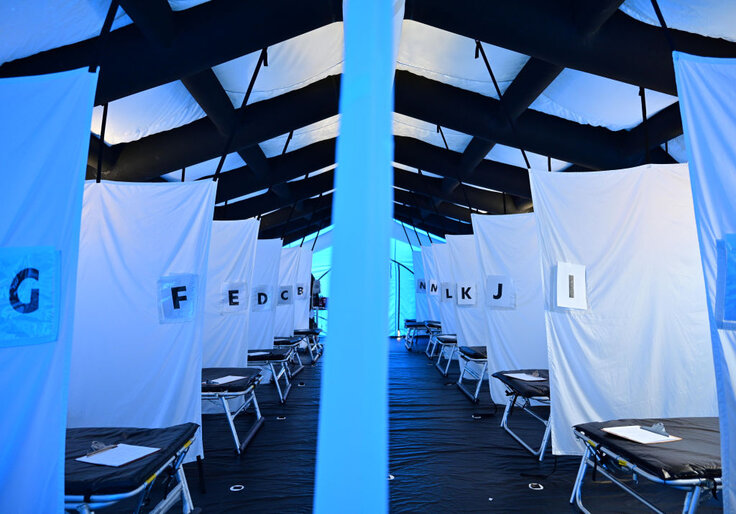
Utah public health officials were warned that allocating COVID drugs based on race violated federal law, but did so anyway with the backing of the Biden administration, emails and documents obtained by the Washington Free Beacon show.
Utah’s points-based system for prioritizing COVID patients, which allocated more points for being non-white than for having congestive heart failure, troubled two law professors specializing in bioethics. They informed the doctors who designed the system in September 2021 that it was probably illegal.
“The use of non-white race really set off alarm bells,” Teneille Brown, a professor at the University of Utah’s S.J. Quinney College of Law, said in an email.
The “consensus among legal academics,” Brown’s colleague Leslie Francis added, is that a system like Utah’s would “violate federal law.”
This piece is based on materials obtained via a third-party public records request and shared with the Free Beacon.
The doctors Brown and Francis emailed were part of the state’s Crisis Standards of Care workgroup, assembled by the Utah Hospital Association at the behest of the health department. When COVID surged in November 2020, the health department asked the group to develop a system for allocating scarce therapies. The group conceded its approach hadn’t been “reviewed legally.” But, they assured the law professors, it did have the blessing of the Biden administration.
The Department of Health and Human Services “has lauded our approach,” said Mark Shah, the director of Utah’s Disaster Medical Assistance Team and a member of the group. In February 2021, Shah’s colleague Brandon Webb presented the race-based allocation system to HHS, according to power point slides reviewed by the Free Beacon. HHS subsequently listed the system as a “promising practice” for other states to consider.
Such race-conscious policies proliferated throughout the pandemic, sparking both moral outrage and legal scrutiny. Like Utah, Minnesota and New York prioritized non-white residents for moncolonal antibodies. Vermont did the same for vaccines. Some states, including Utah and Minnesota, scrapped their policies in the wake of political backlash—and amid threats of legal action from conservative nonprofits.
The emails suggest Utah was ground zero for many of these schemes. The state initially defended its system by invoking guidance from the Food and Drug Administration, which lists race as a risk factor that can qualify patients for monoclonal antibodies. But according to the emails, it was Utah that inspired that guidance in the first place.
“The FDA reviewed our Utah Risk Score and used it as precedent for including ‘race and other risk factors’ as qualifiers,” Shah told the group in June 2021. Minnesota in turn used that precedent to justify its own allocation system.
The emails reflect the race-conscious consensus that has taken hold of medical bureaucracies across the country. As that consensus has consolidated at every level of government, it has emboldened public health officials to flout anti-discrimination law, which they assume won’t be enforced.
The gap between law and policy widened with the pandemic, which provided an emergency pretext for suspending civil rights. Nondiscrimination, the emails suggest, was seen as an obstacle to crisis management.
“I’d prefer just using the ‘we’re too busy trying to save lives during the surge’ excuse,” Webb, an infectious diseases specialist at Intermountain Healthcare, emailed his colleagues after some back and forth with the law professors.
That utilitarian mindset extended to Utah’s Republican governor Spencer Cox, who in January 2022 told health officials to modify the allocation system, a spokesperson for the governor said—but only after it became clear that the drugs weren’t reaching minorities. The problem wasn’t that the system discriminated by race; it was that the discrimination didn’t work.
“Despite the inclusion of race and ethnicity,” the spokesperson told the Free Beacon, “communities of color did not receive monoclonal antibodies proportionate to their share of COVID-test positives.”
“I’m frankly surprised that this has not yet been subject to a legal challenge,” Webb wrote the law professors. He added that in 2020, the group asked “the Office of Civil Rights” for guidance on the use of race but didn’t receive a response.
It is unclear to which office Webb was referring. A draft copy of the group’s inquiry includes no date or letterhead, and Roger Severino, HHS’s director of civil rights at the time, said it never came across his desk.
“Had this been brought to my attention,” Severino told the Free Beacon, “I would have told them they risked violating Title VI and would have merited my office investigating them had they gone through with such explicit race based rationing.”
Reached for comment, Webb said Shah was the one who sent the inquiry. Shah did not respond to a request for comment.
The group, which developed the system in November 2020, took for granted that all racial minorities should receive special treatment. It borrowed heavily from an allocation system used by the Cleveland Clinic, which prioritized African Americans for monoclonal antibodies. The “only knock” against that system, Webb wrote the group, is that “it only gives disparity weighting to black race rather than recognizing elevated risk associated with other race/ethnicities.”
Utah’s system was based on an analysis of 20,000 COVID patients between March and October 2020. Though some minorities are at higher risk than others, according to the state’s own data, the analysis lumped all of them together, comparing hospitalization rates between “white” and “non-white” Utahns.
The result was a “risk score calculator” that gave “non-white race or Hispanic/Latinx ethnicity” two points—more than it gave hypertension, chronic kidney disease, or shortness of breath. Utahns needed to score a certain number of points to be eligible for monoclonal antibodies.
The calculator was first used by the Intermountain hospital system, which employed many members of the group, including Webb and Shah. By September 2021, it was causing controversy among COVID-stricken patients.
“We have been forced into a defense of the scoring system as now constituents are reaching out to elected leaders asking why they are not eligible,” lamented Kevin McCulley, the Preparedness and Response director for the health department.
As pushback mounted, the department’s main concern was semantic rather than substantive. Officials spent days wordsmithing an online “self-screening tool” based on the calculator, in part to ensure it didn’t run afoul of progressive sensibilities.
“Latinex should have the ‘e’ removed (Latinx),” Matthew Plendl, a member of the health department, said of an early draft.
Some exchanges read like parodies of progressive racecraft, with officials attempting to sort out who would count as “non-white.”
The calculator lets “someone select more than one race category,” noted Jenny Johnson, a member of the health department’s communications team. “Would this mean anyone who marks ONLY White would not meet the criteria? And those who mark at least one race category that is not White does meet the criteria?”
Particularly vexing was the status of Hispanics.
“Someone with a high level of cultural competence should help us wordsmith this,” McCulley wrote his colleagues. “Is your race Non-white or Hispanic/Latinex Ethnicity? I don’t think Hispanic is a race.”
The post Utah Was Warned Racial Rationing of COVID Drugs Was Illegal. It Did It Anyway. appeared first on Washington Free Beacon.
Skip The Scoop | Seek Understanding
AP Sources: Feds Search Rudy Giuliani’s NYC Home, Office
New York (AP) — Federal agents on Wednesday raided Rudy Giuliani’s Manhattan home and office, seizing computers and cell phones in a major escalation of the Justice Department’s investigation into the business dealings of former President Donald Trump’s personal lawyer.
Rudy Giuliani’s Manhattan apartment and office were searched Wednesday by federal agents executing a warrant to seize evidence, including electronic devices, from the ex-New York mayor and lawyer to former President Donald Trump, people familiar with the matter said.
Manhattan federal prosecutors have been investigating Giuliani’s involvement with efforts to dig up dirt on Joe Biden in Ukraine ahead of the 2020 election. Executing a search warrant is an extraordinary move for prosecutors to take against a lawyer, let alone a lawyer for a former president, and it marks a major turning point in the long-running probe.
Prosecutors had been seeking approval for a Giuliani warrant from the Justice Department in Washington for months, but senior officials declined to approve it during the Trump administration for several reasons, including the proximity to the presidential election and Trump’s challenge to the results, according to one of the people. Giuliani served as Trump’s main lawyer alleging Biden’s win was due to widespread voter fraud.
AZ GOP Chair Dr. Kelli Ward: Democrats Want to Stall Process to May 14th — Here’s Why…
Arizona GOP Chair Dr. Kelli Ward joined Grant Stinchfield on Newsmax TV on Tuesday night.
Ward gave an update on the ongoing forensic audit of Maricopa County ballots.
During the discussion, Dr. Ward revealed the continued lies by the Democrats and their multiple attempts to shut down the entire process.
Then Dr. Ward added this — Democrats are trying to shut down and delay the audit now because they know the Arizona Senate, both Republicans and Democrats, have rented Veterans Memorial Coliseum until May 14th.
This is why they stall!
They are terrified of what Republicans will find.
The post AZ GOP Chair Dr. Kelli Ward: Democrats Want to Stall Process to May 14th — Here’s Why… appeared first on The Gateway Pundit.
MS-13 Gang Member, Child Sex Offender Attempt To Breach US Border.
Border Patrol agents in Yuma, Arizona intercepted an MS-13 gang member and child sex offender attempting to breach the U.S. southern border. Both illegal entry attempts occurred in the early…
The post MS-13 Gang Member, Child Sex Offender Attempt To Breach US Border. appeared first on The National Pulse.
Election watchdogs urge Jimmy Kimmel to scrap plans to host MyPillow CEO
In a letter sent to Kimmel and several top executives at ABC, the groups, including Common Cause, the Democracy Initiative and the League of Women Voters of the United States, say Lindell should not be given a platform to spread misinformation about the 2020 presidential election.
“Lindell’s work in pushing election disinformation has already had significant consequences for our nation, including the violent insurrection on January 6th at the U.S. Capitol that led to at least five people losing their lives,” their letter reads.
Lindell’s unproven conspiracy theories about electoral fraud are “also rooted in racism and white supremacy,” the groups wrote.
“The disinformation he is trying to sell is part of a larger narrative that essentially wants to throw out millions of votes from cities where people of color make up a majority or significant portion of the voting population, including Detroit, Milwaukee, Philadelphia, Phoenix, and Las Vegas,” they said.
Lindell has been a vocal supporter of former President Trump and has continued to push claims of voter fraud leading to an election result Trump has said was “rigged” against him.
Just 0.03% of fully vaccinated in Wisconsin have gotten COVID-19, state says
Wisconsin has had 605 COVID-19 cases among the 1.8 million residents who are fully vaccinated, state health officials said Tuesday after the Wisconsin State Journal reported that officials had repeatedly declined to release the data.
The “breakthrough” infections represent 0.03% of people who have had both doses of the Moderna or Pfizer injections or the single-dose Johnson & Johnson shot.
That’s a higher share than the 0.008% represented by 7,157 breakthrough cases among more than 87 million fully immunized Americans reported last week by the Centers for Disease Control and Prevention. But the CDC said the national tally is an undercount, and experts say some infections are expected among those fully vaccinated because no vaccine is 100% effective.
North Carolina man killed by deputies hit them with car: prosecutors
District Attorney Andrew Womble told a judge at a hearing Wednesday that he viewed body camera video and disagreed with a characterization by attorneys for the family of Andrew Brown Jr. that his car was stationary when the shooting started.
ELIZABETH CITY, N.C. — A North Carolina prosecutor says that a Black man killed by deputies hit law enforcement officers with his car before they opened fire.
District Attorney Andrew Womble told a judge at a hearing Wednesday that he viewed body camera video and disagreed with a characterization by attorneys for the family of Andrew Brown Jr. that his car was stationary when the shooting started.
Womble said the video shows that Brown’s car made contact with law enforcement twice before shots could be heard on the video.
“As it backs up, it does make contact with law enforcement officers,” he said, adding that the car stops again. “The next movement of the car is forward. It is in the direction of law enforcement and makes contact with law enforcement. It is then and only then that you hear shots.”
Expected COVID baby boom may be baby bust: analysis

Births have fallen dramatically in many states during the coronavirus outbreak, according to an Associated Press analysis of preliminary data from half the country.
NEW YORK — When most of the U.S. went into lockdown over a year ago, some speculated that confining couples to their homes — with little to entertain them beyond Netflix — would lead to a lot of baby-making. But the statistics suggest the opposite happened.
Births have fallen dramatically in many states during the coronavirus outbreak, according to an Associated Press analysis of preliminary data from half the country.
The COVID-19 baby boom appears to be a baby bust.
Outdoor mask guidance echoes what many Americans already do
In the small Nebraska town of Oxford, the school district dropped its mask mandate last month in what was a fairly straightforward decision: Cases were down dramatically and it didn’t bother local officials that their move flouted Centers for Disease Control and Prevention guidelines.
Those federal mask guidelines just didn’t seem to fit local conditions well in the town of about 800 people where hardly anyone wears a mask.
“We haven’t paid a whole lot of attention to what is going on at the federal level — mainly what is coming out through the state,” Southern Valley Superintendent Bryce Jorgensen said. “You just can’t compare Chicago to Oxford, Nebraska. Things are just different.”
Bannon’s War Room | Morning Edition Hour 1 | Recorded April 28, 2021 | Video: 48 Minutes 5 Seconds
Uniparty Hits the Mute Button … Voter Fraud and the Jan. 6 Lie. “You’re destroying the U.S. dollar,” he said. “You’re going to destroy the ability for us to be the reserve currency. When that goes away your life is going to be changed dramatically in the moment.”
Bannon’s War Room | Morning Edition Hour 2 | Recorded April 28, 2021 | Video: 48 Minutes 13 Seconds
The Late Night Lion’s Den … (w/ Mike Lindell, Ben Bergquam). “I believe this is a divine appointment today,” he said. “We are living in the greatest time ever right now. You’re going to look back and say all this had to happen in order to get to that place and once again we will be one nation under God.”
15 shot, 3 fatally Tuesday in Chicago

A 19-year-old man was found fatally shot in the 8300 block of South Sangamon Street.
Fifteen people were shot, three fatally, Tuesday in Chicago including a 19-year-old man who was fatally shot in Gresham on the South Side.
About 10:05 p.m., the man was running in an alley in the 8300 block of South Sangamon Street, when he was shot, Chicago police said. He was found in the backyard of a residence in the 8300 block of South Peoria Street, with a gunshot wound to the chest. The man was taken to Christ Medical Center in Oak Lawn, where he was pronounced dead.
Less than an hour prior, a 31-year-old man was shot to death in Ashburn on the South Side. The man was driving about 9:20 p.m. in the 8300 block of South Keating Avenue, when someone got out of a green-colored SUV and fired shots, police said. He was struck in the face and was taken to Christ Medical Center in Oak Lawn, where he was pronounced dead.
A man was fatally shot in Canaryville on the South Side. The 29-year-old was in the 4600 block of South Normal Avenue about 3 a.m., when someone in a dark-colored SUV fired shots, police said. He was struck in the head and pronounced dead at the scene. The Cook County Medical Examiner’s office identified him as Ryan Jackson, of South Shore.
Merkel Calls for Deeper Cooperation With China on Covid Vaccines
Chancellor Angela Merkel urged Germany and China to join forces to defeat the coronavirus pandemic and raised the prospect of deeper cooperation on Covid-19 vaccines.
In her opening remarks during virtual talks Wednesday with her Chinese counterpart Li Keqiang, Merkel said the two nations should “speak openly and transparently about vaccine production.”
“And, if possible, also mutually recognize vaccines,” she said, adding that this should take place under the auspices of the World Health Organization.
“We can only contain this pandemic together,” Merkel said. “China and Germany can play an important role in this.”
New CDC mask guidance draws clear line between vaccinated and unvaccinated Americans
In the eyes of U.S. health officials, there are two groups of people: those who are vaccinated against COVID-19 and those who are not. And they’re stepping up their efforts to get unvaccinated Americans to switch sides.
New guidelines from the Centers for Disease Control and Prevention regarding when people can safely shed their masks make the benefits of vaccination abundantly clear. Instead of focusing on the serious and potentially deadly risk of COVID-19 to those who aren’t immunized, they emphasize the extent to which those who are can return to an almost-normal life.
“Over the past year we have spent a lot of time telling Americans what they cannot do, what they should not do,” Dr. Rochelle Walensky, director of the CDC, said in a briefing Tuesday. “Today I’m going to tell you some of the things you can do — if you are fully vaccinated.”
Walensky painted a detailed picture of the greater freedom vaccinated Americans can safely enjoy compared with their unvaccinated peers. She and other health officials hoped that doing so would incentivize those who haven’t yet rolled up their sleeves to change their minds and get their shots.
Bannon’s War Room | Evening Edition | Recorded April 28, 2021 | Video: 48 Minutes 58 Seconds
Episode 908 – Deep State Projection … Giuliani Raided But FBI Leaves Hunter’s Laptop From Hell. Kent, who served 11 combat tours and whose wife was killed in combat fighting ISIS, said Washington state is fighting on all fronts to preserve our way of life out here.” Our guests are: Boris Epshteyn, Mark Finchem, Ben Bergquam, Joe Kent, Doug Wardlow.
Woman who was repeatedly raped by her scientist father tells of her childhood in new book
EXCLUSIVE: Woman whose scientist father plied her with bootleg alcohol to rape her from the age of 11 and performed DIY abortions after getting her pregnant twice shares her harrowing story in a new book
- Kim Chown, 52, from Darlington, Durham spoke of horrific abuse suffered at hands of dad Francis Beaumont
- Paedophile father was renowned microbiologist and lecturer at prestigious universities around the world
- She lived a life of forced depravity and rape at his hands – shares experiences in book Who Will Believe You?
Multi-Day Operation by Human Trafficking Task Force Leads to the Recovery of Three Minors & Multiple Arrests
On Monday April 19, 2021, two females who appeared to be very young were observed as they engaged with vehicles occupied by lone males. Both were contacted by members of the Task Force. One of the females was identified as a fourteen year old who had been reported missing; she is six months pregnant. The second female was identified as a sixteen year old. A third juvenile female whom investigators determined had been reported missing, is seventeen years old. In one case, the victim told investigators she had been working as a prostitute since the age of twelve. All three juveniles were reported missing from cities outside of Pomona. All juveniles were turned over to the care of the Los Angeles County Department of Children and Family Services. {Paragraph 3}
CEO of $2 Billion Startup Ousted for Taking LSD at Work
Marketing startup Iterable Inc. dismissed its chief executive officer over violations of company policy, Iterable said in a note to employees on Monday.
The fired CEO, Justin Zhu, said the board’s chief reason for ousting him was that he took LSD, an illegal drug in the U.S., before a meeting in 2019. Zhu told Bloomberg he was experimenting by taking a limited amount of the drug, or microdosing, in an effort to boost his focus.
In an email to staff, co-founder Andrew Boni said Zhu’s dismissal was over unspecified violations of “Iterable’s Employee Handbook, policies and values.” The board replaced Zhu with Boni as CEO, Boni wrote. A spokeswoman for the San Francisco-based company didn’t immediately provide a comment.
Judicial Watch: Documents Show CA State Officials Coordinated with Big Tech to Censor Americans’ Election Posts
Used Biden for President’s Communications Firm to Identify ‘Misinformation’
(Washington, DC) Judicial Watch announced today that it received 540 pages and a supplemental four pages of documents from the office of the Secretary of State of California revealing how state officials pressured social media companies (Twitter, Facebook, Google (YouTube)) to censor posts about the 2020 election. Included in these documents were “misinformation briefings” emails that were compiled by communications firm SKDK, that lists Biden for President as their top client of 2020. The documents show how the state agency successfully pressured YouTube to censor a Judicial Watch video concerning the vote by mail and a Judicial Watch lawsuit settlement about California voter roll clean up.
The records were obtained in response to Judicial Watch’s California Public Records Act (CPRA) requests to the Office of the California Secretary of State for records related to the Office of Election Cybersecurity’s database of social media posts; communications with social media companies; and other social media related records regarding the 2020 elections. Judicial Watch filed the requests after a December 2020 report surfaced that the state agency was surveilling, tracking, and seeking to censor the speech of Americans:
The Office of Election Cybersecurity in the California Secretary of State’s office monitored and tracked social media posts, decided if they were misinformation, stored the posts in an internal database coded by threat level, and on 31 different occasions requested posts be removed. In 24 cases, the social media companies agreed and either took down the posts or flagged them as misinformation, according to Jenna Dresner, senior public information officer for the Office of Election Cybersecurity.
“We don’t take down posts, that is not our role to play,” Dresner said. “We alert potential sources of misinformation to the social media companies and we let them make that call based on community standards they created.”
On September 24, 2020, a California Secretary of State chartlists a video from Judicial Watch President Tom Fitton and falsely alleges:
Head of conservative group Judicial Watch Hosts video alleging Democrats benefit from incorrect voter rolls and ballot collection.
The Secretary of State’s office details its communication with YouTube: “We wanted to flag this YouTube video because it misleads community members about elections or other civic processes and misrepresents the safety and security of mail-in ballots.” The chart quotes Fitton describing Judicial Watch’s statement about its federal lawsuit settlement with Los Angeles County that will require it to clean up voter rolls and how a Michigan court “changed the rules” on ballot deadlines and ballot harvesting. (The controversial decision was overturned in October 2020.)
The document shows that California state officials contacted YouTube directly to remove the video on September 24, 2020, and that YouTube seemed to respond by deleting the video on September 27, 2020. . .
Total Betrayal | FBI Even Spied On Citizens Invited To “Foster Greater Understanding Of The Role Of Federal Law Enforcement In The Community” & “Victims Of Crime”
1. Violations of the Querying Standard
NSD has reported a number of compliance incidents that were oversight reviews at FBI field offices, which suggest that the FBI’s failure to properly apply its querying standard when searching Section 702-acquired information was more pervasive than was previously believed. For example, between April 11, 2019, and July 8, 2019, a technical information specialist in the [REDACTED] who was conducting “limited background investigations” conducted approximately 124 queries of section 702-acquired information using the names and other identifiers of: 1) individuals who had requested to participate in FBI’s “Citizens Academy” — a program for business, religious, civic, and community leaders designed to foster greater understanding of the role of th federal law enforcement in the community; 2) individuals who needed to enter the filed office in order to perform a particular service, such as a repair; and 3) individuals who entered the field office seeking to provide a tip or to report that they were victims of a crime. Page 39, FISA Court Opinion, 10-19-2020
FBI Abused Secretive Surveillance Program, Court Finds
The FBI continued abusing the secretive Foreign Intelligence Surveillance Act program, including searching for information on people who had gone to the bureau to report they were victims of a crime, a newly declassified document shows. One FBI information specialist between April 11, 2019, and July 8, 2019, conducted approximately 124 queries of information obtained through secretive methods under the act, or FISA, which permits warrantless surveillance of foreigners outside of the United States. The surveillance can and has been used to ultimately obtain information on Americans. The searches included looking at information for people who had requested to participate in a bureau-run citizens academy, a program for local leaders designed to foster greater understanding of the role of law enforcement, and people who needed to enter the field office the FBI worker was based in to conduct work, such as a repair, the Foreign Intelligence Surveillance Court reported in the … [Continue]
The Growing Cartel of Big Government, Big Media, and Big Tech With Rachel Bovard | Video: 9 Minutes 29 Seconds
“You have this growing cartel between big government, big media, and big tech” that is “punishing any individual that disagrees,” says Rachel Bovard, Senior Director of Policy at the Conservative Partnership Institute.
Criticisms of mask mandates and lockdowns are being suppressed, including Governor Ron DeSantis’ roundtable with leading doctors and public policy experts.
How does self-government survive in an era of, as Bovard describes it, “massive, concentrated corporate control” over speech? This segment is part of American Thought Leaders, an in depth, open discussions series on important issues that affect our society.
China: Further information: Lawyer faces charges for reporting torture: Chang Weiping
Human rights lawyer Chang Weiping was officially charged with “subversion of state power” on 16 April 2021, six months after police officers took him away for publicly detailing incidents of torture that he experienced during an earlier detention in January 2020. He is currently being held incommunicado at Feng County Detention Centre. Given his isolation and the reports of the torture Chang previously endured, there are grave concerns for his physical and mental wellbeing.
April 27, 2021 | Nightly News Rebroadcast | Video: 53 Minutes 35 Seconds
People Fully Vaccinated Don’t Need to Wear Masks Outdoors: CDC; John Kerry Faces Calls to Resign. The CDC lessens mask restrictions for those who have been vaccinated, the Washington, D.C., police department has been hacked and the attackers are demanding a ransom, and Former Secretary of State John Kerry is accused of leaking information about a U.S. ally to Iran.
Bannon’s War Room | Morning Edition Hour 1 | Recorded April 27, 2021 | Video: 48 Minutes 26 Seconds
The Diesel Dupe of Elections … (w/ Cpt. Maureen Bannon, John Brakey, Tracy Beanz).
Bannon’s War Room | Morning Edition Hour 2 | Recorded April 27, 2021 | Video: 48 Minutes 27 Seconds
Breaking Up the CCP’s Dinner Party … Boris Johnson on the Ropes and Boycott Beijing. Guests are: Cpt. Maureen Bannon, Cpt. Corey Ray, Chris Fenton.
Israel condemns report accusing it of ‘crimes against humanity’ and ‘apartheid’ towards Palestinians
Israel condemns ‘preposterous’ report accusing it of ‘crimes against humanity’ and ‘apartheid’ towards Palestinians.
- Human Rights Watch released a new 213-page report on Tuesday accusing Israel of pursuing policies of apartheid and persecution against Palestinians and its own Arab minority
- Israel has rejected the report but it has been welcomed by Palestinian President Mahmoud Abbas
- The report comes just weeks after the International Criminal Court announced it would investigate war crimes in the Israeli-occupied West Bank and Gaza Strip
Cuomo denies sexual harassment allegations: ‘I didn’t do anything wrong’
Bannon’s War Room | Evening Edition | Recorded April 27, 2021 | Video: 48 Minutes 58 Seconds
The Cheat Ratio … How Arizona Was Stolen and a Bipartisan California Recall. Navarro says he’s 100 percent certain about two things. The virus came from the Wuhan lab and the election was stolen. Our guests are: Dr. Peter Navarro, Maureen Bannon, Ben Bergquam, Adam Brandon, and Tom Del Beccaro.
Simon & Schuster employees tell publisher no book deals for Trump administration authors
Employees at Simon & Schuster have submitted a petition demanding the publishing company not make book deals with former Trump administration officials, following one for a memoir from former Vice President Mike Pence.
They submitted the petition Monday to upper management with 216 signatures, which is 14 percent of the company’s workforce, according to The Wall Street Journal.
Employees asked the management not to treat “the Trump administration as a ‘normal’ chapter in American history.”
The letter was sent to Simon & Schuster’s CEO Jonathan Karp, and publisher Dana Canedy. The company has not commented about the petition publicly.
Businessman to Admit Smuggling Marine Tech to China
Qin Shuren made no secret of his interest in underwater drones, according to his neighbors in the affluent Boston suburb of Wellesley.
The Chinese national once invited local kids to test a subaquatic robot in his backyard pool, they recalled, and another time demonstrated one at his children’s school.
Neighbors were stunned when police arrived at Mr. Qin’s colonial-style home in 2018 and placed him under arrest. On Wednesday, Mr. Qin is set to plead guilty in federal court to felony charges that he illegally procured more than $100,000 in U.S. marine technology for a Chinese military research institute.
Under a plea agreement Mr. Qin reached with the U.S. attorney’s office in Boston, he is expected to plead guilty to counts of conspiring to commit export violations, visa fraud, lying to government agents, money laundering and smuggling.
GOP Governors Sign Bills Restricting Abortion in Oklahoma, Montana
Oklahoma Gov. Kevin Stitt and Montana Gov. Greg Gianforte on Monday each signed three bills to restrict abortion in their states.
Republican Gov. Stitt announced on Twitter the three bills set to be effective Nov. 1 in Oklahoma. “I’m keeping my promise to sign all pro-life legislation,” he said. “We now have three more laws protecting the lives of the unborn! HB 2441, HB 1904, and HB 1102.”
The state’s HB 2441 (pdf), set to be effective Nov. 1, stipulates that no person shall carry out an abortion without first checking whether the unborn child has a heartbeat. If a heartbeat is detected, typically at about six weeks of pregnancy, the abortion is prohibited. Anyone who violates the law “shall be guilty of homicide.”
The post GOP Governors Sign Bills Restricting Abortion in Oklahoma, Montana appeared first on NTD.
It’s Not Just Here | “Trucker Who Had Arm Broken by Illegal Migrants Jailed for Buying Stun Gun, Pepper Spray”
A lorry driver who purchased a stun gun and pepper spray for self-defence after being attacked by illegal migrants has been imprisoned.
The offending articles were found in the cab of 40-year-old Graeme McMurray, of Denny, during a spot check at a ferry terminal in Cairnryan, Scotland, as he was en route to Belfast.
McMurray had been attacked by illegal migrants in France in Boulogne, France, in 2018, leaving him with a broken arm, according to a court report. Such attacks on lorry drivers by migrants seeking to break into their vehicles and cross the British border are far from uncommon, but the judge was unsympathetic.
Grenell: John Kerry allegations ‘incredibly serious’, was constantly undermining Trump policy behind the scenes

Former acting Director of National Intelligence Richard Grenell lashed out at former Secretary of State John Kerry Monday, saying he undermined former President Donald Trump’s foreign policy objectives on a regular basis and suggested he was a threat to national security.
In an interview with Tammy Bruce on “Fox News Primetime,” Grenell, who also served as U.S. Ambassador to Germany under Trump, responded to a New York Times report that cited leaked audio of Kerry informing Iranian officials that Israel had covertly struck them hundreds of times in Syria.
In the roughly three-hour recording, Iranian Foreign Minister Mohammad Javad Zarif said that Kerry told him Israel attacked Iranian assets in Syria “at least 200 times” while also expressing shock that the top U.S. diplomat would reveal such sensitive information. […]
Continue reading Grenell: John Kerry allegations ‘incredibly serious’, was constantly undermining Trump policy behind the scenes …
18-Year-Old Charged With Second-Degree Murder After 2 Teens Fatally Shot Over Social Media Argument
An 18-year-old has been charged with second-degree murder after he allegedly shot and killed two teens over a social media argument, according to authorities.
Zachary Burkard allegedly shot and killed two unidentified teens on Sunday in Springfield, Virginia, Fairfax County police said in a statement. Officers responded to the scene around 3:18 p.m. and found one victim inside a garage with gunshot wounds to the upper body, police said. They attempted life-saving measures but the teen was declared dead by responding authorities.
A second teen was found in front of a nearby home with gunshot wounds to the upper body as well. Police said that the teen was taken to a local hospital where he later died from his injuries.
Russia: Police target peaceful protesters identified using facial recognition technology
Responding to the news that Moscow police have detained several activists and journalists identified using facial recognition technology as attendees of the peaceful rally in support of Aleksei Navalny on 21 April, Natalia Zviagina, Amnesty International’s Moscow Office Director, said:
“This is a new and extremely disturbing turn of events. Never before have the police been able to cast their net so widely to identify and target peaceful protesters using facial recognition technology. The police detained not only those who had joined the protests but also at least three journalists who were simply reporting on the rally.
“Previously the protesters’ main risk was being beaten and arbitrarily detained by police at a rally. As of now, avoiding this fate does not mean that you can feel safe – the repressive state knows who you are and can come for you at any point. The risk of attempting to exercise your right to freedom of peaceful assembly has never been so high in Russia.
“We reiterate our call to ban the development and use of facial recognition technologies for identification purposes. The authorities’ persecution of peaceful protest is now reaching a whole new level in Russia.
Iranian Foreign Minister: Kerry Informed Us Of Hundreds Of Israeli Covert Actions

Former Secretary of State John Kerry informed him that Israel had attacked Iranian interests in Syria at least 200 times, to his astonishment, Mr. Zarif said.
Pompeo Pushes Investigation Into Kerry for Leaking Secrets to Iran

Former secretary of state Mike Pompeo and Republican foreign policy leaders in Congress are demanding a formal investigation into John Kerry following revelations he informed Iranian leaders about covert Israeli military operations.
A leaked audio recording of Iranian foreign minister Javad Zarif, who worked closely with Kerry when the 2015 nuclear accord was negotiated, catches the Iranian official claiming the former Obama administration secretary of state informed him about at least 200 Israeli strikes on Iranian military positions in Syria. That Kerry shared these intimate details “to his astonishment,” according to the New York Times, suggests Kerry may have been disclosing classified information. It would also represent a stunning betrayal of America’s closest Middle East ally. Israel relies on the United States to protect shared intelligence from its top regional enemy.
The revelation is already generating calls for Kerry, the special presidential envoy for climate, to resign from the Biden administration and face a congressional investigation for possibly spilling highly classified secrets to one of America’s leading enemies.
Former Trump administration secretary of state Mike Pompeo said the audio tape proves “what I’ve said for years: That [Zarif] continued to engage with former secretary of state Kerry on policy matters after Kerry’s public service and, according to Zarif, Kerry informed the Iranians of Israeli operations.”
John Kerry is skirting the line of treason with Iran
The rather curious defining feature of Democratic Party foreign policy, going back at least four decades, is that our friends must be bullied and our enemies must be appeased. The Democratic worldview holds that America is a source of geopolitical evil whose destructive influences must be tamed and reined in, and that America’s enemies must be emboldened in order to tilt the global playing field away from America’s noxious ambit.
Barack Obama’s administration encapsulated this toxic ideology through its single-minded pursuit of a nuclear accord with the world’s No. 1 state sponsor of terrorism during the president’s lame-duck second term. Many of the leading hucksters who comprised Team Obama’s “negotiators” with Tehran — Wendy Sherman, Robert Malley, and Colin Kahl among them — are now reprising their roles during Uncle Joe Biden’s third Obama term.
White House Refuses Comment on Tapes Exposing John Kerry Leaks to Iran About Israel
The White House refused to comment on a report exposing Climate Czar John Kerry leaking information about Israel military operations to Iran.
“We’re not going to comment on leaked tapes,” Psaki replied shortly, when asked about the report.
“This Never Happened” – Flustered John Kerry Denies He Told Iran’s Foreign Minister About Israel’s Covert Operations in Syria
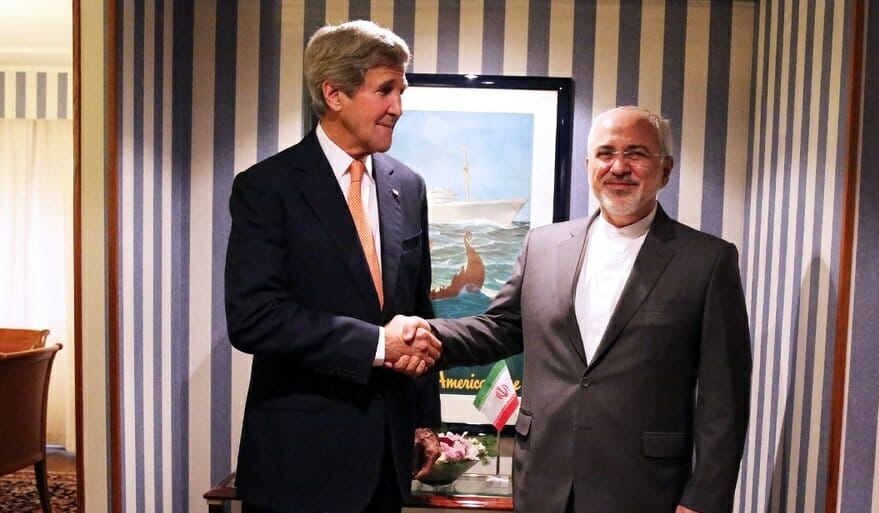
John Kerry denied he ever told Iran’s foreign minister about Israel’s covert operations in Syria.
In a recently leaked audio, Iran’s foreign minister Mohammad Javad Zarif said then-Secretary of State John Kerry informed him about Israel’s covert operations in Syria.
John Kerry served as Barack Obama’s Secretary of State from 2013 – 2017 and currently serves as Biden’s special climate envoy.
Zarif said he was shocked by John Kerry’s revelation that Israel had attacked Iranian targets in Syria over 200 times.
John Kerry is denying the allegations and calling Zarif, his “trusted friend” a liar.
“I can tell you that this story and these allegations are unequivocally false. This never happened – either when I was Secretary of State or since,” a clearly flustered John Kerry said in a tweet Monday evening.
I can tell you that this story and these allegations are unequivocally false. This never happened – either when I was Secretary of State or since. https://t.co/BTOdFE1khW
— John Kerry (@JohnKerry) April 26, 2021
The post “This Never Happened” – Flustered John Kerry Denies He Told Iran’s Foreign Minister About Israel’s Covert Operations in Syria appeared first on The Gateway Pundit.