
Cynthia Phillips was mesmerized when she saw the latest pictures of her favorite moon. Here at last was a fresh look at Europa, an icy satellite of Jupiter. The moon resembles a truffle drizzled haphazardly with strips of melted white chocolate, as if the universe had rushed to finish a baking-show challenge. The images gave us a new sense of Europa’s topography, its collection of ridges and troughs appearing more intricate than ever. The lighting was different this time, Phillips told me, and the shadows brought out dramatic shapes in the terrain.
The images were taken by a Jupiter-observing spacecraft as it swept past Europa last week, coming within just 222 miles (358 kilometers) of the frozen surface. Phillips, a planetary geologist at NASA’s Jet Propulsion Laboratory, immediately reached for the Europa globe on her desk and began comparing the real-world views with the topography stretched over the plastic orb. The last probe to come this close to Europa was disposed of in 2003, when NASA deliberately plunged it into Jupiter’s atmosphere after the mission started running low on fuel. “We haven’t seen Europa’s surface in this level of detail for 20 years,” Phillips said.
Europa might be the best place to search for life elsewhere in the solar system. Scientists are almost certain that beneath the Jovian moon’s frozen surface is a salty ocean with more water than all of Earth’s oceans combined. And such a watery subsurface environment could provide a comfortable home for small Europan life forms.
[Read: Jupiter’s frozen moon is studded with 50-foot blades of ice]
Two years from now, another NASA spacecraft will depart for the Jupiter system, specifically designed to study Europa. The probe will swing past the moon dozens of times, sometimes coasting just 16 miles (25 kilometers) above the surface. Each pass will bring scientists closer to understanding the workings of this celestial truffle and its mysterious interior. Beneath that frosty coating could be the answer to one of our biggest questions: Is there life anywhere else in the universe?
Europa is enveloped in a thick coat of water ice. (Some other moons in our solar system have ice made of methane and nitrogen—the cosmos is a weird place.) The criss-crossing lines visible in the new pictures are actually cracks and fissures in that frozen exterior. Scientists suspect that they’re caused by the stretching and squashing that Europa experiences as it orbits giant Jupiter. The moon’s terrain is sprinkled with chemical compounds such as sodium chloride and magnesium sulfate—more commonly known to Earthlings as table salt and Epsom salt—and they could indicate briny waters below.
A close-up view of Europa’s textured surface (NASA / JPL-Caltech / SWRI / MSSS
Scientists got their best evidence that a Europan ocean might exist two decades ago, when that earlier NASA spacecraft detected a magnetic connection between Europa and Jupiter that could easily be explained by the presence of a salty, global sea. This deep into the solar system, Europa’s underground ocean wouldn’t feel the warmth of the sun; it would stay liquid because of Jupiter’s gravitational tugging. In recent years, telescopes have detected signs of plumes of water vapor spewing out of the cracks and into space. Scientists believe that Europa’s ocean could be as old as the moon itself, about 4 billion years or so, which would give life plenty of time and a stable environment in which to evolve, Phillips said.
[Read: Europa’s mysterious glow]
The data suggest that Europa has a rocky mantle—the layer between the moon’s crust and core—and when rock and water come together, magical things can happen: Chemical interactions between them are known to produce hydrogen-rich materials for tiny creatures to metabolize. “On our own planet, hydrothermal systems at the seafloor provide energy for communities of microorganisms,” Samantha Trumbo, a planetary scientist at Cornell who studies icy ocean worlds like Europa, told me.
The upcoming NASA mission, named Clipper—a nod to the speedy, lightweight vessels favored by 19th-century merchants—will study nearly every bit of the Europan surface. If it gets lucky, the spacecraft could fly through some plume particles, take a sip, and analyze the contents. Alyssa Rhoden, a planetary geophysicist at the Southwest Research Institute who studies Europa, is most excited about a Clipper instrument designed to detect warmer-than-usual spots on the moon’s surface. “When you look at Europa’s surface, you can see a lot of pits where the surface seems to have dropped down a little bit, places where the surface has been disrupted,” Rhoden told me. “We think that that’s happening from heating coming from below.” That signature could simply indicate the presence of melted bits of ice near the frigid crust—or it could mean a roiling sea has floated toward the surface, perhaps bringing any tiny inhabitants with it.
[Read: Exploring the oceans of the outer solar system]
The Clipper mission is not meant to find definitive proof that life exists on Europa, only explore whether the moon has the right conditions and chemistry to make life possible. Evidence of life will require more missions, guided by Clipper’s data, that could land on the Europan surface and drill into the ice. NASA is also searching for life elsewhere in the solar system, notably on Mars, where a rover is collecting samples from a dried-up river delta. But Europa is a more tantalizing target, and so are the other ocean moons sprinkled across the solar system, such as Enceladus and Titan, which orbit Saturn, and Triton, around Neptune. The Mars mission is designed to search for signs of fossilized life that existed several billion years ago, when water once flowed on the planet. “It’s quite possible that Mars could have had life in the past, in a warmer-weather era, and it’s possible that there are subsurface pockets on Mars that could have remnants of this living biosphere,” Phillips said. “But on somewhere like Europa, life could exist there now.”
And what might humanity, by way of carefully engineered machines, find on Europa, once we’ve figured out which melty bits to inspect? “I would love for there to be Europan whales swimming around in that ocean,” Phillips said with a laugh. But alien life, if it exists, is likely to be small and simple. Energy sources are limited in the Europan depths, and scientists don’t think the environment can support the development of more complex organisms, Phillips said. Still, even the discovery of a single microbe would mark an explosive event in human history. It would mean that life had managed to spring up in two different places around the same star—in a universe absolutely brimming with stars. If it happened more than once here, in our own solar system, it’s likely happened elsewhere in the cosmos, around someone else’s sun. This is why scientists are so eager to catch a glimpse of Europa, and prepare as much as they can for the exploration to come. “We all want it to be water,” Rhoden said. “We all want it to be a cool plumbing system in the shell with lots of activity, and someday we’ll get down there and find little Europan sea urchins clinging to the bottom of the ice.”
Skip The Scoop | Seek Understanding
Bannon’s War Room | Evening Edition | Recorded March 15, 2021 | Chaos Under Heaven … China’s Rise is Threat to World (w/ Josh Rogin) | Video: 48 Minutes 59 Seconds
Obama administration’s “soothing” meeting promising a cozy relationship with top Chinese leaders a week before the election in 2016. Then Trump won. Our guest is: Josh Rogin.
“Put down your pen, put down your notebook and listen,” Yasmin said. | If Only We Heeded This Advice Regardless Of Any Side Of An Issue We Take

Journalists, public health officials and tech companies have tried to push back against the falsehoods, but much of the job of correcting misinformation has fallen to the world’s front-line medical workers.
Los Angeles emergency room nurse Sandra Younan spent the last year juggling long hours as she watched many patients struggle with the coronavirus and some die.
Then there were the patients who claimed the virus was fake or coughed in her face, ignoring mask rules. One man stormed out of the hospital after a positive COVID-19 test, refusing to believe it was accurate.
“You have patients that are literally dying, and then you have patients that are denying the disease,” she said. “You try to educate and you try to educate, but then you just hit a wall.”
Bogus claims about the virus, masks and vaccines have exploded since COVID-19 was declared a global pandemic a year ago. Journalists, public health officials and tech companies have tried to push back against the falsehoods, but much of the job of correcting misinformation has fallen to the world’s front-line medical workers.
In Germany, a video clip showing a nurse using an empty syringe while practicing vaccinations traveled widely online as purported evidence that COVID-19 is fake. Doctors in Afghanistan reported patients telling them COVID-19 was created by the U.S. and China to reduce the world population. In Bolivia, medical workers had to care for five people who ingested a toxic bleaching agent falsely touted as a COVID-19 cure.
Younan, 27, says her friends used to describe her as the “chillest person ever,” but now she deals with crushing anxiety.
“My life is being a nurse, so I don’t care if you’re really sick, you throw up on me, whatever,” Younan said. “But when you know what you’re doing is wrong, and I’m asking you repeatedly to please wear your mask to protect me, and you’re still not doing it, it’s like you have no regard for anybody but yourself. And that’s why this virus is spreading. It just makes you lose hope.”
Emily Scott, 36, who is based at a Seattle hospital, has worked around the world on medical missions and helped care for the first U.S. COVID-19 patient last year. She was selected because of her experience working in Sierra Leone during the 2014-2016 Ebola outbreak.
While many Americans were terrified of Ebola — a disease that isn’t nearly as contagious as the coronavirus and poses little threat in the U.S. — they aren’t nearly afraid enough of COVID-19, she said.
Scott blames a few factors: Ebola’s frightening symptoms, racism against Africans and the politicization of COVID-19 by American elected officials.
“I felt so much safer in Sierra Leone during Ebola than I did at the beginning of this outbreak in the U.S.,” Scott said, because of how many people failed to heed social distancing and mask directives. “Things that are facts, and science, have become politicized.”
ER nurse L’Erin Ogle has heard a litany of false claims about the virus while working at a hospital in the suburbs of Kansas City, Missouri. They include: The virus isn’t any worse than the flu. It’s caused by 5G wireless towers. Masks won’t help and may hurt. Or, the most painful to her: The virus isn’t real, and doctors and nurses are engaged in a vast global conspiracy to hide the truth.
“It just feels so defeating, and it makes you question: Why am I doing this?” said Ogle, 40.
Nurses are often the health care providers with the most patient contact, and patients frequently view nurses as more approachable, according to professor Maria Brann, an expert on health communication at Indiana University-Purdue University Indianapolis. That means nurses are more likely to encounter patients spreading misinformation, which gives them a special opportunity to intervene.
“Nurses have always been patient advocates, but this pandemic has thrown so much more at them,” Brann said. “It can definitely take a toll. This isn’t necessarily what they signed up for.”
In some cases, it’s nurses and other health care workers themselves spreading misinformation. And many nurses say they encounter falsehoods about the coronavirus vaccine in their own families.
For Brenda Olmos, 31, a nurse practitioner in Austin, Texas, who focuses on a geriatric and Hispanic patient population, it was a no-brainer to get the vaccine. But first she had to debate her parents, who had heard unsubstantiated claims that the shot would cause infertility and Bell’s palsy on Spanish-language TV shows.
Olmos eventually convinced her parents to get the vaccine, too, but she worries about vaccine hesitancy in her community.
When she recently encountered an elderly patient with cancerous tumors, Olmos knew the growths had taken years to develop. But the man’s adult children who had recently gotten him the vaccine insisted that the two were connected.
“To them, it just seemed too coincidental,” Olmos said. “I just wanted them to not have that guilt.”
Olmos said the real problem with misinformation is not just bad actors spreading lies — it’s people believing false claims because they aren’t as comfortable navigating often complex medical findings.
“Low health literacy is the real pandemic,” she said. “As health care providers, we have a duty to serve the information in a way that’s palatable, and that’s easy to understand, so that people don’t consume misinformation because they can’t digest the real data.”
When Texas Gov. Greg Abbott lifted the state’s mask mandate this month against the guidance of many scientists, nurse practitioner Guillermo Carnegie called the decision a “spit in the face.”
“I was disgusted,” said Carnegie, 34, of Temple, Texas. “This governor, and different people, they act like, ‘Oh, we’re proud of our front-line workers, we support them.’ But then they do something like that, and it taxes the medical field tremendously.”
Brian Southwell, who started a program at Duke University School of Medicine to train medical professionals how to talk to misinformed patients, said providers should view the patient confiding in them as an opportunity.
“That patient trusts you enough to raise that information with you,” Southwell said. “And so that’s a good thing, even if you disagree with it.”
He said medical workers should resist going into “academic argumentation mode” and instead find out why patients hold certain beliefs — and whether they might be open to other ideas.
That act of listening is imperative to building trust, according to Dr. Seema Yasmin, a physician, journalist and Stanford University professor who studies medical misinformation.
“Put down your pen, put down your notebook and listen,” Yasmin said.
Meghan Markle’s claims during Oprah interview debunked by 2014 blog post
Meghan Markle — who claimed to Oprah Winfrey last week that she never thought what it would be like to marry a prince — blogged about dreaming of becoming a princess seven years ago, a new report says. “Little girls dream of being princesses. I, for one, was all about She-Ra, Princess of Power,’’ wrote…
Ireland Suspends AstraZeneca Vaccine Amid Blood Clot Reports
LONDON—Irish health officials on Sunday recommended the temporary suspension of the AstraZeneca vaccine after reports of serious blood clotting after inoculations in Norway. Dr. Ronan Glynn, Ireland’s deputy chief medical officer, said the recommendation was made after Norway’s medicines agency reported four cases of blood clotting in adults after receiving the AstraZeneca vaccine. He said that while there was no conclusive link between the vaccine and the cases, Irish health officials are recommending the suspension of the vaccine’s rollout as a precaution. Danish, Norwegian and Icelandic authorities have taken similar precautionary steps. The World Health Organization and the European Union’s medicines regulator said earlier in the week that there was no link between the jab and an increased risk of developing a clot. The U.K.’s medicines regulator, the MHRA, said Thursday that “reports of blood clots received so far are not greater than the number that would have occurred naturally …
Read More
The Fascistic Drive for Equality
Commentary We live in an age of social engineering, in which unprecedentedly large numbers of people know, or think that they know, what is best for society. They mistrust spontaneity, believing it necessarily to result in injustice, and have a profound faith in their own wise guidance, under which humanity will at last be led to the sunny uplands of freedom, justice and equality. It does not generally occur to them that their desiderata may conflict with one another. The most important tenet, perhaps, in the drive for totalitarian social engineering of the proto-Stalinist variety is that all differences in desirable—or at least desired—outcomes between identifiable groups, even in the most open society, can only arise from injustice or the exercise of illicit influence by the already powerful. This idea is now so deeply entrenched in a large part of the intelligentsia that it has become almost an unassailable orthodoxy. …
Tulsi Gabbard Draws Comparison Between Cancel Culture and ISIS, Al Qaeda
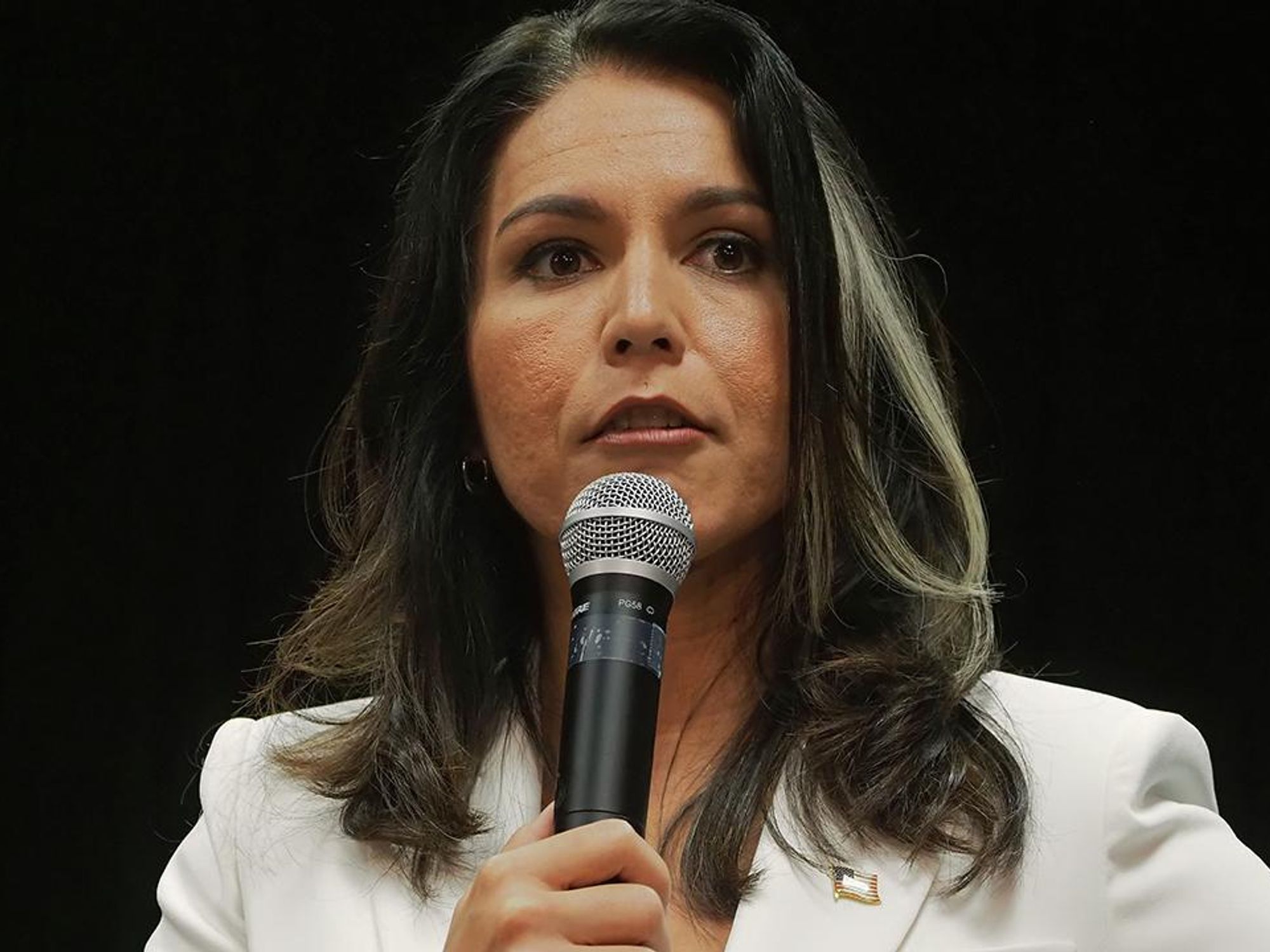
We tend to have fun with cancel culture because of the abject silliness of it. It’s outrage. It’s laughing at the permaoffended woke chuckleheads whose entire life revolves around looking for things Americans like and trying to ruin them. It must suck to wake up every day knowing you’re so easily offended by Dr. Seuss, the Muppets, Pepe Le Pew, Mr. Bean, and Star Wars. I’d be embarrassed to show my face in public. It’s probably why so many of these douchelords hide behind Twitter accounts.
But there is a broader issue over the EASE of how things get “canceled.” Tulsi Gabbard is concerned about the freedom of expression aspect, as well as where she thinks we’re headed. Tulsi comes in at 4:17 if you want to skip ahead. I’m starting the video from the beginning just because I miss Trey Gowdy.
Tulsi Gabbard blasts cancel culture ‘We see the final expression of it in Islamic terrorist groups’
youtu.be
“Okay, well, where does this cancel culture lead us?” You see the final expression of cancel culture in Islamist terrorist groups like ISIS and Al Qaeda who basically go and behead those who they deem to be infidels or heretics in order to silence them, in order to protect others from being misled by those heretical ideas and in the eyes of an ISIS or Al Qaeda.
OBVIOUSLY, she’s not making an apples-to-apples comparison. No one thinks the outrage brigade is literally going to the violent extremism route. But it’s not like there AREN’T any comparisons when it comes to fanaticism and cult-like devotion. Which I find ironic. The same devoutly religious woke leftist tw*t crowd are the first to claim Christians are rigid ideologues. Even comparing us the terrorists. Yet I can have a drink with someone who views a social issue or two differently from me and not look to have their life destroyed. You can’t even sit at the same table with leftists if you think Ricky Gervais or J.K. Rowling are less than evil.
The end result is total control of information. What’s allowed to be said, shared, and distributed. Decided by a small group of people with a rigid ideology of what’s allowed. It’s not all about children’s books and cartoon characters. Like the boss says:
People always say “aren’t there more important things than Speedy Gonzales or Dr. Seuss or *insert latest cancel victim here*?!”
No. Banning books is fascism. Prohibiting creative expression is fascism. That’s pretty important.
It’s the most important. It’s why the First Amendment is first.
TOP 14 Andrew Cuomo PICKUP LINES! | Louder With Crowder
youtu.be
Need a quick laugh? Check out and subscribe to our CrowderBits YouTube channel for Louder with Crowder skits, opens, and parody videos!
White House Won’t Tell Officials How Many Illegal Immigrants Entering Texas Have COVID-19: Gov. Abbott
Texas Gov. Greg Abbott said that the White House has refused to tell Texas officials how many illegal immigrants who have crossed the U.S.-Mexico border have tested positive for COVID-19. When asked in a Fox News interview on Sunday about whether illegal immigrants are spreading the CCP (Chinese Communist Party) virus, which causes the COVID-19 disease, the Republican governor responded, “I have not seen any data about what the COVID rate is” while adding that agents have reported to his office that there are illegal immigrants coming across the border with the virus. “We need the total number of migrants who have been apprehended at the border who have tested positive for COVID-19,” Abbott said, accusing the Biden administration of having “refused” and “failed to give to our state the total number of migrants who have COVID-19.” “We expect that data,” Abbott added. In recent weeks, the number of border …
Texas Judge Says Austin Can Continue to Enforce Mask Mandate for at Least Another 2 Weeks
A judge in Texas refused to grant the state’s attorney general a restraining order that would force two counties to discontinue enforcing mask mandates.
The post Texas Judge Says Austin Can Continue to Enforce Mask Mandate for at Least Another 2 Weeks appeared first on NTD.
Pfizer Vaccine 94 Percent Effective Against Asymptomatic Transmission of CCP Virus: Israeli Data
Pfizer’s vaccine is 94 percent effective in preventing asymptomatic transmission of the virus that causes COVID-19, according to data from Israel. The COVID-19 vaccine, co-produced with BioNTech, was also at least 97 percent effective in preventing symptomatic disease, severe-critical disease, and death, the companies and the Israel Ministry of Health said. The figures stem from […]
The post Pfizer Vaccine 94 Percent Effective Against Asymptomatic Transmission of CCP Virus: Israeli Data appeared first on NTD.
Virus Tolls Similar Despite Governors’ Contrasting Actions
Nearly a year after California Gov. Gavin Newsom ordered the nation’s first statewide shut down because of the coronavirus, masks remain mandated, indoor dining and other activities are significantly limited, and Disneyland remains closed. By contrast, Florida has no statewide restrictions. Republican Gov. Ron DeSantis has prohibited municipalities from fining people who refuse to wear masks. And Disney World has been open since July. Despite their differing approaches, California and Florida have experienced almost identical outcomes in COVID-19 case rates. How have two states that took such divergent tacks arrived at similar points? “This is going to be an important question that we have to ask ourselves: What public health measures actually were the most impactful, and which ones had negligible effect or backfired by driving behavior underground?” said Amesh Adalja, a senior scholar at the Johns Hopkins Center for Health Security. Though research has found that mask mandates and …
Kate Garraway describes husband Derek Draper’s coronavirus battle as ‘horror story’
The Good Morning Britain presenter, 53, has said she’s not sure if her husband will have ‘any kind of life again,’ as he remains in ICU nearly a year after he was admitted to hospital with Covid.
Ex-White House COVID adviser Deborah Birx has new private-sector job
Former White House COVID-19 coordinator Dr. Deborah Birx is now working in the private sector. Birx, who was a familiar face at White House coronavirus briefings under former President Donald Trump, is now working as chief medical and scientific adviser for ActivePure Technology in Texas, an air filtration company, Reuters reported. She has also joined…
Quarantine Hotel Worker in NSW Tests Positive for COVID-19
A person who works in two NSW COVID-19 quarantine hotels with overseas travellers and has already had their first-dose of the Pfizer vaccine, has come down with the virus. The positive result was recorded after 8 p.m. on Saturday, meaning the state’s virus-free run will end at 56 days. NSW Health said in a statement the source of the Sydney worker’s infection remains unclear and testing of their close contacts is underway. There were no locally-acquired COVID-19 cases in the 24 hours to 8 p.m. on Saturday and three cases in travellers in hotel quarantine. Health Minister Brad Hazzard will address the media later on Sunday. Prime Minister Scott Morrison on Sunday told reporters the hotel quarantine worker had received their first dose of the Pfizer vaccine. “There are no risk-free responses when you deal with COVID-19, it is unrealistic and naive to think so … there are always vulnerabilities,” …
12 shot, two fatally, at overnight party at Park Manor business

The other wounded people were all listed in serious or critical condition.
Twelve people were shot, at least two fatally, after gunfire broke out at a Park Manor business where a party was being held early Sunday, according to the Chicago Fire Department.
A fight broke out between several people attending the party about 4:40 a.m. in the 6700 block of South South Chicago Avenue when gunfire erupted, Chicago police said.
Twelve people were struck, ranging in age from 20 to 44 years old, according to police.
Two people were pronounced dead, fire department spokesman Larry Merritt said. The other wounded people were all listed in serious or critical condition at hospitals.
 Sophie Sherry/Sun-Times
A photo of the scene shared by the fire department showed balloons and a shoe strewn outside the South Side Think Tank, at 6798 S. South Chicago Ave.
Officers placed at least 10 evidence markers outside the building, but most investigators appeared to examining the inside of the business. There appeared to be a pool of blood on the sidewalk near the door of the building.
A Chicago police spokesman was unable to immediately provide details about the shooting.
 Sophie Sherry/Sun-Times
The shooting was one of the most violent, in terms of number of people hurt, in recent Chicago memory. Last July, 15 people were shot outside a Gresham funeral home, but none of the victims died.
In 2013, a mass shooting wounded 13 people, including a 3-year-old boy, in Cornell Park near 51st and Wood in Back of the Yards.
Last December, six people were hurt after gunfire broke out at an overnight party in a South Side salon in the Burnside neighborhood.
So far this year, officers have responded to 393 shooting incidents across the city through March 7, according to police statistics. That’s a 31% increase over the same period last year, which saw 301 shooting incidents.
This is a developing story. Check back for updates.
Riots, Violence Erupt in West Coast Cities on Breonna Taylor Anniversary
Major cities on the West Coast were among those seeing riots and protests Saturday night as demonstrators marked the one-year anniversary of Breonna Taylor’s death in a police raid in Louisville, Kentucky. Several U.S. cities were beset by riots and protests on Saturday night as demonstrators marked the one-year anniversary of the death of Taylor in Louisville, Kentucky. Los Angeles, Portland, and Seattle saw protests and clashes between crowds of people and police. Rioters threw rocks at police officers in Hollywood and smashed store windows, according to reports and footage published from the scene. Videos showed riot police at the intersection of Hollywood Boulevard and Vine Street. A video uploaded to Twitter showed a demonstrator appearing to jump on a police car as it drove away. Officials told KNBC in Los Angeles that at least one officer was injured during the skirmishes between protesters and police. “Ppl asking why the …
They’re Back . . . “There was nothing peaceful about the protest. It looked like Black Lives Matter,” one employee told The Post.
A rowdy protester smashed the plexiglass window of an outdoor dining setup in Midtown on Saturday, March 13, 2021, causing a customer to suffer a cut to his face, according to police and witnesses. The customer, a 48-year-old man, was dining at Dalton’s Bar & Grill on Ninth Avenue near West 43rd Street when a group of demonstrators…
Cuomo Should ‘Stick to His Guns’: Alan Dershowitz
Harvard Law School Professor Emeritus Alan Dershowitz said on Saturday that since “accusations don’t constitute guilt” in the United States, New York Gov. Andrew Cuomo should not prematurely resign in response to the sexual harassment allegations against him. “Accusations don’t constitute guilt,” Dershowitz told Newsmax host Carl Higbie. “I wrote a book about it called ‘Guilt by Accusation,’ so I think that Gov. Cuomo should stick to his guns. Let there be a full investigation.” “And if nothing more comes out, these sexual allegations are not enough to deprive him and deprive the millions of voters who voted for him of his governorship,” Dershowitz added. “I take the same position whether a person is a Democrat or Republican, whether I voted for him or against him. The law has to be the same. The shoe on the other foot has to fit.” Dershowitz said of the media reports, “Those are not …
With Biden In Office, ISIS Is Back In Full Swing
ISIS terrorists were behind Thursday’s brutal killings north of Baghdad where they shot dead eight people in three separate attacks, including six family members, according to an Iraqi military statement released Friday. The attack took place in Albu-Dour’s predominantly Sunni village in Salah al-Din province, about 84 miles north of the Iraqi capital. The area […]
The post ISIS Behind Brutal Attack in Salah Al-Din Province: Iraq Military appeared first on NTD.
Video: Remembering the ‘Boat People’ of Vietnam, Who Escaped Communism for America
After the Vietnam war, many people escaped communism by boat and made their way to the United States. They would later be known as the “boat people.” To learn more about this history, we interviewed Binh Tran, a pharmacist and one of the boat people of Vietnam. These stories and more in this episode of Crossroads. Crossroads is an Epoch Times show available on Facebook and YouTube.
Support Crossroads: https://donorbox.org/crossroads
Join Patreon to Support Crossroads: https://www.patreon.com/Crossroads_Josh
Dr. Fauci Advises Stephen Colbert Not To “Hit The Clubs” Even After Getting Vaccinated
America’s most political doctor in history doesn’t recommend large gatherings until COVID-19 is under control.
These Covid Vaccines Are Now in the U.S. Others May Be Coming.
Two vaccines are in wide use, a third is getting there, and there may soon be more alternatives. Here is a rundown.
Rudy Giuliani to Keep Honorary Degree After New York College Votes Against Rescinding It
Former New York City Mayor Rudy Giuliani is keeping an honorary degree he received from a college in New York. St. John Fisher College bestowed a doctorate on Giuliani in 2015 in recognition of the role he played in the recovery of New York City after the Sept. 11, 2001, terrorist attacks. Some people called on the school to rescind the degree after Giuliani spoke at a “Stop the Steal” rally in Washington on Jan. 6 that immediately preceded the breach of the U.S. Capitol, in addition to allegations that the 2020 election was rife with fraud. The St. John Fisher College Board of Trustees said in a statement Friday that it was made aware of the calls and decided to hold a vote on the matter. “The College prides itself on respecting the opinions expressed by all inside and outside of the Fisher community. The matter of rescinding an honorary …
Schumer: Andrew Cuomo should resign amid ‘awful crisis’ in New York
Senate Majority Leader Chuck Schumer said an “awful crisis” is engulfing New York as he again called for Gov. Andrew Cuomo to step down over accusations of sexual harassment from seven women. “This is an awful crisis in New York and elsewhere, and we need sure and steady leadership,” Schumer said in an interview Sunday…
Amazon says it won’t list books it claims classify transgenderism as a mental illness
Retail giant removed moral philosopher’s book on gender dysphoria the month before.
Netflix rolls out feature to crack down on ‘password-sharing’
Users will be required to verify accounts.
Why many of those struck by Long Covid may really be suffering from glandular fever
A year after the start of the coronavirus pandemic, experts have made an intriguing discovery: blood tests on some sufferers of long Covid are coming back positive for ‘reactivated’ Epstein-Barr.
Marvelous Marvin Hagler, Middleweight Champion of the 1980s, Dies at 66
One of the most formidable boxers of his era, Hagler defended his title 12 times before losing to Sugar Ray Leonard in a 1987 split decision.
Read More
H.R. 1 Election Reforms Make Problems of 2020 Worse: Fmr FEC Commissioner
Hans VonSpakovsky, senior legal fellow at the Heritage Foundation and a former Federal Election Commissioner, warns that the House Bill H.R. 1 would cement into law many of the voting practices that caused chaos during the 2020 election—and then make them worse.
The post H.R. 1 Election Reforms Make Problems of 2020 Worse: Fmr FEC Commissioner appeared first on NTD.
Illegal immigrant students in Virginia to be eligible for student financial aid
Democratic governor signed bill on Friday
Read More
Cynthia Nixon supporters remind voters ‘what could have been’ amid Cuomo’s scandals
Cynthia Nixon, who ran against Gov. Andrew Cuomo in 2018, isn’t exactly telling New Yorkers “I told you so,” but her supporters are — and the actress-turned-politician is coming pretty close herself. Nixon’s political allies began posting taunting photos taken during her campaign on Friday, mere hours after a seventh woman came forward and accused…
Read More
Alabama GOP to Present Framed Resolution to Trump as ‘One of the Greatest and Most Effective’ Presidents
The Alabama GOP will give former President Donald Trump a framed copy of a resolution the party passed unanimously, declaring him to be “one of the greatest and most effective presidents” in the history of the United States. The framed resolution will be presented to Trump in Mar-a-Lago on Saturday evening. “Whereas, President Donald J. Trump was one of the greatest and most effective presidents in the 245-year history of this Republic,” the resolution honoring Trump reads at the start. “President Trump put the American people and the American worker first in all his decisions and policies,” it continues. It then goes on to mention other achievements by the 45th president, such as “Operation Warpspeed,” the largest tax cuts in American history, and withdrawal from the TPP and NAFTA, replacing them with the USMCA. “The resolution, basically, it just talks about the greatness of Donald J. Trump, how he made …
The Nation Speaks (March 13) | White House Gender Policy Council Called Sexist, Racist, Anti-Unity
The White House has just created a Gender Policy Council. Warren Farrell, author of “The Boy Crisis,” calls the council sexist, racist, and anti-unity.
Gov. Newsom admits making mistakes in handling of COVID-19 pandemic
SACRAMENTO, Calif. — California Gov. Gavin Newsom acknowledged mistakes in his handling of the coronavirus pandemic, but insists the recall effort against him has more to do with politics than the public health crisis. Newsom made his most direct comments yet about the push to unseat him during an interview Friday with KQED, saying his opponents…
12 Prominent Scientists and Doctors to EU Regulators: Address ‘Urgent’ Safety Concerns or Halt COVID Vaccines
A group of prominent scientists and doctors want the European Medicines Agency (EMA) to answer “urgent” safety questions about the three COVID-19 vaccines authorised for use in the EU, or withdraw the vaccines’ authorisation.
In an open letter published this week, the group questioned “whether cardinal issues regarding the safety of the vaccines were adequately addressed prior to their approval” by the EMA.
The EMA, which is the EU equivalent of the U.S. Food and Drug Administration, approved three vaccines for emergency use in the EU: the Pfizer-BioNtech, Moderna and Oxford-AstraZeneca vaccines.
In their letter, 12 scientists and doctors noted a “wide range of side effects” is reported following vaccination of previously healthy younger individuals with the gene-based COVID-19 vaccines.
They wrote:
“Moreover, there have been numerous media reports from around the world of care homes being struck by COVID-19 within days of vaccination of residents. While we recognise that these occurrences might, every one of them, have been unfortunate coincidences, we are concerned that there has been and there continues to be inadequate scrutiny of the possible causes of illness or death under these circumstances, and especially so in the absence of post-mortems examinations.”
In their original letter, sent Feb. 28 via email to the EMA, the group asked the EMA to provide responses to seven safety-related issues within ”seven days and address all our concerns substantively. Should you choose not to comply with this reasonable request, we will make this letter public.”
The authors, led by Dr. Sucharit Bhakdi, professor emeritus of medical microbiology and immunology, and former chair, Institute of Medical Microbiology and Hygiene, Johannes Gutenberg University of Mainz, have not yet received a response from the EMA.
In a written statement Wednesday, the group said:
“Therefore, as a starting point, we believe it is important to enumerate and evaluate all deaths which have occurred within 28 days of vaccination, and to compare the clinical pictures with those who have not been vaccinated.
“More broadly, with respect to the development of COVID-19 vaccines, the Parliamentary Assembly of the Council of Europe has stated in their Resolution 2361, on 27th January 2021, that member states must ensure all COVID-19 vaccines are supported by high quality trials that are sound and conducted in an ethical manner. EMA officials, and other regulatory bodies in EU countries, are bound by these criteria. They should be made aware that they may be violating Resolution 2361 by applying medical products still in phase 3 studies.
“Under Resolution 2361, member states must also inform citizens that vaccination is NOT mandatory and ensure that no one is politically, socially, or otherwise pressured to become vaccinated. States are further required to ensure that no one is discriminated against for not receiving the vaccine.”
Bhakdi also issued this video statement, in which he says, “The time for governments to act, the time for everyone to act, is now:”
[. . .]
Cuomo’s staffers have stopped going to work and believe he should resign
New York Governor Andrew Cuomo’s Albany offices remain empty of staff, according to reports, as employees look for ways to avoid going to the Capitol amid the sexual harassment allegations.
Bannon’s War Room | Saturday Edition Hour 1| Recorded March 13, 2021 | Video: 48 Minutes 50 Seconds
Gathering of the China Super Hawks … Part 1 on CCP’s War Against America. “China is working on civilization killers,” he said. “This could leave China as the only viable society.” Our guest are: Frank Gaffney, Rudy Giuliani, Gordon Chang, Kevin Freeman.
Bannon’s War Room | Saturday Edition Hour 2 | Recorded March 13, 2021 | Video: 48 Minutes 47 Seconds
“China is working on civilization killers,” he said. “This could leave China as the only viable society.” Our guest are: Frank Gaffney, Trevor Loudon, Steve Mosher.

Abuse and Power | Andrew Cuomo’s governorship has been defined by cruelty that disguised chronic mismanagement. Why was that celebrated for so long?
Joel Wertheimer took a job in Andrew Cuomo’s administration in February 2017, straight from his position in Barack Obama’s White House. He came on alongside almost 30 other new hires, many of whom had also worked for the outgoing president or on Hillary Clinton’s campaign and were seeking a progressive professional path through the Trump years. Some saw New York State government as a bulwark against what they feared Trumpism would bring. Others hoped it could be a laboratory for ideas that might become a model for federal policy. . .
. . . One year after he began his star turn as “America’s Governor,” steering his state through COVID via daily, reassuringly matter-of-fact press briefings, Andrew Cuomo’s third term as governor of New York is suddenly deeply imperiled. In January, State Attorney General Letitia James released a report showing that his administration had underreported COVID deaths in nursing homes by as much as 50 percent. In February, liberal State Assembly member Ron Kim, who had criticized the governor in the wake of that report, spoke publicly about how Cuomo called him at home and threatened his career. Then the floodgates opened: His adversary Mayor Bill de Blasio called the bullying “classic Andrew Cuomo”; state legislators Alessandra Biaggi and Yuh-Line Niou began openly suggesting that the governor’s hard-knuckled approach to politics is simply abusive. And since last month, when Cuomo’s former aide and candidate for Manhattan borough president, Lindsey Boylan, published an article on Medium accusing him of sexually harassing and kissing her against her will, five more women have come forward with tales of harassment, objectification, and inappropriate touching. As of publication, dozens of Democratic members of the State Assembly and Senate, and 11 Democratic members of Congress, have called for his resignation.
Schumer, Gillibrand Say Cuomo Should Resign
Senate Majority Leader Chuck Schumer (D-N.Y.) and Sen. Kirsten Gillibrand (D-N.Y.) in a statement late Friday called on New York Gov. Andrew Cuomo to resign amid mounting allegations of sexual misconduct. “Confronting and overcoming the Covid crisis requires sure and steady leadership. We commend the brave actions of the individuals who have come forward with […]
The post Schumer, Gillibrand Say Cuomo Should Resign appeared first on NTD.