
Cynthia Phillips was mesmerized when she saw the latest pictures of her favorite moon. Here at last was a fresh look at Europa, an icy satellite of Jupiter. The moon resembles a truffle drizzled haphazardly with strips of melted white chocolate, as if the universe had rushed to finish a baking-show challenge. The images gave us a new sense of Europa’s topography, its collection of ridges and troughs appearing more intricate than ever. The lighting was different this time, Phillips told me, and the shadows brought out dramatic shapes in the terrain.
The images were taken by a Jupiter-observing spacecraft as it swept past Europa last week, coming within just 222 miles (358 kilometers) of the frozen surface. Phillips, a planetary geologist at NASA’s Jet Propulsion Laboratory, immediately reached for the Europa globe on her desk and began comparing the real-world views with the topography stretched over the plastic orb. The last probe to come this close to Europa was disposed of in 2003, when NASA deliberately plunged it into Jupiter’s atmosphere after the mission started running low on fuel. “We haven’t seen Europa’s surface in this level of detail for 20 years,” Phillips said.
Europa might be the best place to search for life elsewhere in the solar system. Scientists are almost certain that beneath the Jovian moon’s frozen surface is a salty ocean with more water than all of Earth’s oceans combined. And such a watery subsurface environment could provide a comfortable home for small Europan life forms.
[Read: Jupiter’s frozen moon is studded with 50-foot blades of ice]
Two years from now, another NASA spacecraft will depart for the Jupiter system, specifically designed to study Europa. The probe will swing past the moon dozens of times, sometimes coasting just 16 miles (25 kilometers) above the surface. Each pass will bring scientists closer to understanding the workings of this celestial truffle and its mysterious interior. Beneath that frosty coating could be the answer to one of our biggest questions: Is there life anywhere else in the universe?
Europa is enveloped in a thick coat of water ice. (Some other moons in our solar system have ice made of methane and nitrogen—the cosmos is a weird place.) The criss-crossing lines visible in the new pictures are actually cracks and fissures in that frozen exterior. Scientists suspect that they’re caused by the stretching and squashing that Europa experiences as it orbits giant Jupiter. The moon’s terrain is sprinkled with chemical compounds such as sodium chloride and magnesium sulfate—more commonly known to Earthlings as table salt and Epsom salt—and they could indicate briny waters below.
A close-up view of Europa’s textured surface (NASA / JPL-Caltech / SWRI / MSSS
Scientists got their best evidence that a Europan ocean might exist two decades ago, when that earlier NASA spacecraft detected a magnetic connection between Europa and Jupiter that could easily be explained by the presence of a salty, global sea. This deep into the solar system, Europa’s underground ocean wouldn’t feel the warmth of the sun; it would stay liquid because of Jupiter’s gravitational tugging. In recent years, telescopes have detected signs of plumes of water vapor spewing out of the cracks and into space. Scientists believe that Europa’s ocean could be as old as the moon itself, about 4 billion years or so, which would give life plenty of time and a stable environment in which to evolve, Phillips said.
[Read: Europa’s mysterious glow]
The data suggest that Europa has a rocky mantle—the layer between the moon’s crust and core—and when rock and water come together, magical things can happen: Chemical interactions between them are known to produce hydrogen-rich materials for tiny creatures to metabolize. “On our own planet, hydrothermal systems at the seafloor provide energy for communities of microorganisms,” Samantha Trumbo, a planetary scientist at Cornell who studies icy ocean worlds like Europa, told me.
The upcoming NASA mission, named Clipper—a nod to the speedy, lightweight vessels favored by 19th-century merchants—will study nearly every bit of the Europan surface. If it gets lucky, the spacecraft could fly through some plume particles, take a sip, and analyze the contents. Alyssa Rhoden, a planetary geophysicist at the Southwest Research Institute who studies Europa, is most excited about a Clipper instrument designed to detect warmer-than-usual spots on the moon’s surface. “When you look at Europa’s surface, you can see a lot of pits where the surface seems to have dropped down a little bit, places where the surface has been disrupted,” Rhoden told me. “We think that that’s happening from heating coming from below.” That signature could simply indicate the presence of melted bits of ice near the frigid crust—or it could mean a roiling sea has floated toward the surface, perhaps bringing any tiny inhabitants with it.
[Read: Exploring the oceans of the outer solar system]
The Clipper mission is not meant to find definitive proof that life exists on Europa, only explore whether the moon has the right conditions and chemistry to make life possible. Evidence of life will require more missions, guided by Clipper’s data, that could land on the Europan surface and drill into the ice. NASA is also searching for life elsewhere in the solar system, notably on Mars, where a rover is collecting samples from a dried-up river delta. But Europa is a more tantalizing target, and so are the other ocean moons sprinkled across the solar system, such as Enceladus and Titan, which orbit Saturn, and Triton, around Neptune. The Mars mission is designed to search for signs of fossilized life that existed several billion years ago, when water once flowed on the planet. “It’s quite possible that Mars could have had life in the past, in a warmer-weather era, and it’s possible that there are subsurface pockets on Mars that could have remnants of this living biosphere,” Phillips said. “But on somewhere like Europa, life could exist there now.”
And what might humanity, by way of carefully engineered machines, find on Europa, once we’ve figured out which melty bits to inspect? “I would love for there to be Europan whales swimming around in that ocean,” Phillips said with a laugh. But alien life, if it exists, is likely to be small and simple. Energy sources are limited in the Europan depths, and scientists don’t think the environment can support the development of more complex organisms, Phillips said. Still, even the discovery of a single microbe would mark an explosive event in human history. It would mean that life had managed to spring up in two different places around the same star—in a universe absolutely brimming with stars. If it happened more than once here, in our own solar system, it’s likely happened elsewhere in the cosmos, around someone else’s sun. This is why scientists are so eager to catch a glimpse of Europa, and prepare as much as they can for the exploration to come. “We all want it to be water,” Rhoden said. “We all want it to be a cool plumbing system in the shell with lots of activity, and someday we’ll get down there and find little Europan sea urchins clinging to the bottom of the ice.”
Skip The Scoop | Seek Understanding
Bannon’s War Room | Evening Edition | Recorded April 19, 2021 | Video: 48 Minutes 52 Seconds
Bad Cops … Bill Barr and the FBI Lied About January 6 and November 3. Autopsy results reveal four months later that officer Brian Sicknick’s death had nothing to do with Jan. 6. Our guest is: Doug Wardlow, Capt. Maureen Bannon, Raheem Kassam, Peter Navarro, and Tracey Anthony.
Washington Post’s Josh Rogin On Doctor Fauci’s Connections To the Origins of Covid & The Wuhan Lab | Video: 6 Minutes 20 Seconds
“People don’t want to think about the fact that our hero of the pandemic Dr. Fauci might also have been connected to this research which might also have been connected to the outbreak…” The Megyn Kelly Show
Dr. Peter Navarro Discusses Dr. Fauci’s Sketchy Record on AIDS | Video: 2 Minutes 44 Seconds
Dr. Fauci played the same game with the AIDs epidemic he’s been doing with Covid-19. He dismisses therapeutics in favor of vaccines, to the detriment of the public.
An Open Letter to Dr. Anthony Fauci | Originally Published May 31, 1988
“You care, I’m told (although I no longer believe it). I’ve even heard you called a saint… But saints have imaginations vivid enough to know how to spend $374 million in a dire emergency.” ~ Larry Kramer

The Press of Freedom: A Column Open to Our Readers
I have been screaming at the National Institutes of Health since I first visited your Animal House of Horrors in 1984. I called you monsters then and I called you idiots in my play, The Normal Heart, and now I call you murderers.
You are responsible for supervising all government-funded AIDS treatment research programs. In the name of right, you make decisions that cost the lives of others. I call that murder.
At hearings on April 29 before Representative Ted Weiss and his House Subcommittee on Human Resources, after almost eight years of the worst epidemic in modern history, perhaps to be the worst in all history, you were pummeled into admitting publicly what some of us have been claiming since you took over three years ago.
You admitted that you are an incompetent idiot.
Who Is Sean Strubs? | Author Of “Body Counts: A Memoir of Activism, Sex, and Survival” by Sean Strub
The founder of POZ magazine shares “a captivating…eyewitness account from inside the AIDS epidemic” (Next) and “a moving, multi-decade memoir of one gay man’s life” (San Francisco Chronicle).
When the AIDS epidemic hit in the early 1980s, Strub was living in New York and soon found himself attending “more funerals than birthday parties.” Scared and angry, he turned to radical activism to combat discrimination and demand research. Strub takes you through his own diagnosis and inside ACT UP, the organization that transformed a stigmatized cause into one of the defining political movements of our time.
Whitewashing AIDS History | Dr. Anthony Fauci Is Rewriting History To Disguise His Shameful Role In Delaying Promotion of an AIDS Treatment That Would Have Prevented Tens of Thousands of Deaths In The First Years of the Epidemic.
In my book, Body Counts, A Memoir of Politics, Sex, AIDS, and Survival, I recount how slow the federal government was in publicizing the use of Bactrim and other sulfa drugs to prevent PCP (the pneumonia that was then the leading killer of people with AIDS) in addition to its long-time and well-known use to treat PCP.
 I point to Dr. Fauci in particular, because he was, and remains today, the head of the National Institutes of Allergy and Infectious Diseases and the head of the federal government’s AIDS research program. In 1987, pioneering AIDS activist Michael Callen begged Fauci for help in promoting the use of Bactrim as PCP prophylaxis and issuing interim guidelines urging physicians to prophylax those patients deemed at high risk for PCP.
Fauci has taken exception to my account of the incident. In comments to The Washington Blade, he offered his version of the story.
“So what actually happened is that Michael came to me and said you know there is this preliminary activity and some small trials that Bactrim works,” Fauci said. “Would you come out and make a guideline to say it should be used by everybody. And I said ‘Michael I can’t do that but what I can do is help design and make sure that the grantees that we fund do a clinical trial in Bactrim to prove or not that it was safe and effective,’” he said. “But I didn’t blow him off and say I don’t want to issue guidelines. The fact is that’s neither within my purview nor within the responsibility or authority I have to issue guidelines.”
Whether Fauci personally had this authority or not isn’t the point. His excuse would be laughable if it wasn’t so tragic; he was constantly traveling and speaking to the media and opining about everything related to AIDS research and treatment. In Arthur Kahn’s book, Winter Wars, Larry Kramer pointed out that to get an appointment with Fauci, one didn’t call his secretary but his press officers, “who book [his] talks and interviews… like movie stars.” He could easily have advocated awareness of the preventive treatment, as the de facto federal AIDS Czar, his influence was and is enormous.
Had Fauci listened to people with AIDS and the clinicians treating them, and responded accordingly, he would have saved thousands of lives. In the two years between 1987, when Callen met with Fauci and 1989, when the guidelines were ultimately issued, nearly 17,000 people with AIDS suffocated from PCP. Most of these people might have lived had Fauci responded appropriately.
Henry Ford Doctors Pen An Open Letter On Hydroxychloroqine Study
 FILE – In this April 6, 2020 file photo, a pharmacist holds a bottle of the drug hydroxychloroquine in Oakland, Calif. Results published Wednesday, June 3, 2020, by the New England Journal of Medicine show that hydroxychloroquine was no better than placebo pills at preventing illness from the COVID-19 coronavirus. The drug did not seem to cause serious harm, though – about 40% on it had side effects, mostly mild stomach problems. (AP Photo/Ben Margot).
(WXYZ) — Doctors at Henry Ford Health System penned an opened letter on the hospital’s study of hydroxychloroquine being used to treat COVID-19.
It comes just days after Dr. Anthony Fauci called the study “flawed” while testifying in front of a House subcommittee.
(From the letter)
Unfortunately, the political climate that has persisted has made any objective discussion about this drug impossible, and we are deeply saddened by this turn of events. Our goal as scientists has solely been to report validated findings and allow the science to speak for itself, regardless of political considerations. To that end, we have made the heartfelt decision to have no further comment about this outside the medical community – staying focused on our core mission in the interest of our patients, our community, and our commitment to clinical and academic integrity.
~ Dr. Adnan Munkarah and Dr. Steven Kalkanis said in the letter.
The Story Behind the First AIDS Drug
Today, if someone is diagnosed with HIV, he or she can choose among 41 drugs that can treat the disease. And there’s a good chance that with the right combination, given at the right time, the drugs can keep HIV levels so low that the person never gets sick.
That wasn’t always the case. It took seven years after HIV was first discovered before the first drug to fight it was approved by the U.S. Food and Drug Administration (FDA). In those first anxious years of the epidemic, millions were infected. Only a few thousand had died at that point, but public health officials were racing to keep that death rate from spiking — the inevitable result if people who tested positive weren’t treated with something.
Opinion: State Department Cables Warned of Safety Issues at Wuhan Lab Studying Bat Coronaviruses
What the U.S. officials learned during their visits concerned them so much that they dispatched two diplomatic cables categorized as Sensitive But Unclassified back to Washington. The cables warned about safety and management weaknesses at the WIV lab and proposed more attention and help. The first cable, which I obtained, also warns that the lab’s work on bat coronaviruses and their potential human transmission represented a risk of a new SARS-like pandemic. (Paragraph 3)
‘We Loved Each Other’: Fauci Recalls Larry Kramer, Friend and Nemesis
In public, the activist berated the infectious disease expert for federal inaction on AIDS. But their affection lasted decades and changed the course of the epidemic.
The Claim That NIH Funded Gain of Function Experiments Is Just A ‘Conspiracy Theory’, Debunked | “Understanding the Risk of Bat Coronavirus Emergence” | NIH Project Number 2R01AI110964-06
This project seeks to understand what factors allow coronaviruses, including close relatives to SARS, to evolve and jump into the human population by studying viral diversity in their animal reservoirs (bats), surveying people that live in high-risk communities in China for evidence of bat-coronavirus infection, and conducting laboratory experiments to analyze and predict which newly-discovered viruses pose the greatest threat to human health.
LISTEN: Police Dispatch Respond To Minneapolis Shooting After Maxine Waters Incited Riot, ’10 To 15 Shots’, ‘White SUV’
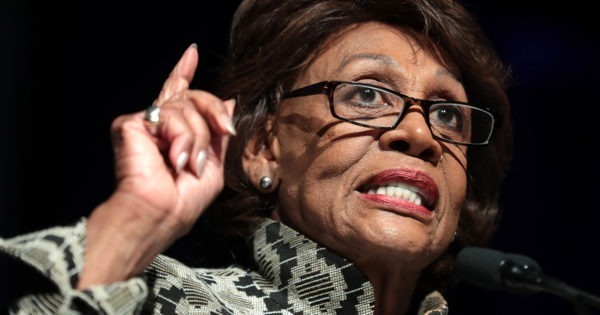
The audio of police dispatch describing the situation after an unknown assailant attempted a drive by style shooting that apparently targeted police and National Guard stationed in Minneapolis early this morning has surfaced. The shooting happened only hours after Rep. Maxine Waters (D-CA) endorsed rioting as a means to enact favorable outcomes in court cases, and told rioters to become more “confrontational.”
Initially, a breathless woman – apparently a police officer targeted by the drive by style shooting – breaks in, “We just got shot at, a white SUV just took off Westbound on Broadway from Penn, our Guard is defenseless at the intersection”. Dispatch originally thought it was a security guard, only for another person to break in and explain that it was a member of the Minnesota National Guard who was apparently targeted.
The reporting police officer broke in again to say, “It was a white SUV shot at police at least 10 times, next squad in please check on our Guard, officers are okay but I’m not sure if anyone else is hit.” She then announced that she was pursuing the white SUV containing the gunmen, “We’re in Robbinsdale now, we’re trying to check and see if it’s out here.”
The Nation Speaks (April 17): As Riots Return, What Lies Ahead; Supreme Court Under Review; Out of Afghanistan | Video: 59 Minutes 13 Seconds
In Minnesota, former police officer Derek Chauvin is on trial for murder, in the in-custody death of George Floyd. Then, last week, barely 10 miles from the courtroom, now ex-officer Kim Potter accidentally shot her gun, instead of her taser, at another black man during a traffic stop, killing 20-year-old Daunte Wright. Demonstrators poured into the streets. Cities across the country have seen nights of arson, looting, and violent clashes with police. To help us gain perspective on what’s happening and what might lie ahead, is Sgt. Betsy Smith, spokesperson for the National Police Association. And Andy Ngo, independent investigative journalist and author of “Unmasked: Inside Antifa’s Radical Plan To Destroy Democracy.” On the campaign trail, packing the Supreme Court became a hot topic. Candidate Joe Biden refused to say whether he was in favor of it or not, but promised to study the matter. To that end, on April …
//vs.youmaker.com/assets/2021/0417/afa90007-7022-4202-a54c-269b4dc0bcd0/playlist.m3u8Andy Ngo: Antifa, BLM Gearing Up for More Violence as Riot Season Begins
Andy Ngo, independent investigative journalist and author of “Unmasked: Inside Antifa’s Radical Plan To Destroy Democracy,” discusses the renewed riots across America in the wake of Daunte Wright’s death. He says Antifa and Black Lives Matter activists were already primed for violence given the highly charged murder trial of former police officer Derek Chauven, over […]
Arizona Senate Is Ready for Audit of Maricopa County’s 2020 Election Results to Begin – The Democrats Are In a Panic
It’s been months since the results of the 2020 Election were called for Joe Biden late Election night with 25% of the vote still outstanding.
Joe Biden became the first Democrat to win Arizona in decades and the first Democrat to win Maricopa County, where Pheonix is located, since Harry Truman. This came as a surprise to most since when Biden and his unlikable VP Kamala Harris came to Phoenix less than a month before the election almost no one showed up.
Since this time, much has gone on. The state politicians gave the race to Joe Biden but many individuals in Arizona called BS. These patriots began a grassroots effort to have the votes in Arizona, but especially Maricopa County, looked into. They petitioned the State Senate to perform an audit with qualified auditors who will do a thorough job.
Maricopa County’s Board of Supervisors sued the Senate to prevent them from performing an audit saying that the law states that they cannot unseal ballots after the election and therefore an audit of the ballots cannot happen. This ended up in court and the Senate updated the laws grandfathered in as of January 2020 so that they could perform their audit. The courts agreed with the Senate and claimed they could perform their audit as well.
Next, the County said they could only have qualified auditors perform the audit. This was another way of the Board of Supervisors saying that they wanted to choose the auditors. The two firms selected turned out to not be certified as the County promised but they went ahead with them anyway.
The auditors weren’t the most professional either:
Not surprisingly these auditors basically said everything was fine. The Senate charged on and made a selection of auditors of their own and when it was announced the media went crazy:
Big Tech censored the Senate’s effort (the Senate should really determine if this was legal and not interfering with an election):
And of course, the Democrat Party is freaking out and have sent in their top lawyers to disrupt the audit:
Now we are even warned that the Democrats’ may send in their shock troops of Antifa and BLM to crack some heads and disrupt the audit:
We will see how this week goes. Senate leader Karen Fann shared recently:
“The Maricopa BOS has refused to allow us to perform the audit at their facilities,” Fann said, “and has gone so far as to refusing to even answer simple questions such as, ‘How are the ballots sequestered?’”
But the lawmakers were able to secure a “20,000-plus square foot facility known as the Coliseum at our state fairgrounds to perform the audit” and will have 24-hour physical and livestream security at the site.
“The Arizona Senate and the auditors have no ‘expectations’ of findings,” Fann said. “We are performing the full forensic audit to either dispel our voters’ concerns or, if a problem is uncovered, we must fix the problems before the next election.”
“We have never accused anyone of fraud or misconduct, whether it be the hardware, software, or actions of personnel,” Fann added. “We hope there is no intentional illegal tampering but, if found, we will turn the information over to the state and federal attorney generals for their further legal action, and we will proceed to make the appropriate corrections.”
Fann said affidavits signed by Arizona residents since the election hint at “some problems with a large amount of mail-in ballots that should not have been sent to residents who have moved from the known address or have passed away.”
We will see how this audit progresses and if the Democrats will let it happen. By their reaction, they appear to be very scared about what may be found.
Video: Facts Matter (April 9): Experts Warn That Illegal Immigrants Are ‘Renting’ Children to Cross the Border
At the southern border, experts are warning that illegal immigrants and cartels are renting children in order to cross the border. Meanwhile, New York has just announced that it will give up to $15,600 to undocumented migrants who were hit by the pandemic. Facts Matter is an Epoch Times show available on YouTube. Follow Roman on Instagram: @epoch.times.roman
EXCLUSIVE: Rep. Chip Roy To Introduce Legislation Making Cartels Terrorist Organizations
Republican Texas Rep. Chip Roy will introduce legislation Thursday which would designate cartels as Foreign Terror Organizations (FTO) under federal law, the Daily Caller has learned.
Roy’s bill is titled the “Drug Cartel Terrorist Designation Act” and would designate the Reynosa/Los Metros faction of the Gulf Cartel and the Cartel Del Noreste faction of Los Zetas as FTOs under federal law, as there continues to be a surge in illegal immigration at the southern border.
The bill would also require the State Department to send a report to Congress on other cartels that could be considered FTOs, and would give the State Department 30 days to designate them as FTOs.
“I’ve spent my time talking to people who actually know what’s happening at the border and I’ve been meeting with former DPS agents, people engage with and rooting out cartels and the violence and all they are telling me is that cartels are becoming increasingly violent. All of the data shows it all of the actions show it. We have people in America being shuttled around by cartel-paid American citizens to put them in human trafficking, sex trafficking,” Roy told the Daily Caller.
Abbott Calls for Biden to Label Mexican Cartels as Terrorist Organizations as Texas Ranchers Fend off Criminals
by Bethany Blankley
Gov. Greg Abbott on Thursday sent a letter to President Joe Biden and Vice President Kamala Harris asking them to designate Mexican drug cartels as foreign terrorist organizations.
The cartels are bringing terror into Texas communities, Abbott said in his fourth letter to the administration about the border crisis.
The cartels “smuggle narcotics and weapons into the United States to fund their illegal enterprises,” Abbott writes. “They force women and children into human and sex trafficking – enriching themselves on the misery and enslavement of immigrants. They murder innocent people, including women and children. These Mexican drug cartels are foreign terrorist organizations, and it is time for the federal government to designate them as such.”
The questions and concerns addressed in the previous three letters have remained unanswered by Biden and Harris, Abbott says. Harris, tasked with managing the illegal immigration crisis last month, has yet to visit the border, let alone Texas.
Meanwhile, Texas ranchers are left to fend for themselves defending their property from trespassing cartels and illegal immigrants evading law enforcement.
California forces Christian college employees to undergo gender identity training at odds with faith
When several Christian colleges sued to stop the Obama administration’s proposed contraceptive mandate in 2013, their trade association briefly had their back.
Forcing faith-based institutions to cover abortifacient drugs under the Affordable Care Act threatens “the religious liberty of all people and the entire nation,” Edward Blews, then-president of the Council for Christian Colleges and Universities, told the feds. When the final rule was released a few months later, however, the CCCU was reportedly silent.
‘Completely anti-biblical’: Target selling devotional book that includes prayer to ‘hate white people’

A pastor with a church in Virginia is outraged over a book being sold by Target in their “Christian Life” section that includes a “prayer” written by a black female professor who asks God to help her “hate White people.”
The title of the book is “A Rhythm of Prayer: A Collection of Meditations for Renewal” and is written by Sarah Bessey. It contains passages from a number of authors and is selling for $14.87 on Target’s website. It was published in February and was a New York Times bestseller. […]
Continue reading ‘Completely anti-biblical’: Target selling devotional book that includes prayer to ‘hate white people’ …
This past Easter Message from Joe Biden | “Day 73: While the Border Burns, Your New “Spiritual and Patriotic” Duty Is Here.”
For “devout Catholic” Biden, Easter provided an opportunity to tell Christians it’s their “duty” to get vaccinated. On Easter Weekend, Biden Doubled Down On “Spiritual Duty” Message. President Joe Biden…
The post Day 73: While the Border Burns, Your New “Spiritual and Patriotic” Duty Is Here. appeared first on The National Pulse.
VIDEO: 200 Armed Riot Police Break Up Christian Church Service In Canada

Video captured the moment 200 armed riot police officers in Edmonton, Canada entered GraceLife church and broke up services after the congregants removed a fence previously erected by police to prevent Christian worship due to unscientific COVID-19 lockdowns.
“After the Christians tore down the fence that the government had build around the Edmonton church, the police sent in 200 heavily-armed riot police,” wrote Rebel News founder Ezra Levant. “That’s the church building you see there. This is China stuff, Iran stuff. But it’s happening in Canada.”
After the Christians tore down the fence that the government had built around the Edmonton church, the police sent in 200 heavily-armed riot police. That’s the church building you see there. This is China stuff, Iran stuff. But it’s happening in Canada. pic.twitter.com/jYs8E1oXGh
— Ezra Levant
(@ezralevant) April 11, 2021
The church previously made headlines as they refused to cease operations due to the government’s COVID-19 lockdowns, ultimately resulting in the pastor being incarcerated for 35 days.
Pakistan: Further information: Health of death row prisoner in sharp decline: Shafqat and Shagufta
The health of Shafqat Emmanuel, who faces execution, along with his wife Shagufta Kausar, is rapidly deteriorating. Shafqat’s lower body is paralyzed, which means he relies on the help of prison guards, which is not readily available, for mobility. He has multiple bed sores, which according to his lawyer, are not being given adequate treatment, and his pain is worsening every day. In March, his family alleges, he was in a coma for three days and was not taken to the hospital. The Christian couple were sentenced to death for sending ‘blasphemous’ texts to a mosque cleric and have consistently denied all allegations. Imprisoned since 2013, the couple were convicted and sentenced to death in April 2014.
Christian women face death penalty in Pakistan for removing sticker from Muslim coworker’s locker
Two Christian women face the death penalty in Pakistan for removing a sticker carrying a verse from the Koran from a Muslim colleague’s locker they were asked to clean.
- Nurses Maryam Lal and Newsh Urooj accused of blasphemy by Muslim colleague
- The pair, who work in Faisalabad, removed a sticker while cleaning a locker
- The sticker carried a verse from the Koran and following day they were accused
- Lal was reportedly stabbed and police were forced to intervene and rescue pair
- Police have launched an investigation, putting the pair on remand for 15 days
U.S. State Department’s Report on Nigerian Violence Leaves Out Jihad
Claims of a Christian genocide in Nigeria were discounted by the Department of State’s recently published 2020 Country Report which cites land disputes and farmer-herder competition—not jihadism—as the driver of mass homicides in Nigeria’s North West states. The 17,000-word report posted March 30, 2021 spares just 200 words to explain close to 1,000 brutal murders in Nigeria’s Middle Belt during the last year. “Land disputes, competition over dwindling resources, ethnic differences, and settler-indigene tensions contributed to clashes between herdsmen and farmers throughout the north-central part of the country,” according to “2020 Country Reports on Human Rights Practices: Nigeria.” The findings of the report contradicted stern warnings from The U.S. Commission on International Religious Freedom, the International Committee on Nigeria, Save the Persecuted Christians and nonprofit human-rights watchdogs. The U.S. Mission in Nigeria cites studies by United Nations think tanks and European newspapers to downplay the claims of genocide. The tragedy of Nigeria is reduced …
Opinion: Joe Biden must recognize Armenian genocides — the past and the present
Following World War II, when the 1948 Convention on the Prevention and Punishment of the Crime of Genocide was adopted as the United Nations’ inaugural treaty, the jurist who initiated and championed the law explained on CBS TV that he “became interested in genocide because it happened to the Armenians” and “their criminals … were not punished.”
Despite being widely considered by academia as the first modern genocide and the Nazis’ template for the Holocaust, the WWI-era Armenian Genocide remains officially unrecognized by the White House.
This is largely because of decades of persistent protest by the government of Turkey, which categorically denies the monumental crime committed by its Ottoman predecessors in erasing the existence of the indigenous Christian peoples of Asia Minor, consisting of several million Armenians, Assyrians, and Anatolian Greeks in 1915-1923.

Medical workers transport a wounded in a hospital during shelling by Azerbaijan’s artillery in Stepanakert, the separatist region of Nagorno-Karabakh, Wednesday, Oct. 28, 2020. Nagorno-Karabakh officials said Azerbaijani forces hit Stepanakert, the region’s capital, and the nearby town of Shushi with the Smerch long-range multiple rocket systems, killing one civilian and wounding two more.
This month, however, President Joe Biden, a long-time advocate for Armenian Genocide awareness, has a unique opportunity to formally recognize the first modern genocide. Such recognition would be a welcome move beyond the obvious moral and historical reasons to acknowledge the atrocity.
Commentary: Who Funds the Riotous American Left & Why?
by Dr. Michael Rectenwald
Why do giant corporations and billionaires fund Black Lives Matter and Antifa, both avowed socialist groups? And why do the leftists accept their aid? They both want a kind of socialism, but only one of them could get their way.
If you’re at all familiar with the corporate and billionaire funding sources behind Black Lives Matter and Antifa and the socialist commitments of these groups and their leaders, you’ve probably wondered why the ‘capitalist class’ would support a movement whose doctrine is apparently antithetical to their own interests. Aren’t these funders capitalists after all, and don’t capitalists naturally oppose socialism?
And why do American leftists dance like marionettes attached to strings pulled by globalist billionaires? Don’t they understand that they’re actually serving the masters they claim to oppose?
The answer is not so simple as the World Socialist Website suggests: “The aims of the Black Lives Matter movement are aligned with those of Wall Street and the US government.” Nor is the answer that BLM/Antifa have merely ‘sold out’ to capitalists. Nor is the donor class making a mistake, or merely interested in racial equality. The answer is that the corporate and billionaire elites prefer a kind of socialism—namely, ‘corporate socialism.’
Corporate socialism
And what is corporate socialism? Corporate socialism is not merely government bailouts for corporations. It is a two-tiered system of ‘actually-existing socialism’ on the ground, paralleled by a set of corporate monopolies on top. (‘Actually-existing socialism’ is a pejorative term used mostly by dissidents in socialist countries to refer to what life was really like under socialism, rather than in the perfidious books of Marx and his epigones.)
Wealth for the few, ‘economic equality,’ under reduced conditions, for the many—corporate socialism is a form of neo-feudalism.
Liberty University sues Jerry Falwell Jr., seeking millions in damages

The complaint alleges Falwell crafted a “well-resourced exit strategy” from his role as president and chancellor in the form of a 2019 employment agreement while withholding from the school key details about a personal scandal that exploded into public view last year.
RICHMOND, Va. — Liberty University has filed a civil lawsuit against its former leader, Jerry Falwell Jr., seeking millions in damages after the two parted ways acrimoniously last year.
The complaint, filed Thursday in Lynchburg Circuit Court, alleges Falwell crafted a “well-resourced exit strategy” from his role as president and chancellor in the form of a 2019 employment agreement while withholding from the school key details about a personal scandal that exploded into public view last year.
“Despite his clear duties as an executive and officer at Liberty, Falwell Jr. chose personal protection,” the lawsuit says.
It also alleges that Falwell failed to disclose and address “the issue of his personal impairment by alcohol” and has refused to fully return Liberty’s confidential information and other personal property.
Falwell responded to a phone call from The Associated Press on Friday with a text saying he was not available to talk.
Jason Whitlock Goes There: White Liberals Are ACTUAL Bigots
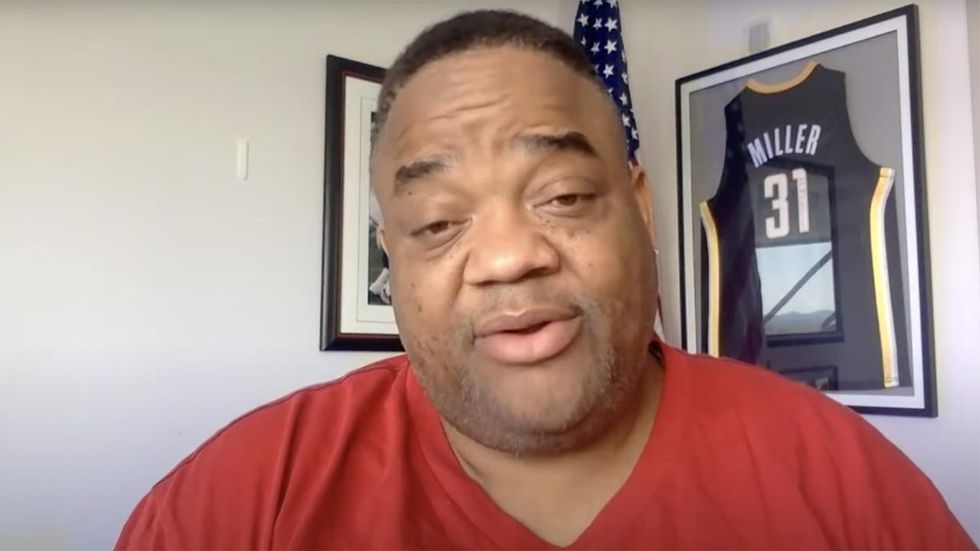
Jason Whitlock makes it clear who the real enemy is: white liberals. He’s explained why white liberals want to limit the freedoms black people enjoy in America and has exposed their “mental slavery.” But that’s him pulling his punches and not saying how he really feels. During a recent interview with Crowder, Whitlock got blunt for a change. According to the sports writer, white liberals are the ACTUAL bigots.
WHITLOCK: “The White Liberal is the Actual Bigot” | Louder With Crowder
youtu.be
The white liberal is the actual, out-of-the-closet bigot. The white liberal is the direct descendent, mentally … of slave owners and bigots. They believe that “black” is a special category of human beings that restricts your freedom. That’s what they believed in the 1600s; that’s what these white liberals believe now. That’s why they want to capitalize the “B” in black, because we’re a “special category of human beings. [White liberals] want to designate [black people] over here and they can only think one way.” …
[Bllack people] are the only people who have no political freedom. … If [black people] think any conservative thought … “Oh my God, you sold black people out.” … I’d rather have … social media think I’m a sellout of my skin color than think I’m a sellout of Jesus Christ and my Christian beliefs.
Whitlock was recently suspended on Twitter for criticizing … someone. I’m being coy because it would appear you can’t criticize them on Facebook either. It’s a story that was in the news recently of the founder of a trendy nonprofit. Bravo Lima Mike. And how the founder of this nonprofit that collects tens of millions of donations decided to go a house-buying spree.
Does that story sound familiar to you? Yeah, Jason got suspended for tthat.
Looking for a fashionable way to support Louder with Crowder? Get your swag at Crowdershop today!
Christian College Takes Biden to Court Over Trans Mandate

A Christian college is taking the Biden administration to court over a directive mandating the college to end its single-sex dorms and bathrooms.
A Biden executive order signed in January requires colleges to open up single-sex facilities to members of the opposite sex depending on the person’s gender identity. The College of the Ozarks—a Missouri Christian college with an enrollment just over 1,400—alleges that this requirement violates its religious right to practice and enforce its beliefs about sexuality.
“By promulgating a Directive imposing liability on colleges with religious objections to sex before marriage or to transgender theory, Defendants have targeted the College’s religious beliefs and practices and shown hostility toward them,” the lawsuit, filed Thursday, states. “The Directive, and Defendants’ enforcement of it, imposes impermissible burdens on the exercise of religion in violation of the First Amendment of the U.S. Constitution.”
UK Christian Leaders ‘Wholly Opposed’ to COVID-19 Vaccine Passports
Over 1,200 Christian leaders in the UK have written to Prime Minister Boris Johnson to express their opposition to the government’s proposal to introduce COVID-19-status certification for domestic use. In an open letter, the church leaders, who are from various denominations, said they are “wholly opposed” to the scheme. They said the introduction of vaccine passports “would constitute an unethical form of coercion and violation of the principle of informed consent.” “People may have various reasons for being unable or unwilling to receive vaccines currently available including, for some Christians, serious issues of conscience related to the ethics of vaccine manufacture or testing,” said the letter. Christian leaders in the United States have raised concerns over some CCP (Chinese Communist Party) virus vaccines, which have been developed, tested, and produced with abortion-derived cell lines. The UK church leaders expressed fears that the COVID-19 certificates could give rise to “a two-tier …
Argentinian Socialist Leader and Pro-Abortion Advocate Dies Days After Aborting Baby
Young Socialist Party leader María del Valle González López died this week days after her abortion.
The young Socialist was also a pro-abortion advocate.
Video is Spanish.
Christian News reported:
A 23-year-old woman died in a hospital in San Martin in the Argentinian province of Mendoza last Sunday, four days after having undergone a legal abortion in the neighboring town of La Paz. Maria del Valle Gonzalez Lopez’ death was attributed to hemorrhage and general septicemia according to what is known of her autopsy report. Judicial investigations are under way to determine whether her death was related to the abortion and whether she fell victim to medical malpractice. What is known is that she was a rising figure in the pro-abortion “Union Civica Radical,” a historic Argentinian left-wing party affiliated with the Socialist International, having been elected last year as president of the Youth section of the Radicals in La Paz.
Del Valle is the first mother who is known to have died since abortion on demand was made legal in Argentina earlier this year. She was a university student studying social work and had a boyfriend. Her party campaigned for legal abortion, and while it is not clear whether she personally joined pro-abortion “green scarf” rallies, her party had always told her that legal abortion is “safe” and a question of personal choice.
María del Valle González López
The post Argentinian Socialist Leader and Pro-Abortion Advocate Dies Days After Aborting Baby appeared first on The Gateway Pundit.
On The National Pulse Podcast with Raheem Kassam Discussing Bensman Book and Europe’s Terror Attacks

Raheem Kassam and Todd Bensman discuss one of the lesser known threats at the U.S. southern border: radical Islamic terrorism and Bensman’s new book Listen to the March 9, 2021 national podcast here
“Every year there are between three and four thousand migrants who reach the US southern border from all of those countries… Muslim-majority countries in North Africa, South Asia and the Middle East and they’re able to make it over the Atlantic with the aid of these very specialized human smugglers. Quite a few of them over the years have turned out to be jihadists that were apprehended in Latin America on their way to the border and at the border. There are established routes that bridge the Atlantic so that this is a possible route into the United States. Jihadists are able to operate best in these current circumstances, meaning they are able to cross the borders when border management systems have broken down under the weight of human volume. And that is where we are now at the US southern border. The normal systems for vetting and detention and processing are breaking down very rapidly right now, just as they did in Europe, and jihadists thrive on that. That is how they get through. The fear here and the heightened threat, in my view, is that those extra continental migrants … are able to get into the United States without the vetting that is necessary. The covert border war that I talk about does have cordons and vetting set up and government programs. But that covert border war, those processes, fall apart in circumstances like these.”
The post On The National Pulse Podcast with Raheem Kassam Discussing Bensman Book and Europe’s Terror Attacks appeared first on Todd Bensman.
Two Melbourne Men Face Terrorism Charges, Including for Links to ISIS
Two young Melbourne men suspected of having extremist motivations are facing terrorism charges. The 19-year-old and 20-year-old Epping men were arrested along with a 16-year-old Pascoe Vale boy following counter-terrorism raids in Melbourne’s north on Wednesday. The 19-year-old will appear before Melbourne Magistrates Court on Thursday charged with an attempted terrorist act, intentionally causing injury, an act in preparation of a terrorist act and being a member of prescribed terrorist organisation, ISIS. The 20-year-old was taken to hospital after his arrest because of a medical episode. He will also face Melbourne Magistrates Court on Thursday accused of an attempted terrorist act. The 16-year-old boy was released without charge. The trio came to the attention of police after a fire in bushland about 30 minutes from Epping on Feb. 18 and an assault in a public place in metropolitan Melbourne on March 10. Investigators believe the incidents may have been motivated by Islamist …
Europe’s Migrant Crisis, Still Yielding Terror, Foretells The Effects Of Biden’s Border-Crossing Boom.

With the flash of knife, the latest border-jumping, migrant asylum seeker has wrought yet another trail of blood, hospitalizations, shots fired, and street memorials in a European nation. This time, a 22-year-old Afghan migrant asylum allegedly slashed seven pedestrians in the Swedish town of Vetlanda before police could disable and arrest him.
Although reporting is developing, the Afghan undoubtedly crossed the European Union’s external borders among several thousand young Afghan asylum applicants who traveled to Sweden in recent years via an Iran-Iraq-Turkey-Greece-Italy route and who are now being repatriated as ineligible.
How and why border-crossing migrants from Muslim-majority nations keep conducting such attacks pose lessons applicable to the American southern border, where thousands from the same Muslim-majority nations annually cross.
Jihad at the Border.
As discussed at length in America’s Covert Border War, The Untold Story of the Nation’s Struggle to Prevent Jihadist Infiltration, Europe’s experience showcases a new terrorism travel phenomenon on the world stage: that malevolent long-haul migrants from countries rife with Islamist terrorist organizations now routinely cross land borders of western nations and do so far less noticeably when high volumes of benevolent economic migrants have overwhelmed border management systems.
Security officials first realized the new terrorist border proliferation method after ISIS deployed operatives camouflaged among massive migrant caravans to attack Paris in November 2015 and Brussels in March 2016. Lone offender migrants and small cells have since neatly exploited the inability of western security services to vet hearts and minds as border control and asylum systems stagger under high volumes.
Now that record volumes plague the U.S.-Mexico border, American leaders should know that stressed receiving nations waved through people like the Afghan knife slasher of Vetlanda, the Tunisian who in October 2020 slashed three people in a Nice, France church, the Iraqi who in August 2020 purposefully hunted and killed German motorcyclists in an Opel Astra sedan, Europe’s most-wanted jihadist (captured in Italy in May 2020), the Sudanese migrant who in April 2020 killed two and wounded five more during a knife-slashing spree in the south of France, the five Tajik migrants caught planning to murder American military personnel in Germany, and many others besides.
Indeed, the best available data by researcher Sam Mullins in his book Jihadist Infiltration of Migrant Flows to Europe shows that at least 140 border-crossing refugees and migrants—likely an undercount—gamed asylum systems and killed and maimed over a thousand Europeans from 2011 to 2018. My research for “America’s Covert Border War” identified a likely undercounted 104 border-crossing migrant terrorists from 2014 to 2018. The numbers have since moved only higher.
Zion man gets more than 13 years in prison for conspiracy to support Islamic State, telling informant ‘I want to see blood flowing’

U.S. District Judge Andrea Wood called Edward Schimenti the “more culpable” of the two men charged in the case, but she also described the crime as “on the less serious end of a scale that starts at a very serious level.”
A federal judge on Friday sentenced a Zion man to 13 and a half years in prison for taking part in a conspiracy to support the Islamic State, in part by collecting cellphones he thought could be used as detonators overseas.
Edward Schimenti, 39, was originally charged with Joseph D. Jones in 2017. In handing down the sentence Friday, U.S. District Judge Andrea Wood called Schimenti the “more culpable” of the two, having had a “better idea of what he was getting himself into.”
However, Wood also described the crime as “on the less serious end of a scale that starts at a very serious level.”
A federal jury found Schimenti and Jones guilty in 2019. Prosecutors asked for a 20-year sentence for Schimenti, noting that he had also been convicted of lying to the FBI. They sought a 17-year sentence for Jones, but the judge last month gave Jones 12 years instead.
Authorities said the FBI opened an investigation into Jones and Schimenti based on “troubling” comments they made online. For example, they said Schimenti wrote, “Islamic State will control your country, matter of fact, Islam will dominate the world!!” They said he also displayed the Islamic State flag on his Google+ account.
Ultimately, the feds created what they called “a ruse scenario” to determine the true intentions of Jones and Schimenti. But attorneys for both men have insisted they were entrapped. Schimenti’s defense lawyers wrote in a memo last week that the feds “infiltrated every part of his life” and created a “false reality” for Schimenti at the gym, online and at home.
“Mr. Schimenti only acted when the government placed the opportunity before him and then consistently manipulated him over an extended period until he took the bait,” defense attorneys Joshua Adams and Stephen Hall wrote in that memo.
They also said that, despite Schimenti’s online commentary, no member of any terrorist group ever reached out or “ever took Ed seriously.”
Friday’s sentencing took place in Wood’s 19th-floor courtroom at the Dirksen Federal Courthouse. Before he was sentenced, Schimenti apologized and told the judge, “In the end, your honor, really I guess I’m just asking for another chance at life.”
Before he was escorted out of the courtroom later, after the hearing ended, Schimenti looked toward the gallery, put his hand on his heart and pointed toward members of his family.
As part of their “ruse scenario,” the feds sent an undercover agent, who called himself Omar, to strike up a relationship with Jones in 2015. The two crossed paths at the Zion police station, where Jones was summoned for questioning about the recent murder of a friend.
Omar also told Jones he knew of a person who could help facilitate travel to join the Islamic State. That man, who went by the name Bilal, turned out to be a second undercover agent.
Jones and Schimenti met with Omar and Bilal on Dec. 29, 2015, according to prosecutors. But when Bilal asked Jones and Schimenti whether they had pledged allegiance to the Islamic State, they said Schimenti became suspicious and abruptly left the meeting.
Nearly a year later, in November 2016, the FBI sent a confidential informant to get a job with Schimenti’s employer. Not only was the informant hired, but he began socializing with Schimenti after work. The informant told Schimenti he had a brother in the Islamic State and hoped to join his brother in Syria. Schimenti then told the informant about Bilal, records show.
Schimenti helped the informant get into fighting shape at a gym, prosecutors said. There, they said Schimenti said he hoped to be the one to “cut the neck” of non-believers.
The informant also told Schimenti that Islamic State fighters had been tracked by compromised cellphones, and that fighters could use cellphones for bombs. He even told Jones and Schimenti about watching a YouTube video that showed how the Islamic State would use the phones. The feds say that, when the informant paused to remember an English word, Schimenti interrupted and asked “Detonator?” — prompting confirmation from the informant.
Prosecutors said Schimenti helped the informant gather cellphones and declined payment for them, telling the informant, “I know where they’re going.” During one shopping trip to help prepare the informant to travel overseas, Schimenti allegedly said, “I want to see blood flowing, either way.”
On April 7, 2017, prosecutors say Jones and Schimenti ate dinner with the informant and drove the informant to O’Hare Airport thinking he’d be traveling to Syria. The feds say Schimenti told the informant to “drench that land with they, they blood.”
College that censored Islamic terrorism quiz pays professor $155,000 to not sue
Nicholas Damask teaches a world politics course that includes a module on “Islamic Terrorism.” A Muslim student in his class was so offended by the purportedly correct answers to quiz questions that he sued the professor and Maricopa County Community College District.
Seven months after a federal judge tossed that lawsuit, the college district has paid off the professor to keep him from filing his own suit for censoring his course and pressuring him to release a public relations-written apology.
Phoenix New Times obtained the settlement terms through an Arizona open records request following a vague statement from the district that the matter had been settled.
Report: Mozambique Jihadists ‘Beheading, Skinning, Cutting off Limbs’
The brutal violence of Islamist militants in northern Mozambique is “driving the local population from their homes in terror,” the Barnabas Fund reported Friday.
Dozens Released From Gitmo Who Resumed Terrorism Remain At Large
In all, 729 detainees have been released from Gitmo since the prison opened nearly two decades ago and the ODNI says 125 have been confirmed as reengaging in terrorism, though the Defense Intelligence Agency (DIA) and Federal Bureau of Investigation (FBI) put the figure at 130. The top security facility houses the world’s most dangerous Islamic terrorists, including 9/11 masterminds Khalid Sheikh Mohammed (KSM), Ramzi Binalshibh, Ali Abdul Aziz Ali, and Mustafa Ahmed Adam al Hawsawi as well as USS Cole bomber Abd al-Rahim al-Nashiri. “Based on trends identified during the past 17 years, we assess that some detainees currently at GTMO will seek to reengage in terrorist or insurgent activities after they are transferred,” the latest ODNI report states, reiterating language used in past reports. “Transfers to countries with ongoing conflicts and internal instability as well as recruitment by insurgent and terrorist organizations could pose an increased risk of reengagement.”
There has been no shortage of examples of Gitmo captives rejoining terrorist missions after the U.S. let them go. Judicial Watch has reported on it extensively after obtaining both domestic and international documents involving the matter. Examples of recidivism among freed Gitmo jihadists include dozens who have rejoined Al Qaeda in Yemen, the country where the 2009 Christmas Day airline bomber proudly trained, and several high-ranking Al Qaeda militants in Yemen involved in a sophisticated scheme to send bombs on a U.S.-bound cargo plane. A Gitmo alum named Mullah Abdul Rauf, who once led a Taliban unit, established the first Islamic State in Iraq and Syria (ISIS) base in Afghanistan. Another, Sabir Mahfouz Lahmar, was arrested in France as part of a terrorist cell that operated an ISIS recruiting network. The Obama administration released Lahmar even though his Department of Defense (DOD) file says he has links to “multiple terrorist plots” and as a member of the Algerian Armed Islamic Group (GIA) plotted with Al Qaeda to attack the United States Embassy in Sarajevo.
The George W. Bush administration also released quite a few Gitmo captives confirmed by the ODNI to be “directly involved in terrorist or insurgent activities.” Among them is a Saudi national, Ibrahim al-Rubaysh, repatriated under a Saudi Arabian “rehabilitation” program that supposedly reforms Gitmo jihadists but instead has served as a training camp for future terrorists. Years after releasing al-Rubaysh, a known Al Qaeda operative, the U.S. government put him on a global terrorist list and offered $5 million for information on his whereabouts! The State Department even classified the “senior leader” of Al Qaeda in the Arabian Peninsula (AQAP) a Specially Designated Global Terrorist. “He serves as a senior advisor for AQAP operational planning and is involved in the planning of attacks,” according to a State Department announcement. “He has served as a senior AQAP sharia official since 2013, and as a senior AQAP sharia official, al-Rubaysh provides the justification for attacks conducted by AQAP. In addition, he has made public statements, including one in August 2014 where he called on Muslims to wage war against the United States.”
Just a few months ago, the DOD cleared for release an Al Qaeda operative classified as a “forever prisoner” because he was once considered too dangerous to be freed. His name is Said Salih Said Nashir and his DOD file says he has ties to 9/11 conspirator Walid Bin Attash and trained at the infamous al-Faruq camp in Afghanistan to participate in terrorist operations against U.S. forces in Karachi, Pakistan and inside the U.S. The document labels Nashir a high risk likely to pose a threat to the U.S. A few years ago the Office of Military Commission’s parole board denied the Yemen national release, determining that “continued law of war detention of the detainee remains necessary to protect against a continuing significant threat to the security of the United States.”