
Mexican cartels adjusted to restrictions imposed by the global pandemic last year to smuggle huge amounts of narcotics into the U.S. and remain the greatest criminal drug threat to the country, expanding the market as methamphetamine deaths skyrocket. The government classifies them as Transnational Criminal Organizations (TCO) and in 2020 they flooded the nation with illicit drugs though a staggering 28,000 pounds of methamphetamine and millions of counterfeit pills containing fentanyl were seized by law enforcement agents. Bigger loads reached communities around the nation as deaths and seizures involving meth rise sharply and Mexican TCO’s increase the drug’s availability, according to the Drug Enforcement Administration’s (DEA) National Drug Threat Assessment (NDTA).
The annual publication outlines the threats posed to the U.S. by domestic and international drug trafficking and the abuse of illicit drugs, which is at an all-time high. The document also addresses money laundering of drug proceeds and the role of domestic groups, such as violent street gangs, that traffic drugs. “While the COVID-19 pandemic plagues this nation, so, too, do transnational criminal organizations and violent street gangs, adjusting to pandemic restrictions to flood our communities with dangerous drugs,” said DEA acting Administrator D. Christopher Evans in a statement announcing the report’s release. Evans was the agency’s chief of operations before taking over and last year was appointed by then Attorney General William Barr to a presidential commission charged with exploring issues affecting law enforcement. The DEA chief added that this year’s NDTA “shows the harsh reality of the drug threats facing communities across the United States.”
The U.S. saw a record number of drug overdose deaths last year, according to the Centers for Disease Control, which put the figure at more than 81,000. The agency says that synthetic opioids, primarily illicitly manufactured fentanyl, appear to be the primary driver of the increases in overdose deaths. The DEA discloses that Mexican TCOs have established clandestine laboratories in Mexico for the synthesis of fentanyl, and Mexican authorities have encountered a rise in illegal fentanyl pill press and tableting operations. Mexican TCOs are also responsible for the production and trafficking across the Southwest Border (SWB) of the overwhelming majority of heroin available in the United States. Additionally, Mexican TCOs control most of the U.S. drug market and have established varied transportation routes, possess advanced communications capabilities, and hold strong affiliations with criminal groups and gangs in the U.S., the NDTA reveals.
The DEA names nine Mexican TCOs as having the greatest drug trafficking impact on the United States. Among them are the infamous Sinaloa and Juárez cartels, Los Zetas, La Familia Michoacána, Los Rojos and Guerreros Unidos. The TCOs maintain drug distribution cells in cities across the U.S. that report to leaders in Mexico and dominate the nation’s drug market. “The criminal activities of these organizations operating in the United States extend well beyond drug trafficking and have a profoundly negative impact on the safety and security of U.S. citizens,” the NDTA report states. “Their involvement in alien smuggling, firearms trafficking, and public corruption, coupled with the high levels of violence that result from these criminal endeavors, poses serious homeland security threats and public safety concerns.” Though they were temporarily challenged by disruptions associated with COVID-19, the Mexican criminal enterprises found new methods and used existing techniques to continue operating during the pandemic.
In a Homeland Threat Assessment issued just a few months ago, the Department of Homeland Security (DHS) divulges that Mexican cartels pose the greatest threat to the U.S. because of their ability to control territory and co-opt parts of government, particularly at a state and local level. “They represent an acute and devastating threat to public health and safety in the Homeland and a significant threat to U.S. national security interests,” the DHS writes in the document.
The post Mexican Cartels Overcome Pandemic Hurdles to Remain Greatest Criminal Drug Threat to U.S. appeared first on Judicial Watch.
Skip The Scoop | Seek Understanding
Amnesty International Report 2020/21: The state of the world’s human rights
The Amnesty International Report 2020/21 documents the human rights situation in 149 countries in 2020, as well as providing global and regional analysis. It presents Amnesty lnternational’s concerns and calls for action to governments and others. During 2020, the world was rocked by COVID-19. The pandemic and measures taken to tackle it impacted everyone, but also threw into stark relief, and sometimes aggravated, existing inequalities and patterns of abuse.
100,000 Illegal Immigrants Escaped: Border Patrol Official
The number of illegal immigrants being apprehended at the southern border is soaring—and so is the number of those who are evading capture. But border agents are in a bind because they are needed in overcrowded processing facilities at the same time.
The post 100,000 Illegal Immigrants Escaped: Border Patrol Official appeared first on NTD.
Biden Says All Adults Will Be Eligible for Vaccine by April 19
The president moved up his target date by two weeks, matching the timetable already being put in place by many states.
Texas Bans Vaccine Passports Via Executive Order
The governor of Texas issued an executive order prohibiting vaccine passports. He said vaccines are always voluntary and never forced. Texas and Florida are the first states to ban them.
The post Texas Bans Vaccine Passports Via Executive Order appeared first on NTD.
CNN Admits Crime Wave, Highlights Violence in Democrat-Run Cities
CNN admits a crime wave which was evident in 2020 is continuing in 2021 in Democrat-run cities like Chicago, Los Angeles, New York City, and others.
REPORT: New York’s Vaccine Passport Has ‘Massive Security Flaws,’ Barely Functional
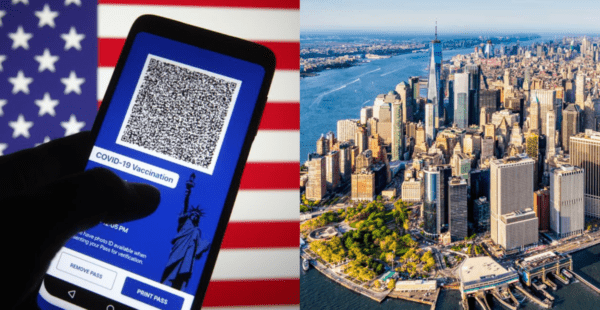
New York’s “Excelsior Pass” vaccine passport program has “massive security flaws,” with user reviews “hammering” the app for its total “dysfunction.”
In his newsletter, “The Dossier,” Jordan Schachtel revealed the total dysfunction of New York’s “Excelsior Pass” vaccine passport system. Built in conjunction with IBM, the Excelsior Pass was based off of the company’s “Digital Health Pass” system, which Schachtel describes as being “incredibly impractical, and incredibly easy to manipulate.”
The system is “incredibly rigid,” he writes, noting that not only does it take two weeks for the system to recognize that you have been fully vaccinated, but that many people who have been vaccinated will not even be on their database to begin with. Anyone who received a vaccine from out of state, or who took a private at home test kit not on the New York central database, will not be on their system, as there is absolutely zero communication with any other database.
These 5 states have nearly half of nation’s new COVID-19 cases
Nearly half of the nation’s new COVID-19 cases are concentrated in just five states — including New York, which had the highest number of new infections across the country last week, data show. Together, New York, Michigan, Florida, Pennsylvania and New Jersey accounted for 44 percent of all new infections between March 29 and April…
CDC: Soap and Detergent Enough to Reduce Spread of COVID-19 in Most Cases
The Centers for Disease Control and Prevention said Monday that normal household cleaners and soap are adequate to use to clean indoor surfaces and disinfectants are only necessary if someone in the home has been sick with the virus. “In most situations, regular cleaning of surfaces with soap and detergent, not necessarily disinfecting those surfaces, is enough to reduce the risk of COVID-19 spread,” said CDC Director Rochelle Walensky said at Monday’s White House coronavirus briefing. “Disinfection is only recommended in indoor settings—schools and homes—where there has been a suspected or confirmed case of COVID-19 within the last 24 hours,” she added. Besides disinfecting indoor surfaces after someone has been sick, Walensky recommended taking continued precautions of wearing a mask and socially distancing to prevent the spread of the virus. She noted that the infection rate for the most recent 7-day period is up 3 percent from the last 7-day period. She …
President Biden advances to April 19 the date that all adults will be eligible for COVID vaccination
“We’re still in a life and death race against this virus,” Biden said.
Fairfax: McAuliffe ‘treated me like George Floyd’ after assault claims surfaced
Virginia Lt. Gov. Justin Fairfax (D) accused fellow gubernatorial candidate Terry McAuliffe (D) of treating him “like George Floyd and Emmett Till” when the former governor called on Fairfax to resign after sexual assault allegations against him surfaced in 2019.
Fairfax made the charge during a gubernatorial debate on Tuesday night while standing alongside McAuliffe and several other Democratic candidates.
“Everyone on that stage called for my immediate resignation, including Terry McAuliffe three minutes after a press release came out,” Fairfax said at the debate, which was hosted by CBS 6. “He treated me like George Floyd. He treated me like Emmett Till. No due process. Immediately assumed my guilt.”
Here’s The Far-Left’s Plan To Take Over Every Federal Court Over Republican Objection
Progressives have long advocated packing the Supreme Court, but a recent plan proposed by far-left judicial activists calls on Senate Democrats to add hundreds of new federal judges to the lower courts through the procedural tactic of reconciliation.
Yale Law School professor Samuel Moyn and Take Back the Court director Aaron Belkin sent a memo March 29 to Senate Majority Leader Chuck Schumer and other top Senate Democrats in favor of expanding federal appellate and district courts through reconciliation.
A third of COVID survivors suffer mental or neurological problems, study reveals
A third of coronavirus patients were found to suffer from psychiatric or brain problems within six months of their COVID-19 diagnosis, according to a study published Tuesday. Researchers analyzed the health records of 236,379 COVID patients, mostly from the US, and found that 34 percent had been diagnosed with neurological or psychiatric disorders six months…
Man accused of trying to extort Max Gaetz admits he asked for cash
The man accused of trying to extort $25 million from Rep. Matt Gaetz’s family admitted Monday that he asked the congressman’s dad for cash — but denied that it was a shakedown.
Bob Kent, an ex-Air Force intelligence officer, confirmed to Sirius Radio host Michael Smerconish that he approached the Florida Republican’s dad, Don Gaetz, for money last month.
The funds, Kent said, were to pay for an effort to free Robert Levinson, a former FBI agent who disappeared in Iran in 2007, and is believed to be dead. Kent claimed he has video evidence that Levinson is still alive and is being held hostage.
Kent said he met Don Gaetz, a wealthy former Florida politician, at his office on March 17 — and told him his son was having “legal issues” and might want to “generate good will” by helping with the rescue effort.
“I explained that in no way am I trying to extort him and that if he decides not to help us, he’ll never hear from me again,” Kent told Smerconish.
“Matt Gaetz is in need of good publicity, and I’m in need of $25 million to save Robert Levinson,” he added.
Kent insisted that his intention wasn’t to blackmail the Gaetz family.
New York Times Writers May Have Deceived Readers in Stories About Project Veritas: Court
Writers for the New York Times may have spread deceptive claims about the nonprofit journalism group Project Veritas, a judge ruled this week. In stories from 2020 about Project Veritas videos, writers Maggie Astor and Spencer Hsu inserted sentences that were opinions despite the articles being billed as news, New York Supreme Court Justice Charles Wood said. “If a writer interjects an opinion in a news article (and will seek to claim legal protections as opinion) it stands to reason that the writer should have an obligation to alert the reader, including a court that may need to determine whether it is fact or opinion, that it is opinion,” Wood wrote in a 16-page decision denying the paper’s request to dismiss a lawsuit from Project Veritas. “The Articles that are the subject of this action called the Video ‘deceptive,’ but the dictionary definitions of ‘disinformation’ and ‘deceptive’ provided by defendants’ counsel …
The Right View with President Donald J Trump and Lara Trump | Banned By YouTube, Facebook & Twitter | Recorded March 30, 2021 | Video: 18 Minutes
“It was also sad from the point of view that we don’t have freedom of the press anymore. . . I think the censoring . . . when they (the mainstream media & Big Tech) didn’t show . . . all the things that were happening with Hunter (Biden) . . . it’s been fake (the news coverage & social media) for a long time. . . it used to be fake where they’d come up and I’d come up and you’d fight. . . and the public can believe one way or the other.” ~ Donald J. Trump
Over A Million Views & Counting
Federal Judge Alleges Democrats Are Close to Controlling All Major News Outlets
A federal judge this week said that the Democrat Party is close to controlling the press as he detailed what he described as shocking bias against Republicans. D.C. Circuit Court Judge Laurence Silberman outlined his opposition to the Supreme Court’s key decision in 1964 in New York Times v. Sullivan, which has since protected many […]
The post Federal Judge Alleges Democrats Are Close to Controlling All Major News Outlets appeared first on NTD.
Sidney Powell Blasts Dominion Suit as Bid to ‘Save Business’
Former Trump campaign attorney Sidney Powell asked a judge to dismiss a defamation suit filed against her by Dominion Voting Systems Inc., the election software company she accused of hatching a vast conspiracy to steal the election for Democrats.
Analysis: The Stated Goals of the Black Lives Matter Impact Report
by Kevin Mooney
Political activists who call for defunding police and ending what they call systemic racism used the banner of Black Lives Matter to raise tens of millions of dollars and launch a political action committee, according to the main organization’s “2020 Impact Report.”
The 42-page report declares victories in the election of two Democrats to the U.S. Senate in Georgia’s runoffs as well as three Democrats to the U.S. House from Texas, New York, and Missouri.
The report credits the new PAC for coordinating get-out-the-vote efforts. The main Black Lives Matter organization also entered the legislative fray for the first time while making generous grants to allied organizations.
In an introduction, Black Lives Matter co-founder Patrisse Cullors says the radical organization believes that “white supremacy is currently sanctioned by our systems and even by some of our elected officials.”
Black Lives Matter raised $90 million in 2020 from corporations, other organizations, and individuals, with an average donation at $30.64 and more than 10% of donations recurring, according to the report.
The report says Black Lives Matter Global Network Foundation had $8.4 million in operating expenses in 2020 while disbursing $217 million in grants to more than 33 other organizations.– – –
Kevin Mooney is an investigative reporter for The Daily Signal. Send an email to Kevin.
The post Analysis: The Stated Goals of the Black Lives Matter Impact Report appeared first on The Georgia Star News.
Border Patrol agents arrest Yemeni men who were on the FBI’s Terrorism Watch List
One man was arrested in late January and another was arrested in late March.
California shooting suspect expected to be arraigned from his hospital bed
The man accused of killing four people, including a child, last week in Southern California is expected to be…
GOP Congressman Says Fauci Needs To Answer For Why His Agency Bypassed Oversight Of Funding To Wuhan Lab
- Republican Rep. Scott Perry of Pennsylvania said it is “very concerning” that the National Institutes of Allergies and Infectious Diseases bypassed oversight of a research grant that involved the transfer of $600,000 to the Wuhan Institute of Virology to modify bat-based coronaviruses.
- “When it comes to oversight of U.S. tax dollars headed to the Chinese Communist Party, Dr. Fauci seems like he’s literally whistling past the graveyard,” Perry told the Daily Caller News Foundation.
- Experts said the NIAID’s grant involved gain-of-function research on coronaviruses, but a federal review board that exists to scrutinize such research was never notified of the grant.
Arkansas Governor Vetoes Transgender Youth Treatment Ban
Little Rock, Ark. (AP) — Arkansas Gov. Asa Hutchinson on Monday vetoed legislation that would have made his state the first to ban gender confirming treatments or surgery for transgender youth.
Biden’s ‘Sanctuary Country’ Orders Cut Deportations by 50 Percent
President Joe Biden’s “sanctuary country” orders, implemented at the start of his administration, have helped cut deportations of illegal aliens by 50 percent in March, a report reveals.
Ilhan Omar plays pretend with Capitol attacker story

Democrats including U.S. Rep. Ilhan Omar appear to be shifting the narrative following an attack on Capitol Police Friday that left one dead along with the assailant. […]
Continue reading Ilhan Omar plays pretend with Capitol attacker story …
Gov. Kemp Makes Powerful Point About Cancel Culture, Unloads on Joe Biden and Stacey Abrams
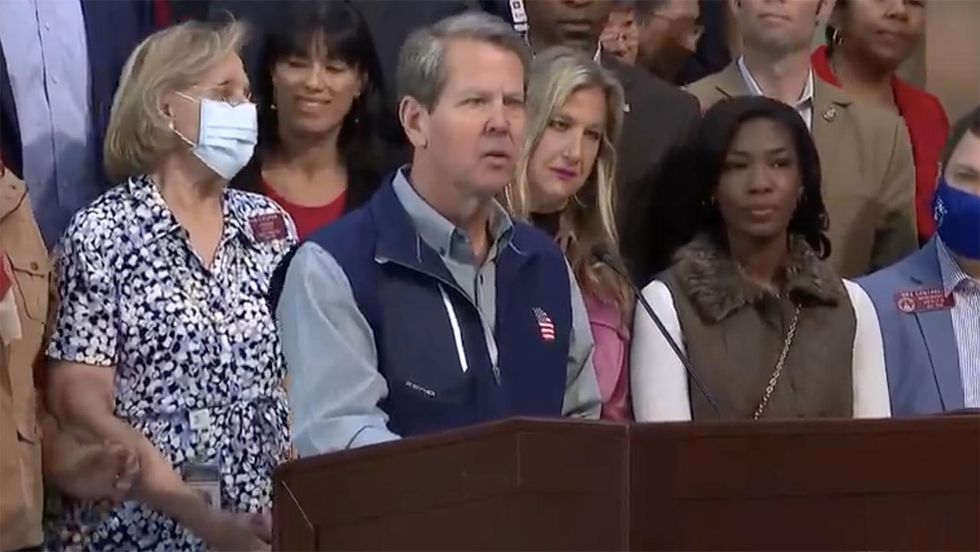
Now here’s a pissed-off Gov. Kemp with a warning to all other states. Cancel culture is coming for them too unless they start nutting up.
In the middle of a pandemic, Major League Baseball put the wishes of Stacey Abrams and Joe Biden ahead of the economic well-being of hard-working Georgians who were counting on the All-Star Game for a paycheck. Georgians and all Americans should know what this decision means. It means cancel culture and partisan activists are coming for your business. They’re coming for your game or your event in your hometown. And they’re coming to cancel everything from sports to how you make a living. They will stop at nothing to silence all of us. They don’t care about jobs, They don’t care about our communities. And they certainly don’t care about access to the ballot box. Because if they did, Major League Baseball would have announced they were moving their headquarters fron New York yesterday.
Let’s take a breath because this next part is important. I want you to think how many activists in the New York media and/or who went on the New York media repeated the talking point that Georgia’s law was Jim Crow 2: Electric Boogaloo. That was the main lie that is causing companies to take a stand about a bill they didn’t read.
In New York, they have ten days of early voting. In Georgia, we have a minimum of seventeen.
In New York, you have to have an excuse to vote by absentee. In Georgia, you can vote by absentee for any reason.
It’s easier to vote in Georgia than it is in New York.
Georgia tightening some voter laws STILL makes it easier to vote in Georgia than it is in New York. If companies like MLB and Delta and Coke really care about access to the ballot box, they would announce they will stop doing business in New York.
After Losing Georgia Voter Law Argument, BlueAnon Conspiracy Theorists are FREAKING OUT Because Trump “Hid” A Coke That Was Actually Left in Plain Sight.
Left-wing conspiracy theorists, otherwise known as “BlueAnon”, collectively freaking out Monday evening after former White House staffer Stephen Miller posted a picture with former President Donald Trump in which Trump…
The post After Losing Georgia Voter Law Argument, BlueAnon Conspiracy Theorists are FREAKING OUT Because Trump “Hid” A Coke That Was Actually Left in Plain Sight. appeared first on The National Pulse.
Blue States and Cities Continue To Struggle With Covid | “Minnesota COVID-19 hospitalizations have nearly doubled since late Feb.”
Some evidence suggests that highly infectious and possibly more serious COVID-19 variants are also responsible, sickening those at younger ages who would have otherwise not needed medical care.
Border Patrol arrests previously deported man with second-degree murder conviction
“The man now faces new charges for illegal entry after being previously deported,” CBP said.
FBI Promises To Hunt Down Anyone Who Lies About Taking COVID Vax As Vaccine Passports Loom
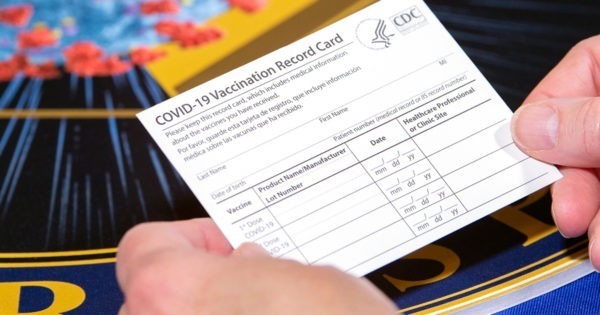
After it was confirmed that the Biden regime is working with major corporations to develop a country-wide vaccine passport, and after New York began the rollout of its own vaccine passport system, the FBI is warning people against fake vaccine passports or COVID-19 vaccination cards.
“We’ve all seen friends posting their #COVID19 vaccination cards on social media,” wrote the Minneapolis branch of the FBI on social medial. “If you make or buy a fake one to misrepresent your vaccination status, you endanger other people and may also be breaking the law.”
We’ve all seen friends posting their #COVID19 vaccination cards on social media. If you make or buy a fake one to misrepresent your vaccination status, you endanger other people and may also be breaking the law. Learn more: https://t.co/AAZWyW64fi pic.twitter.com/jVVZbpP0We
— FBI Minneapolis (@FBIMinneapolis) March 31, 2021
The FBI linked to a press release from the Internet Crime Complaint Center, which reveals that federal law enforcement, including the FBI, is “advising the public to be aware of individuals selling fake COVID-19 vaccination record cards and encouraging others to print fake cards at home” and notes that “Fake vaccination record cards have been advertised on social media websites, as well as e-commerce platforms and blogs.”
“If you did not receive the vaccine, do not buy fake vaccine cards, do not make your own vaccine cards, and do not fill-in blank vaccination record cards with false information,” the press release explains, “By misrepresenting yourself as vaccinated when entering schools, mass transit, workplaces, gyms, or places of worship, you put yourself and others around you at risk of contracting COVID-19.”
“Additionally, the unauthorized use of an official government agency’s seal (such as HHS or the Centers for Disease Control and Prevention (CDC)) is a crime, and may be punishable under Title 18 United States Code, Section 1017, and other applicable laws.”
As National File reported, the Biden administration is working with major corporations to develop a vaccine passport system that would require Americans to take one of the controversial vaccines and receive a vaccine passport to engage in commerce. According to establishment newspaper The Washington Post, Biden’s plan is for the vaccine passport to be pushed entirely through large corporations – essentially barring those who refuse the vaccine from engaging in commerce – without any direct federal involvement.
Yesterday, Florida Governor Ron DeSantis signed an executive order banning vaccine passports in the state, and revealed that he is working with the Florida legislature to permanently ban them within the state.
FEMA to take over mass vaccination site in Pueblo, increase COVID-19 immunizations
The federal government will take over the state’s mass vaccination site in Pueblo next week to ramp up efforts to get more people inoculated against the coronavirus.
The site, to be run by the Federal Emergency Management Agency, will be located at the Colorado State Fairground, where vaccinations already are ongoing. The plan for the eight-week pilot program is to increase capacity from about 1,750 vaccinations per day to 3,000 per day, according to a news release.
The Pueblo location, at 1001 Beulah Ave., will transition into a FEMA site on April 14. It will operate seven days a week, according to the news release. Appointments can be scheduled via Centura Health.
The effort also aims to increase vaccinations in rural locations by launching mobile sites in counties such as Alamosa, Bent, Las Animas and Rio Grande, according to the news release.
The Colorado Division of Homeland Security and Emergency Management will work with FEMA on transitioning the Pueblo location.
Despite COVID, many hospitals had a banner year with federal coronavirus bailout cash

Some of the richest hospital systems had hundreds of millions in surpluses. But CommonSpirit Health, based in Chicago, lost money despite getting about $1B in grant money.
Last May, Baylor Scott & White Health, the largest nonprofit hospital system in Texas, laid off 1,200 employees and furloughed others as it braced for the then-novel coronavirus to spread.
The cancellation of lucrative elective procedures as the hospital pivoted to treat a new and less profitable infectious disease presaged financial distress, if not ruin. The federal government rushed $454 million in relief funds to help shore up its operations.
But Baylor not only weathered the crisis, it thrived. By the end of 2020, Baylor had accumulated an $815 million surplus — $20 million more than it had in 2019, creating a 7.5% operating margin that would be the envy of most hospitals in the flushest of eras, a KHN examination of financial statements shows.
Like Baylor, some of the nation’s richest hospitals and health systems recorded hundreds of millions of dollars in surpluses after getting the lion’s share of the federal health care bailout grants, their records show. Those included the Mayo Clinic, Pittsburgh’s UPMC and NYU Langone Health.
But poorer hospitals — many serving rural and minority populations — got a tinier slice of the pie and limped through the year with deficits, downgrades of their bond ratings and bleak fiscal futures.
/cdn.vox-cdn.com/uploads/chorus_asset/file/22421775/Grogan.jpg) University of Chicago
University of Chicago“A lot of the funding helped the wealthy hospitals at a time, especially in New York, when safety-net hospitals were hemorrhaging,” said Colleen Grogan, a health policy professor at the University of Chicago. “We could have tailored it to hospitals we knew were really suffering and taking on a disproportionate amount of the burden.”
Baylor, which runs Baylor University Medical Center in Dallas and 51 other hospitals, says it spent $257 million last year on pandemic-related costs, including protective clothing for employees and patients and creating isolation rooms. Baylor says it has $197 million in unspent federal relief funds to use this year to cover costs of battling the virus and refrigerating vaccines.
“Our COVID-19-related expenses and lost revenue continue to exceed the funding we have received,” Baylor said in a written statement.
Other well-off hospitals and health systems faced bigger problems. CommonSpirit Health — a 140-hospital Catholic system that’s based in Chicago and operates in 21 states — and NewYork-Presbyterian Hospital lost money despite federal grants in the vicinity of a billion dollars each.
A few systems, including the for-profit chain HCA Healthcare, returned federal funds when they saw they had skirted their worst-case scenarios.
But most spent the aid and held onto any leftover money and new grants to cover pandemic costs this year.
Much of the lopsided distribution was caused by how the federal Department of Health and Human Services based the allotment of the initial bailout money on hospitals’ past revenue. That favored institutions with well-off patients withprivate health insurance over those that rely on lower-paying government insurance that many poor people use.
HHS didn’t take into account which hospitals had enough assets to survive.
Baylor, for instance, began 2020 with $5.4 billion in cash and investments — enough to keep it running for 238 days, the financial disclosures show.
Hospitals that ended the year with profits were entitled to aid because of the extraordinary latitude Congress and HHS set for how hospitals could classify pandemic costs.
Last fall, when HHS tried to limit how much aid hospitals could keep based on their profits — so money could be redirected to struggling hospitals — the effort was beaten back by the industry and Congress.
HHS officials declined interview requests but, in a written statement, said Congress ordered it to revert to its “broader definition of permissible use of . . . funds.”
The bailouts were initiated last spring to help healthcare providers ride out a once-in-a-century public health calamity. The money for hospitals and other healthcare providers from the Coronavirus Aid, Relief, and Economic Security Act and subsequent legislation totaled $178 billion.
It was intended to offset all costs of treating infected patients, including buying ventilators, masks, gowns and other personal protective equipment. Congress also authorized hospitals to use the money to compensate for a drop in revenue when they shut down elective surgeries and non-emergency treatments to prepare for the anticipated deluge of coronavirus patients.
The money — the Provider Relief Fund — helped many poorer hospitals avert cash crunches, layoffs and bond-rating downgrades. A survey by the consulting firm Kaufman Hall found that the median hospital gain during 2020 would have been 0.3% without federal support. With it, half of hospitals posted gains of 2.7% or more, below the 2019 median of 3.1%, according to the firm, which also does work for the American Hospital Association.
In February, the association urged Congress to replenish the near-empty relief fund, saying, “Hospitals have never experienced such a widespread, national health crisis.”
Some hospitals’ finances deteriorated significantly during the pandemic. From the end of March through December, the rating agency Moody’s downgraded 28 hospitals, primarily because of weaknesses like higher debt or more competition, said Lisa Goldstein, associate managing director at Moody’s.
Others suffered worse fates, like Williamson Memorial Hospital, which closed last April. The hospital, in West Virginia’s coal country, had been trying to climb out of bankruptcy protection, but “the decline in volumes experienced from the current pandemic were to[o] sudden and severe for us,” its CEO wrote on Facebook.
Conversely, many prosperous health systems emerged unscathed, often due to the federal aid.
“It gave them an ability to not have to draw down on their reserves to make up for the loss in revenue,” said Suzie Desai, a senior director for S&P Global Ratings.
Systems saw patient visits return to near normal as the year wore on. In some cases, business in the latter half of 2020 was higher than the previous year because of demand for treatments postponed from the spring, records show.
“We saw volumes spring back” in every area except emergency visits, said Kevin Holloran, a senior director for Fitch Ratings.
Major hospital systems also reported that cases tended to be more complex than normal, leading to higher insurance payments.
UPMC accepted $460 million in bailout money while collecting $2.5 billion more in revenue in 2020 than in 2019. The nonprofit system ended the year with an $836 million operating surplus — a 3.6% margin that was triple the prior year’s — in part due to growth of the health insurance plan the system owns.
Other hospitals that sold insurance, including Baylor, persevered because the cause of their financial troubles — fewer surgeries and doctor visits — meant the health plans paid fewer claims.
UPMC’s strong finances went unmentioned in a recent fundraising pitch launching its “Health Care Heroes” campaign: “During the past year, health care workers have carried the weight of the world on their shoulders, risking their own health and safety to ensure ours as we navigated the COVID-19 pandemic. … By making a donation, you will help provide training, recognition and support for our staff initiatives.”
Donald Yealy, chief medical officer of UPMC Health Services, said the appeal was a way to let people in the community show their appreciation.
Hospitals can hold onto unspent relief money until the end of July to defray further pandemic-related costs. After that, any unspent money must be returned.
UPMC retains $80 million in unspent relief money, which it expects to use, said Edward Karlovich, its chief financial officer.
In April 2020, the Mayo Clinic in Rochester, Minnesota, forecast up to $3 billion in lost revenue from the pandemic. Instead, Mayo, which got $338 million in federal relief money, ended the year with revenue $202 million higher than in 2019. It saw a $728 million surplus — a 5.2% margin.
“It gave us a shot in the arm when we needed it,” said Dennis Dahlen, Mayo’s chief financial officer.
Later, when it seemed likely Mayo would run a surplus, executives debated what to do with the federal money and “landed in a middle-of-the-road decision,” returning $156 million.
“We considered it with what everyone else was doing … and we thought about what was good for society,” Dahlen said. “‘Nonprofit’ doesn’t really mean no profit. It means tax-exempt. We still have to create earnings so we can reinvest in ourselves.”
Mayo ended the year with $14 billion in investments — $3 billion over 2019, a 29% increase.
The federal money was a lifesaver for some health systems.
Marvin O’Quinn, president and chief operating officer of CommonSpirit Health, said, “There was never a thought of turning back the money.”
/cdn.vox-cdn.com/uploads/chorus_asset/file/20078355/Screen_Shot_2020_07_11_at_7.18.33_AM.png) Ashlee Rezin Garcia / Sun-Times file
Ashlee Rezin Garcia / Sun-Times fileDespite taking $1.3 billion in relief money, CommonSpirit, with headquarters at 444 W. Lake St., ended last year with a $75 million deficit — a 0.2% loss.
“All the things we wanted to do — to renovate, to build new facilities, to expand our service — we’ve had to slow up to get through the crisis,” O’Quinn said.
The first $50 billion in relief money “was sent out indiscriminately as a life support,” said Ge Bai, an associate professor at Johns Hopkins Bloomberg School of Public Health.
HHS tried to target later distributions. It sent $22 billion to 1,090 hospitals with large numbers of COVID patients. It sprinkled $16 billion among hospitals serving poor populations, Native American tribes, people in rural areas and children.
Still, recipients included well-endowed academic medical centers and major urban hospitals. Only $14 billion took profitability into consideration, HHS documents show. It restricted those payments to hospitals with 3% or lower profit margins.
Wealthy hospitals also benefited because of HHS’s broad definition of lost revenue. If a hospital made less than the year before or just had less revenue than budgeted, it could chalk that up to the pandemic and apply the relief money to it.
In September, HHS tried to tighten limits on how much the hospitals could keep by basing that on the difference from the previous year’s net income rather than overall revenue to “probit most providers from using [Provider Relief Fund] payments to become more profitable than they were pre-pandemic, to conserve resources to allocate to providers who were less profitable.”
The American Hospital Association, based in Chicago, complained that would punish hospitals that cut costs and would be an “administrative and accounting disaster.”
HHS backed down, citing “significant attention and opposition from many stakeholders and Members of Congress.” Congress cemented the rollback in a December law.
Some hospital executives attributed their surpluses to aggressive cost-cutting.
NYU Langone Health got $461 million in relief money, covering about a third of its pandemic losses, said Daniel Widawsky, chief financial officer. Another third of Langone’s losses was absorbed by the record financial performance in the months before the pandemic, he said, and cost control addressed the rest. Widawsky said that, in March 2020, Langone canceled travel, froze hiring, paused construction and stopped discretionary purchases. “If they wanted to buy a pencil, they had to call me,” he said.
Langone ended its fiscal year in August with $208 million in net income and a $136 million surplus in the final quarter of 2020, or 5.5%. Earlier this year, two credit agencies upgraded their outlook on Langone from “stable” to “positive.”
Despite taking $942 million in bailout money, NewYork-Presbyterian Hospital had a $457 million operating deficit, a 7% loss, at the end of September — a sharp turn from September 2019, when it recorded a $166 million surplus, a 2.5% gain.
The system, which declined to comment, hasn’t released its financial metrics for the final three months of 2020. Fitch projected it would stay in the red. Still, NewYork-Presbyterian remains fiscally solid: Its most recent disclosure reported $3.8 billion in cash and short-term investments, enough to keep operating for over a year.
KHN (Kaiser Health News) is a nonprofit newsroom that produces in-depth journalism on health issues.
AstraZeneca’s Covid vaccine ‘may not be suitable for young people’, Prof Lockdown says
The UK’s MHRA vaccine regulator could stop younger people from having AstraZeneca ‘s coronavirus jab as soon as tomorrow over concerns about rare cases of blood clots.
NYC COVID positivity rate remains steady even as vaccines ramp up
New York City’s coronavirus positivity rate has remained stubborn for weeks — while new cases are only slowly inching downward — even as the city continues to ramp up vaccinations, the latest data shows. The Big Apple has a COVID-19 positivity rate of 6.55 percent on a seven-day rolling average – and that figure…
Texas COVID Cases, Deaths Plummet After Gov. Abbott Repeals Mask Mandate
Texas’ coronavirus case and death totals have collapsed in the month since Republican Gov. Greg Abbott repealed the state’s mask mandate.
Since Abbot repealed Texas’ mask mandate on March 2, Texas’ COVID-19 cases have dropped by about 4,000 per day, while the state’s deaths have dropped by 137 per day, according to the New York Times’ COVID tracker.
Many Democratic politicians predicted that Texas’ cases and deaths would skyrocket as a result of Abbott’s move.
Twitter Suspends Marjorie Taylor Greene After She Tweets ‘He Is Risen! Happy Easter!’

U.S. Rep. Marjorie Taylor Greene (R-GA) was suspended by Twitter this morning, shortly after she tweeted “He Is Risen,” something said by billions of Christians to celebrate the resurrection of Jesus Christ.
In its message to Greene, Twitter did not note what offense she made, however, many pundits and Greene herself have noted that the action happened soon after she tweeted “He Is Risen” on Easter morning. Twitter simply notified Greene, “We have determined that you have violated the Twitter Rules, so we’ve temporarily limited some of your account features.”
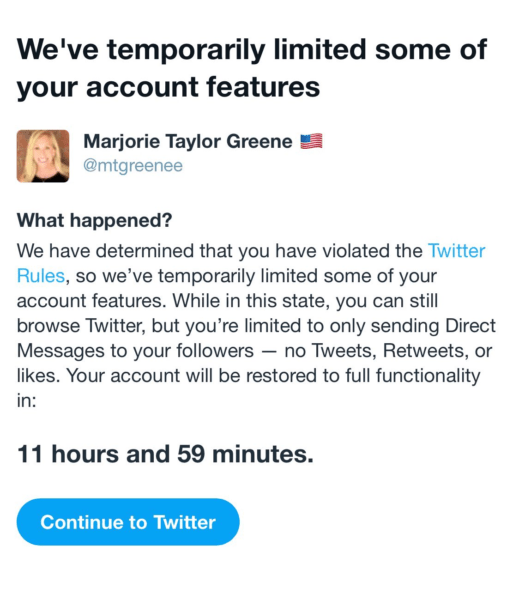
On Gab, Greene wrote, “After tweeting, “He is risen! Happy Easter!” I was suspended this morning for 12 hours! Was it my Christian faith? My never ending demand to an end to murdering God’s creation in the womb? Is it my fight to protect our greatest right to defend ourselves, come and take them? My willingness to Fire Fauci? Maybe my fight to stop mandated vaccine passports? Or how about calling out Ilhan Omar?”
“Or really… Fighting with every ounce of my body to Save America and Stop Socialism!!! Message to Big Tech: I’LL NEVER STOP!!! You can’t silence me. You can’t stop me. The People are with me. And so are the greatest conservatives especially President Trump!!!” Greene added.

Twitter has previously suspended Greene multiple times, most recently as the House of Representatives debated ejecting her from Congress. Twitter later admitted the action was taken by mistake, however, not until after Greene was left unable to use the platform to defend herself against charges levied by Democrats and anti-America First Republicans.
GOP Rep. Greene Introduces Bill to Cut Fauci’s $400,000 Salary to Zero Until He Is Replaced
The post GOP Rep. Greene Introduces Bill to Cut Fauci’s $400,000 Salary to Zero Until He Is Replaced appeared first on The Georgia Star News.
Rep. Marjorie Taylor Greene Says Democrat-Led Effort to Expel Her ‘Will Fail’
Rep. Marjorie Taylor Greene (R-Ga.) on Monday said that an attempt by some Democrats to expel her from Congress is “very foolish” because she has done “absolutely nothing wrong,” adding that she believes the effort will ultimately fall through. About 70 House Democrats led by Rep. Jimmy Gomez (D-Calif.) signed a resolution last week to expel the embattled lawmaker from office on the grounds that Greene “had previously supported social media posts calling for political violence against the Speaker of the House, members of Congress, and former President Barack Obama.” House Speaker Nancy Pelosi (D-Calif.) has since said that she doesn’t agree with the resolution. A two-thirds supermajority is needed to expel a Congress member, meaning that a significant number of Republicans would need to back the Democrat-led effort. “It would be very foolish for anyone in Congress to expel me when I have done absolutely nothing wrong,” Greene told …
‘What a coincidence?’ Marjorie Taylor Greene demands Twitter explain ‘error’ in suspending account

On Friday, Twitter inexplicably suspended Rep. Marjorie Taylor Greene’s account for 12 hours on their platform due to what they now claim was an error. This coincided […]
Continue reading ‘What a coincidence?’ Marjorie Taylor Greene demands Twitter explain ‘error’ in suspending account …
Coronavirus cases continue to trend upward despite productive vaccination days (LIVE UPDATES)
Latest
2,839 new COVID-19 cases in Illinois as Cook County faces ‘the beginning of another surge’
/cdn.vox-cdn.com/uploads/chorus_asset/file/22419935/CV_UPDATE_032421_08.jpg) Ashlee Rezin Garcia/Sun-Times
Ashlee Rezin Garcia/Sun-TimesA troubling rise in COVID-19 cases across the Chicago area and the rest of Illinois means another coronavirus “clamp-down” could soon be in store for businesses in suburban Cook County, officials warned Saturday.
The Illinois Department of Public Health reported 2,839 new cases of the deadly respiratory disease were diagnosed across the state, raising Illinois’ average testing positivity rate to 3.8%. That figure has almost doubled in just three weeks.
Hospitals statewide have seen a 32% increase in COVID-19 patients over that period, with 1,426 beds occupied Friday night.
And with about 600 people testing positive in Cook County each day — most of them young adults — suburban cases have more than doubled over the past month, according to Dr. Rachel Rubin, co-lead and senior medical officer for the Cook County Department of Public Health.
“We are in the beginnings of another surge now,” Rubin said during a virtual news conference. “Maybe this is as high as we’ll go, and maybe it’ll level out and go down. We can’t say. It’s very very hard to predict. But that’s one of the reasons we’re pushing out vaccine as quickly as we get it.”
The state reported its second-most productive vaccination day yet with 145,315 doses administered Friday. At a rolling average of 110,057 shots given per day, Illinois is vaccinating more people than ever — but still, only 18.2% of the population have been fully immunized.
Read the full story from Mitchell Armentrout here.
News
9:05 a.m. From child care to COVID-19, rising job market faces obstacles
WASHINGTON — A surge in hiring in the United States last month — 916,000 added jobs, the most since August — coincides with growing confidence that a blistering pace of job growth will continue as vaccinations increase and federal aid fuels economic growth.
The most optimistic economists even predict that between now and year’s end, the nation could produce as many as 10 million more jobs and restore the labor market to its pre-pandemic level.
Maybe so. Yet even in normal times, it would be hard to regain all those jobs so quickly. And these aren’t normal times.
Many people who’ve been thrown out of the labor force remain fearful of the coronavirus and reluctant to take face-to-face service jobs. Millions of women are still caring for children attending school online — and can’t take jobs because they can’t find or afford child care.
Extended unemployment aid has meant that some employers might have to pay more to attract workers, which they may feel unable to do. And some people will need new skills before they can land a job to replace the one they lost.
While few doubt that the trillions in federal money flowing through the economy will help accelerate hiring, the challenges are sure to endure. Here’s a look at some of them:
New Cases & Vaccination Numbers
- The Illinois Department of Public Health reported 2,839 new cases of the deadly respiratory disease were diagnosed across the state.
- The state reported 13 more COVID-19 deaths, including that of a Cook County woman in her 40s.
- Illinois’ pandemic death toll is up to 21,361, among almost 1.3 million who have tested positive over the past year.
- Public health officials announced Friday that more than 6 million COVID-19 vaccinations have now gone into Illinois arms.
Wisconsin Governor Asks Court to Force Sidney Powell, Trump to Pay Over $100,000 in Legal Fees
Wisconsin Gov. Tony Evers on March 31 asked a federal court to force lawyer Sidney Powell and her client to pay more than $106,000 in legal fees over a lawsuit regarding the state’s presidential election results, and he’s seeking $144,000 from former President Donald Trump and his lawyers, according to court filings. “A message must be sent that this type of behavior cannot be tolerated in the judicial system, and that attorneys should avoid these types of frivolous attempts to disenfranchise voters in the future,” attorneys for Evers said in court papers (pdf) filed last week. “This litigation imposed significant costs on the taxpayers of Wisconsin,” the attorneys said about Trump in separate court papers. “Those costs were needless, because Trump’s suit never had any merit, this litigation was precluded by exclusive state-court proceedings, and the costs were exacerbated by strategic choices made by Trump and his lawyers.” Powell and …